
Train Dreams (2025)
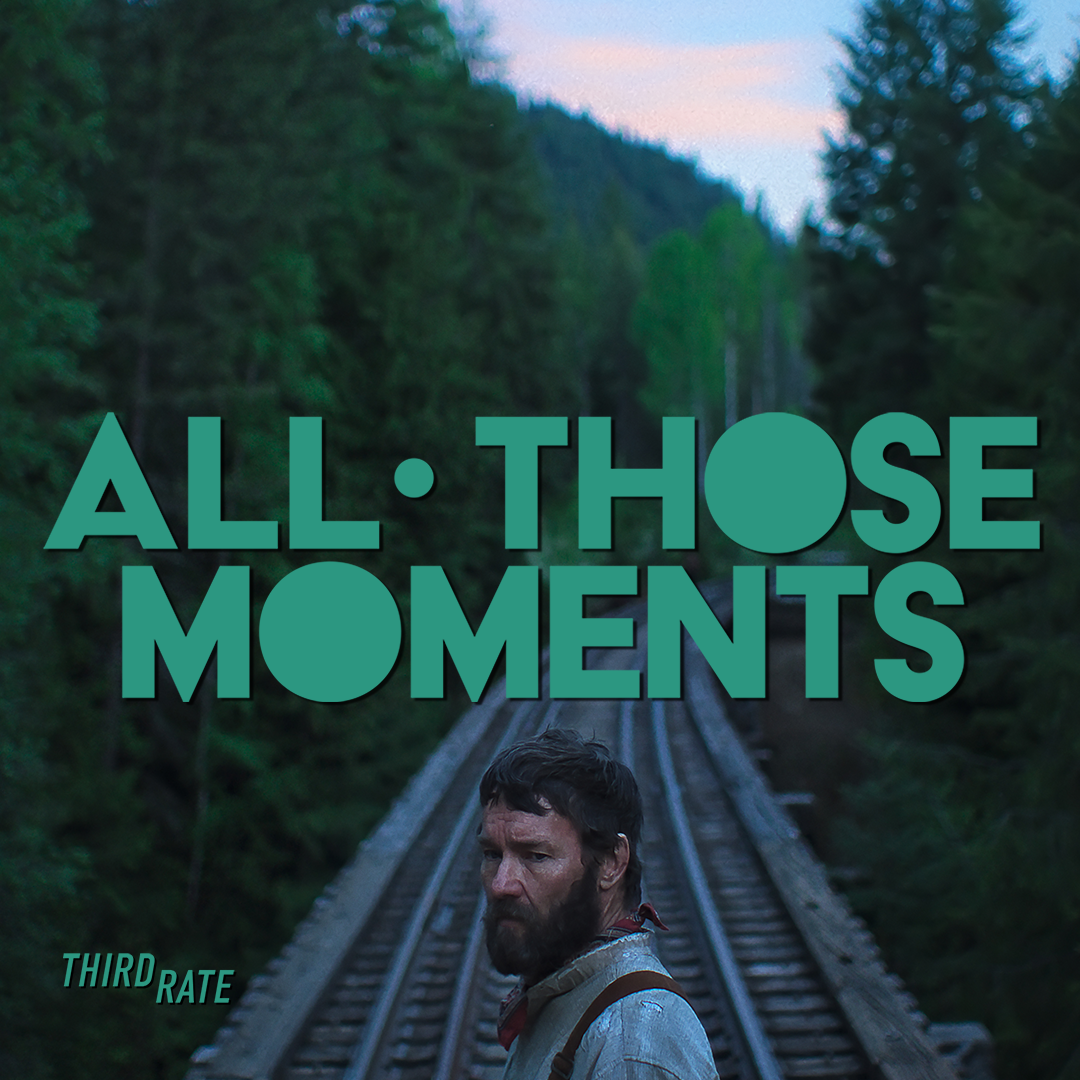
A Beautiful Adaptation of a Beloved Book
Benji and Luke are joined by award-winning novelist Jess Walter. Born and raised in Spokane, Jess has written several novels set in the Inland Northwest, including The Cold Millions. They begin the episode with an exploration of Jess's background, including his relationship with Denis Johnson, the author of the novella Train Dreams.
Jess offers insights and perspectives about the practice of his works being adapted for the screen. Then, they dive deep into the moments from the movie including key distinctions between the movie and the book.
Finally, they wrap up the episode with their overall thoughts about Clint Bentley's Train Dreams and the meaning it has to the city of Spokane.
-
Train Dreams (2025) — All Those Moments Podcast Transcript with Jess Walter
00:00
A man ekes out a living in rural North Idaho at a time when America is being transformed by the sweat and blood of men like him. Everything in this new world means very little to him though, when weighed against two equally modest lives, the wife and child he had and lost. The movie is called Train Dreams. This podcast is called All Those Moments. I'm Benji Wade. And I'm Luke Baumgarten.
dude.
In time.
All those moments is a podcast built around connecting social, political, or cultural moments with moments from our favorite movies. And Luke, we have an incredibly special guest here with us today. He's sitting between us through the magic of television. it's star of page and screen play, best-selling novelist, Obama-annointed short story scribe, hometown hero, and I'm beyond touch to say my friend, Jess Walter.
Thanks for coming, man. I really appreciate it. Yeah, thanks. It's great to be here. I'm in feel like I'm in the the right in the middle of this this vortex of genius. god. Yeah. People, yeah, one other person has been caught in the vortex. Let's see if it's escape. Yeah, all right. d does Jess know Inga? yeah, you know Inga was we inflicted our asses on Inga once upon a time. I would actually describe us as not a vortex of geniuses, but more like a
Tesla coil of fucking dorks. So I could see that. Yeah. Yeah. So that's where you are, Jess. I'm sure Inga left you both in the dust. She's brilliant. She absolutely did, without the benefit or aid of a bunch of notes and computers and stuff. She just kind of off the cuff was just telling us where we were wrong about things. I understand. I'm going to tee you guys up to have a conversation because you have a friendship. Luke knows way more about you, Jess, than I do. I'm a relative newcomer to Spokane, but I just want to say this.
I said it the other day when we watched Train Dreams together that I have a crush on you. And it a lot of it is because of your book, The Cold Millions, that came out in the very heart of the pandemic. And I also met you probably what do you think it was, Luke? Ten years ago at a party of you and Gingers? really? wow. And I just felt like you were the humblest, most chill dude. And I kept thinking to myself, Why is he so humble and chill? He's just Walter.
That was probably someone else. You really fooled him. That does not sound like me at all. I have like a Saddam body double that I send out to exude humility. Yeah. Basically every time we've even broached the subject of having a guest, your names crossed my mind. Awesome. Just because of how much I know you love movies and the way it was worth it because this film for a number of reasons feels really
Really close to so much of the work you've done in your life and just being from Spokane. So we watched this film Train's Dreams, which is based on a really beautiful novella, mostly set in North Idaho, the area around Bonner's Ferry. History is so alive in many of your works, it becomes a character. And that's very much what this move this movie and novel was about. So yeah, I mean, second only to Denis Johnson himself. I can't imagine a better personality. Yeah, which would be a much that'd be an amazing get from the grave. Yeah, from the grave, yeah. We tried. Yeah. We tried, I'm sure. Yeah. So we're gonna talk a little bit more about.
craft and being both a novelist and somebody who's written screenplays. but before we get to that, some bio that I didn't even know as I was sort of re-re-looking at your career through the lens of screenwriter. you grew up in the Spokane Valley and you told me was like a working class kind of union household. Did you grow up thinking you wanted to be a reporter and eventually a writer? Or what was you? You know, I definitely wanted to be an NBA point guard first. And then, but yeah, from
The time I was eight years old, I was, you know, I had a little magazine in my family called Readers and Digestion, kind of like Readers Digest. And my sister and brother were reporters. I was the editor. And so we played my we played writer as a kid. And around twelve or thirteen, I was reading so many books I thought I'd want to write novels one day. wow. We also, when I was in fifth grade, we moved right next to the East Trent Drive In Theater. And so from my tree fort, I watched
Both the greatest cinema, you know the the person who ended buying that theater would play Woody Allen movies. wow, Midnight Express and Dog Day Afternoons. yeah. I I'm watching these 70s autours, but I'm also watching Kentucky Fried Movie and House of a Thousand and One Pleasures, like Softcore Porn. Kentucky Fried Movie, that's John Landis, right? Yeah. Yeah. Hell yeah. Yeah. I think it it's given a cinematic quality to my fiction, but it's also
You know, embedded these two things in my mind. There's a place where they intersect screenwriting and and writing literary fiction that is for me the sweet spot. It's so hard to hit. And that's why I was so interested to see this movie. Cause this is a film whose images play a a novella whose images play in your mind in such a way that I was like, How are we gonna capture this? Well, I I've always I'm glad you said it because I don't people don't always love the cinematic as an adjective to describe like books and writing all the time. But that's
The way that's how I think of my writing. And I think it's one of the reasons that I really connected with yours as quickly as I did with Yeah, I felt like I got to see a proto version of trained dreams by reading the Cold Millions. And by s when I say, folks, that I read The Cold Millions, I listened to it like any self respecting person would do in the year t two thousand twenty. Yeah. You know, doing like
chores and yard work during the pandemic and I listened to the audiobook version of it, which was exquisitely produced. Yeah, they did an amazing job. And it and, you know, I I'm a on the page first person, but when I'm reading, what I'm doing is the same thing you're doing when you're listening. I'm s I am, you know, playing that music in my head, seeing those images. So I when people say, I didn't read the book I listened to, I Yeah, you read it. It's the exact same mental process. Totally.
So you started your career at the spokesman. Most a lot of reporters go on to be novelists and screenwriters. The vast majority do not. Like, what did you find in your time at the spokesman that made you think, yeah, I could do this? At the time, I felt like going to get my MFA, my Master of Fine Arts in Creative Writing was the path to being a novelist, which is a really limited, short way to look at it. Because in the long history, going back to
Hemingway and Stephen Crane, they're far more novelists who come out of journalism. And to this day, now as journalism has kind of died down, has lost its its footing in the culture, that's a much harder path. Right. But I don't think just being a journalist would lead you there. I think you have to, you know, at during that time I was also getting every reading list and syllabus from anyone I knew who was either teaching in a creative writing program or taking those classes and was
in a very, you know, very much an autodidact, I was giving myself the very education I thought I would have. Yeah. So added to the fact that I was essentially creating my own eight-year MFA program, sending out short stories. When you add journalism to that, I think it gives me this incredible advantage that if I had only gone the MFA route or that I wouldn't have. So you know, the curiosity, the chops to write, the
07:21
ability to research, all those things are just so many so many people come out of creative writing programs and kind of write about their childhood over and over, or their parents over and over. And the outward looking nature of being a journalist, I think, was the gr you know, was the greatest thing that could happen to me. Yeah. That research element is really intriguing to me in the context of Train Dreams, because Robert Greener, mm-hmm, similar to characters in the cold millions, many characters. Right.
Based on a real person, but it's unclear to me, and I I may be stepping on a future part of the conversation, but I feel like this is as good a context as any to talk about it. Like, what on earth was Denis Johnson up to with this Robert Greener character? How much did he know? And how much was just ended up being a composite of all these laborers that came out of the early twentieth century West? Yeah. I mean, I think for the Cold Millions, my research was a lot more embedded in, you know, in telling this story.
Big story. I my understanding of of trained dreams. So Denis Johnson lived up near Bonner's Ferry for a while. And when I met him, that's where he was living. And and it's very much a place of bumping into your neighbors and hearing stories. And so you, you know, imagine hearing about a guy who lives in a cabin who's lived there since the late the early part of the twentieth twentieth century. And imagine the change you see in that life. And and that's reflected in the
in the novella and then again in the film in such a great matter of fact way. Like all of a sudden there's there are there's a chainsaw in on the login camp. And you know the and and so I I think it was more hearing this story and then that activating his fiction writer's brain in a way. I don't get the sense that he thought I'm gonna this is not a biopic. This is not the story of this person's life.
Denis Johnson's a much more impressionistic writer than that. You know, he's not he's not you're not gonna look at his landscapes and say, that's exactly what that looks like. You're gonna see the brush strokes and the and what he's really writing about is time. And what and that's what I was so curious about when we went to see the film was I've
adapted enough and been adapted enough to know that there's such different forms that things are gonna have to change. And it's gonna be hard for me as a lover of this novel to let go of things. Totally. But if I come away with the same feeling, if I come away with this idea of of the mystery of time and and and of grief and all those things, then, you know, then in many ways
You know, you've created, I think, a good adaptation. And kind of the poetry and instability of memory. Yeah. And I think if there's anything, I really love what you just said about the the novella and the film and how where I find perfect harmony between the two is that neither Denis Johnson nor Clint Bentley were just gonna call balls and strikes about some person's life. They were they were brush strokes to use the the impression is it's like a
Naturalism, it was impr impressionistic. And it's like we're gonna give you a kind of flutter of memories that we think we can attribute to this character to tell this very rich story. And I think in both cases, pushing against the usual demands of that medium. Yeah. Like for you know, to write fiction, you think of how that it's a really minimalist book. It's what, a hundred and five pages or something. Yeah. And small pages too. Yeah. And it tell
And you're gonna say, I'm gonna tell this whole person's life in a hundred and five pages. That's that's such a a minimalist sketch that you're creating. And so how are you gonna create such a depth of emotion in that small space? Now, the filmmakers were not gonna give you chronology, which in cinema is we sort of take for granted. We're gonna we're gonna have things sort of in it, things are gonna come in and out of time. And so that that's the what makes something challenging.
also often turns out to be the thing that you come away with the most moved by. Yeah, absolutely. Yeah. The thing that kind of springboarded you from reporter to book writer was your coverage of the Ruby Ridge standoff, which you're somewhere between like fifteen and thirty miles from the setting of this book. If that yeah.
From Ruby Ridge, where the Weaver compound was and that whole thing. That was the source material for your first book, which was originally called Every Knee Shall Bow and now is called just what was it called? The Weaver? Just called Ruby Ridge. Ruby Ridge, yeah. It also apparently, which I did not know until I was doing this research, was your first screenwriting credit. Yeah, I was it was made in a mini-series in 1996 with Laura Dern, Kirsten Dunst, Randy Quaid, and I did not write the screenplay, but then they brought me into
give it a pass essentially. Yeah. And so I think I'm I think I'm an executive producer and a script consultant, I think is my official. Executive producers usually the one where they go, We don't know where else to put you. Right, exactly. How else how else can we get you some money? So but since then that that kind of launched my screenwriting career. And I'm like a lot of screenwriters have sold you know, more than than
I mean, things haven't been produced, but I've you've sold I've s but I I actually have a really high batting average. I think I'm like seven of eight in the scripts I've written have been sold, which yeah is pretty pretty remarkable. I've adapted my own stuff four or five times and I've got two things right now out in the world that are adaptations that I've written that I'm hoping to get made.
So but you're you're always hoping to get things made. Sure. it's really hard for people because they'll announce they're about to announce, make the announcement on So Far Gone. And when they do, people say, Congratulations, when's it gonna be on the end? Yeah, exactly. And I say, sometime between next November and never. Yeah, there's like thirty seven steps between when they actually order the No, it is it is like signing up for hurdles race and they don't tell you how long the race is, how many hurdles there are. Yeah. if there happen to be crocodiles,
Right. And and you're just running and but I've come to kind of be okay with that process. Like you work with great people and and you know the things can just take forever. You know, I don't know how many times you see a film and you find out that it's been in pre-production for twelve, fifteen years.
So what I would love to do is just a kind of snapshot of more or less like what your expectations were going in versus like how they were met. Let's start with you, Jess. I suppose the difficult thing for me was again going in with one of your favorite pieces of writing and knowing that there are gonna be diversions. Yeah. And so you sort of steal yourself for those. And then, you know, watching a few kind of anachronistic mistakes in the movie, you know, which as a
Again, as a writer, you're gonna notice or you know, some clunky things. And the one that we talked about was early on. It talks about how he'd he'd made it all the way to Helena and then later in cut in dialogue he says he's never been to Montana. And I'm like, who in North Idaho's never bone? I mean, you accidentally yeah end up in Montana if you live in North Idaho. But go for a long walk. But that was a tiny thing. But I think the most jarring thing for me, and it's right, I'm just gonna read the very first sentence of the of the book. Yeah. because I think it's this is the f the very first
Moment, I was like, all I'm gonna be ready for changes. So it starts way. In the summer of nineteen seventeen, Robert Grainier, Grenier took part in an attempt on the life of a Chinese laborer caught, or anyway, accused of, stealing from the company stores of the Spokane International Railway in the Idaho Panhandle. And that's that's almost like a nonfiction beginning. But he took part in it. Now, if you remember in the film, he's friends with the guy and he tries he
He doesn't make much of an effort to stop him, but he tries to stop him. Sure. In the in the novella, the character gets away and because they can't, but but he's got a leg, he's part of it. And so the first thing I was like, wait. Yeah, his regret is built of something totally different here. Yeah. And and that, and I know why they made that change, because you're trying to get a 21st century audience to like a character. That's right. And so from the very
Beginning, I have to say, I was I was like, I'm not gonna like this because they're gonna the you know it's also very odd because usually filmmaking does the media res thing of your in action. And so for a n a novella to start that way and for the movie to go a completely different direction was very surprising. W when that happened, I thought, they're doing the likability thing. And it breaks my heart when Hollywood does the likability thing. Now, as the film went on.
15:52
A lot of that went away because I found myself in the same you know, having as I said, those exact same feelings. When I, you know, in the end, I thought they had done just a beautiful adaptation of a work that I love. They the and that's where you always end up when you love a book and the film comes out. You have to separate them and say, you know, I think the big the biggest example for me is American fiction, which is based on
maybe one of my favorite novels of all time, Erasure by Percival Everett. And and in the end, I'm like, that's a good version, and that's a good version, and and you have to let them live separately. So so I think that was my main impression was after I got over the places where I, you know, you're just like, that's not right. Yeah. You know, I mean, in the novel, he's skinny, like
Joel Edgert Edgerton's never gonna, I mean, Joel Edgerton doesn't look like he's lived in the woods. He's a beefcake. Looks like he's been eaten pretty well. god, totally. Yeah. So there, so you know, you're yeah, I think if you haven't read the book, you aren't you you don't bring that to it. So it's a it's you know, you're you're kind of bringing in a backpack that you have to take off at some point and just allow yourself to be. And I thought Joel Edgerton was br I thought he did a really great job in the film. And so getting past that physical thing and
You know, 'cause w I mean what what you're gonna find a an actor who's gonna lose fifty-two pounds and half his teeth, you know, to there aren't that many of those left. Jeremy Strong was taken. Yeah, totally. Christian Bale was preoccupied. Yeah, exactly. So I used to be more pretentious about that sort of thing too. And I think at some point, you're calling me pretentious, yeah. Totally. But no, the idea of like, it's this is my favorite book, so the movie is like gonna be a pale imitation. And I think at some point I I just got over that. But also I
I think I love movies too much and books to like they feel like different things. Obviously there's they have you have the source material is the same, but like you have to allow them to be different things. And I'll tell you the you know, everyone would would would experience that if they had to watch their book being adapted, which I've had to watch. Of course. You know, and then you get these things back. the screenwriter for So Far Gone just turned in his draft. It's so great. And in fact he thought of something like
Why didn't I think of that? Yeah. No. So yeah, they you have to allow them to be different things. But I don't think it's pretension at all. I think it's in fact the thing you get from a book that a film sometimes can't do. You know, and vice versa. Totally. In this book, the world is happening so like all around him, so much change is happening. But like you were saying, Benji, when he's in his cabin, time is literally frozen. And then he goes into Bonner's Ferry.
You're like halfway through the movie before we see a car. And then I contrasted that with like the Cold Millions and where it's mostly set in Spokane and there's and there or it's like logging camps in West in eastern Montana. Probably the train ride to get to what was it, Taft, Montana or whatever, probably went through Bonner's Ferry and maybe up that bridge that Robert Grainier literally builds in part of this book and movie.
Time was dilated in such interesting ways in that era. Like your book starts ten years before, or yeah, ten years your book mostly takes place ten years before this book even starts. Right. Yeah. Yeah. I knew the novella. I read it because I read it like three weeks ago in a single sitting. Didn't intend to do that. Very difficult for me to do that as a severely ADHD person who has a smartphone, these this new thing that came out a few years ago.
You might have heard of them? I don't think Robert gets one in the film. That's that's the only piece of technology he actually does. He goes to the Apple store and gets confused. but I read it in a single sitting, sobbed over the last five pages, wasn't even clear why. Yeah. But whatever Denis Johnson was attempting to do in a little over a hundred pages, he accomplished it with me. I did not know any of the films of either Clint Bentley or Greg Kwedar, the
Producing and screenwriting writing their films. There's one that I jockey and Sing Sing. Sing Sing is an incredible thing. Yeah. Yeah. And very different. I mean totally. Yeah. I think they accomplished what they set out to do. I would also say, and Jess, your descriptions of your writing about Spokane made me think about this too. And it's topical and top of mind for me because our professional soccer team is in a championship for the second year in a row. Shout out.
Velocity FC, but it made me feel proud of Spokane. Yeah. And our friends here in the filmmaking community who helped make it. And to me, I think it's likely the best film of its kind that's ever been produced in the region. A kind of what would I call it? Like a prestige drama, historic film. It's very earnest, it's very sweet. It's filled with lots of loss, but probably just as much love about nature, about people, about
The way that a kind of kinship can be struck under the very worst circumstances imaginable for human beings. And a preview of my thoughts that I think will be sort of fleshed out over the course of this conversation. A random post I came across on Twitter. I was searching for takes. I found a couple clips from Clint Bentley and the cinematographer Adolpho Veloso. This is from a a a person named Del Winters, has 13 followers and has been on Twitter for three months. Dell, I don't know what you're doing on Twitter, but I loved what you had to say.
Train Dreams is a remarkable movie about an unremarkable man. Robert Grainier is haunted by a tragedy so complete to him, yet so trivial, to a world that just keeps chugging along. How many lives were ground to dust under the engine of progress to build this country? That's better than the log line from Rotten Tomatoes. I would be more likely to watch Train Dreams based on his description. He's on to a big to a to
One of the reasons I was sort of scared about that opening scene because he talks about the fact that there's an environmental side of this there. That and so so it's really important in the novella that
That Robert is involved in trying to throw this guy off the train bridge because he's also involved in cutting down the trees. He's also a tiny cog in this huge machine. And so those two regrets are intertwined. He's not really haunted by in the in the novella and in the film.
He he is haunted by the ghost of of the man who in the novella they try to throw off the bridge and he gets away. And the in the film, I won't say what happens, but he's haunted by that ghost. Sure. He he's also haunted by the fact that this modernity that comes to to sweep over the land, he has had a part in. And I and so I think un unraveling him from responsibility for this this being
brutal act of racist vengeance also unravels a little bit his the other thing. And so so that was my first like, But I I I think again, you come away with that same feeling, which to me makes it as six you know, a a a different kind of success. Yeah, by the end of the film, too.
23:04
do a little bit of who did this, a little bit, a tiny bit of background, and I'll I'll go quickly. Director Clint Bentley made his first feature film in 2021. It was called Jockey. It starred Clifton Collins. Clifton Collins has a cameo in this movie. Yep. Jockey was shot by cinematographer Adolpho Veloso, who also shot Train Dreams. Bentley is also a writing and producing partner of Greg Cuidar, the director of the highly acclaimed 2023 A24 movie Sing Sing. Sounds like both of you have seen Sing Sing. I need to see it.
Bentley and Quidar also co-wrote Train Dreams. I hope I'm saying your name correctly, Greg, if you ever listen to this podcast. what else have they made? I have not seen any of these movies, by the way. Veloso's career is taking off, though. He just finished shooting Knight's latest movie, which is called Remain. Here is the log line from the internet, aka Rotten Tomatoes, about what happens. And then from here out, folks.
We will spoil the hell out of this movie. This is not a podcast you should be listening to or watching if you have not seen Train Dreams. You will probably get very little out of it. We'll also spoil the book. I think it's inevitable. I I and I'm not gonna apologize for that. I really want to talk to this man about that book quite a bit, and you Luke, obviously. It's the kind of book too. If you if you're spoiled by the the plot.
Or something you're not really reasonable to read this. So true. Because it does have a reservoir dog's ending where it does. Yeah, no, there's a whole Mexican standoff. It's really crazy. Eleven people die. You don't see it coming. Yeah. He dies. He dies at the end. You're never gonna you're never gonna believe it, but this main character dies at the end. Based on the beloved novel, novella by Denis Johnson, Train Dreams is the moving portrait of Robert Grainier or Grenier. What are we saying? It's funny. I I think in the film it's Granier, yeah. Which is funny. It's it's very much French
Well, it's very much the way trapper French gets turned. I mean Corduray and Cor de Lane are not, you know, it's very it's very much the same thing happens to French in the bayou, you know. Yeah, it I always want to say grenier because I took French and stupidly in high school, but I think it's grenier as my favorite version of this is living in southern Illinois, going to grad school, Southern Illinois University, and there's a nearby town which has an incredibly rich history, by the way. I hope somebody makes a movie about it someday, called Cairo.
we've got Kero, yeah. Or there's like Decoin, like all these French terms just get flattened. It's really funny. Granier, I'm gonna say Granier because I think it's stuck to me right now. It's played by Joel Edgerton, whose life unfolds during an era of unprecedented change in early 20th century America. Orphaned at a young age, Robert grows into adult adulthood among the towering forests of the Pacific Northwest, where he helps expand the nation's railroad empire alongside men as unforgettable.
As the landscapes they inhabit. After a tender courtship, he marries Gladys, played by Felicity Jones, and they be they build a home together, though his work often takes him far away from her and their young daughter, Kate. When his life takes an unexpected turn, Robert finds beauty, brutality, and newfound meaning for the forests and the trees that he has felled. It's directed by Clint Bentley, shot by Adolpho Veloso, music by Bryce Desner of The National.
Edited by Parker Laramie, visual effects by a couple of my friends, Jason McKee and Travis Berry, and a ton of our friends in the local filmmaking community were involved. So shout out, Washington Film Commission, North by Northwest, Spokane Film Project, many more people that I won't name on this podcast, because there's probably countless of them. That's this movie that we're about to talk about. And I think it's time to do it.
Unpack the moments from the movie. The way that we do this, Jess, is we're gonna do kind of a it's not beat by beat. We try to do this in a fairly condensed fashion, but it gives us an opportunity to point out things that we recall, tie in sort of the thematic material. We can make comparisons to Denis Johnson's novella. And then we'll also incorporate some of the feedback we got from the audience that we watched the movie with. So you brought this up early on, Jess, but Luke discovered something about the narrator of this movie. Will Patton plays the role of the narrator, which is
I think the de facto voice of Denis Johnson, is that fair to describe? Yeah. I mean, I I have a lot more to say about narration. So we'll let that stand. Okay, yes, yes. Okay. He's describing the character of Robert Grainier, like on the very first moments of the movie, but it's out of it's already out of sync with the novella 10 seconds into the movie. But but it but I I agree it it very much takes the place of the narration quality of a novel. His name was Robert Grainier.
And he lived more than eighty years in and around the town of Bonner's Ferry Idol.
So the thing that I about that narration that I did want to talk about right now is basically he's portraying Grenier as a a man from nowhere, no family, lands in this place under no volition of his own as a child and just sticks there. Does that mean anything to y'all? Yeah, I mean I I think it makes to have a an unmoored I mean, if you start with a character with no past, yeah, you've got Clint Eastwood writing in a town. It's I mean it's very much a simple way.
To have this character embody symbolic things and embod, you know, and but it also, you know, kind of connotes like this, it was such a wild place. You could, you could just be sort of born into existence without knowing your parents or even how old you are. You know, it's a little bit of a fable in a way, you know, and and and that's what that storytelling quality does. That's what that narration does. It establishes things and it establishes a tone.
Will Patton's voice is so perfect. It's got a little bit of like Midwestern corn in it and and just a little dusty quality. And you discovered that that he did the audio book. Yeah. He so he read the and I was thinking so I was thinking of Will Patton. Yeah, totally perfect for this. He's like when you don't want to go full Sam Elliott, you call it. No, and Sam Elliott would have been too mannered. Yeah. Like this is much more matter of fact. Yeah. It was a perfect choice, I thought. And and Will Patton's also very much in sync with a filmmaker we've talked a lot about recently because we just
Talked about one of her movies, Kelly Reichardt. So he did, or he was one of the main characters in Meek's cutoff. So he feels perfectly coded to do this. It's a great choice. And we talked about another narrated film that I think we both love, the assassination of Jesse James by the coward Robert Ford. And if you read the novel, the the there's quite a bit more narration in that film. Yeah, in a way that that it for a moment has you feel like you're watching a documentary, which establishes the
Bona fides of that movie so profoundly that that when Brad Pitt starts becoming Jesse James and one of the I think one of the great performances of all time, Casey Affleck invents the can I say, can I swear on here? Of course. Invents the character of the star fucker as Robert Ford. If Jesse palavered with another person, Bob secretaried their dialogue, getting each inflection, reading every gesture and tick, as if he wanted to compose a biography of the outfit.
Or as if he were preparing an impersonation. It's like you're seeing something come out of, you know, like the very his history's first star fucker, you know. You know, it's it's I'm so glad you said that because this is the part and I I realize we're already into the adaptation narration thing, which I'm just glad to just get it out of the way here. But that movie fucks with you with the narration, because it's out of sync sometimes with what you're seeing and it's asking questions about
Western myth making of these these larger than life figures. It's also asking questions about how the audience feels about Brad Pitt and his intertext as a s as a as a Hollywood star. And he's going through the branjelina period of his life and being covered by tabloids. And the narration is like it's tabloid-ish by the by the middle of it. Because that was the invention of the tabloid. People writing no novels about Billy the Kid and Jesse James. So it really fits. And it's interesting if if you
write screenplays and you turn something in with a narrator, the very first note you'll get from every producer is take the narration out. It's seen as lazy and as if you can't show it, then don't tell it. Yeah. And and which is funny because every time it's in a film, I love it. I mean, I I could
you know, the Royal Tenembalms, I could just have that narration my whole life. I could I would love to just walk around having that narration. But it's it's part of the oral tradition that I think is so celebrated in this movie too, which we've talked about. The thing I've realized with narration when I use it in screenplays is it can't be expository. You actually can't tell
31:33
Any part of the story that matters. and so you can set up the story, which is what happens here. He sets up the story and then it disappears for long periods of time, and then it comes back. And so, what's what does narration actually stand in for here? Time. Every time it comes in, a long period of time has passed. And and so that's its job. Its job is not to tell you how Robert feels or anything like that, but just it it picks up when he
goes to Spokane and rides on the plane when he goes to the and so that's kind of its job is to is to be a sort of transition it into another time period. And I thought and in that way
I thought it was beautiful. I never thought it was overused. for it. They don't use titles. That came up in the audience feedback and that's something that we can reflect on a little bit more later too. But yeah, there's no use of titles to say nineteen eighteen and now it's nineteen forty. Thank God, because again it's impressionistic too. And it in R Robert Greinier's life it doesn't he doesn't get titles. He just lives these moments and the moments come to him in memory and in grief.
Out of order. Well, especially for that period that is like the end of his life is so marked by this sort of endless grief. If you did get the like 1917 is when he decided to you would lose that like just the indeterminacy of that time all those different time periods makes it feel like, this was an in eternity to him and a lifetime. Right. And it all bled into itself. Yeah. It's interesting. You talked about the wife and one of the challenges of writing minimalism.
is there's almost if you go back to the novella, there's almost nothing about the relationship. Yeah. She's there. and and you so they have to invent some scenes that show this incredible intimacy between them. this character is like the age of my grandpa. and I I it's hard for me to imagine those intimate scenes between my grandma and grandpa. Can I can I can I come back to that Jess? 'Cause I that's a whole topic that I think has to be explored. Sure.
Before we get out of the opening moments of the movie though, I do just want to say that there's something that occurs early on that becomes part of this text that is impossible to not talk about. In the novella, there's a Chinese worker that Robert Grainier is working with that is first kind of treated inhumanely and threatened with death. They're trying to shoot at him and kill him. Right. But he survives and escapes. But Robert's a participant in it. In
The movie, he gets kicked away quickly and is no longer a participant, and then is just a witness to a totally barbaric act of and says, Why are you doing this? And what did he do? What did he do? And he gets kicked trying to intervene, not because he's helping. Not because he's helping. Yes. And they Yeah, it's the opposite. It's the opposite. And then he gets the the Chinese worker gets thrown from the bridge. It happens so quickly that I missed it watching the movie. The first time. My wife is telling me later, she's like, Yeah. And then they threw the Chinese worker. That was so awful. And I was like
Huh? So if you're gonna take away the fact that that Robert went along with the mob initially, then then having him not get away is a really stark way. And so I I I understood as a screenwriter, I was like, Yeah, I I can imagine getting that note from the producers saying, Can we have him try to intervene? Yeah, and and I'm not I don't know that that was a note that the that the screenwriters got, but but I can understand why they did that. And again, you you know, you you don't want something so jarring at the beginning that
that the film now becomes about that. Yeah. This is the time probably to to speak about the observation you're making about the portrait of the relationship. It is definitely something the second time watching it, but I mean, their relationship is portrayed as being fiercely intimate. The beard stroking, the say my name.
There's a plainness about it. And and you talked about how she apparently ha doesn't leave the cabin while they're gone. Well, he's going to church is where he meets her and her family's in that area. Yeah. You know, and and this is not in the novella. Again, this is the the genius of minimalism. And then it makes it hard to make that in the film. But she would be going to dinner at her family's house. You know, she would be going into town, you know. and so you again, you have to set that stuff aside and say, what were the filmmakers trying to create? And and they have to create that.
Intis intimacy, so we know what we lost. You also know that when you cast a well-known actress, you gotta give her something to do. Yeah. She is portrayed though of having a ton of masculine energy. Yeah. And Robert is portrayed as having a lot of feminine energy. She's really assertive in she's the one who initiates the relationship in the first time that she shoots the gun.
She's suggesting ways that they can get out of the situation that they found themselves caught in where he doesn't get to spend time with his daughter. She's willing to go to a to a log camp or to a you know with a bunch of disgusting men. Yeah. This is one of the ways in which I think the the f the thematic parts of the film are impressionistic, the way that the actual stuff like the the the way it's filmed is impressionistic. This is the first moment when the the Chinese worker is thrown off the bridge. And there's a lot of like creature song and insects in this movie, like when they're out in the woods.
And when they're in the logging camp, there's always the crackle of a fire because it's nighttime. There's a lot of sound design in this movie. And whenever you know, a couple different times for different reasons, when Granier experiences something that truly shocks and like freaks him out. Like trauma. Yeah. It'll like the next scene is a hard cut to just like the stand of trees and complete silence. Like, man, when he's alone, when he's walking back through those woods after having seen this or having it's like.
There is nobody but him in his head. You know. And then I thought it was pretty intense. I totally agree. And and because we keep talking about, well, it's different than the novella this way, this is what I mean about saying, well, how are we going to get that feeling across? And you mentioned the word quiet. And and the times of quiet, you know, there's not some soaring violin music in the back. It's it's the sound of the woods, or it's just the sound of your own kind of solitude. And I and that's what I think is such a triumph here is that again,
You know, you the all these changes and yet I come away with the same feeling I had from the develop.
This is where I think Joel Edgerton does such a great job of selling that interiority of Robert Grainier. The camera rack focuses from Granier's profile to the Chinese worker, and it's the first time he's haunted by his memory. Right. And you're immediately like, shit. In fairness, if they had gone right off the page from the novella and the Chinese worker had gotten away.
I think a lot of the audience might have like, what the hell is this guy's problem? Yeah, yeah. The dude got away. Right. Yeah. It's not a big deal. It's so much more nuanced in the novella. But anyway, let's talk about what happens next in the story. Robert returns to Gladys after his railroad job, where he even it's made mentioned that it's the first time he ever did a railroad job and it was gonna be his last because he hated it. Robert and Gladys have a baby because there's a shot where the that character is introduced. They have dogs at this point, and like, can a dog pup live on its own? That the solitude of that place, the
The combination of the beauty of it and then you feel that solitude so much that when a dog shows up, you are you're kind of thrilled for everyone involved, you know. So and of course the filmmakers can't help but sort of show their hand a little bit with don't worry, you'll have plenty of time to be her daddy. And as a person in the audience, you're just kind of like, fuck, here, great. That's foreshadowing. Yep, great. It's at this point we are introduced to the whole logging environment.
The characters that he's in this environment with are all described, including Billy, who made his home in the trunk of a tree. There's Apostle Frank, this nonstop yapping about the Bible character that reminded me a little bit of something out of, brother, where art thou? there's a man that shows up in camp. It's from one fixed camera angle, which I thought was really, really cool. Real distance, yeah. A lot happening in the foreground, the background, that like Veloso was using every ounce of this deep focus to reveal what happens in the scene.
It's a black character who walks in, all these one hundred percent white men loggers. Loggers loggers, thank you, are sitting around kind of chilling and you know, this guy shows up and says he's looking for this character.
39:50
Buckskin Sam. And as soon as he says that name, the character that we've been told is Apostle Frank, this guy who won't stop talking. Just yapping about the Bible. Yapping about the Bible. Played by Paul Schneider, who's a a great actor. He just stands up and runs off. And immediately this black character pulls out a gun and shoots him in the back and then walks up and basically I'm gonna TLDR this, but he's like, Yeah, that guy killed my brother.
And for nothing but the color of his skin. Yep. Yeah. And if anybody has a problem with that, I'd w I'd rather not be like watching my back for the rest of my life. That's right. And every character just kind of goes, nope. I'm good. Yeah. Which I I you probably would say to a character with a gun, you probably wouldn't have a problem right then. Yeah. So I'm not sure what I make of this scene and why they put it in put it in the movie, other than the likability thing, I guess. And well it's important to say this does not appear anywhere in the book.
No, but no, yeah, no, it's not. It's so this is one of the few scenes that's totally invented, right? Or yeah, totally invented and and a a little hard to get your mind around too. It's like, all right, how does this guy find this log crew? How how does he you know speak to all of them and wait till that guy runs away? Mm-hmm. And then shoot him in the and then how does he like
Maybe it's him, but if that's all you have for I mean, it's all it's all fine. It's all a little bit invented and it's a kind of interesting scene and it doesn't take away from the film. It almost feels like a in the same way that that you're haunted by that Chinese worker, it almost feels like a kind of strange dream sequence that's been interjected. But again, very much I think of it as as a sort of Tarantino moment where
Jan Django gets to burn down the house or or the you know the the Manson family gets gets killed by you know, it's just a moment of like, yes, you know, like they're just a slight a strange wish fulfillment kind of put in the middle. Like look at that racist who also
You know, w when you know, he was he's very much like the street preacher when you're cloaking. Right. Yeah. Look, look, the hypocrite got one in the back. Yeah. we can all feel sort of better about ourselves. And again, it's fine, but my take on moments like that is in nineteen twenty-three or whenever this was supposed to happen, the exact opposite happened all the time. Yeah. Acts of violence against black people that were not
You know, and so and so it's nice for us to feel great about ourselves and that we are we're glad that b that this happened, but historically are are we losing something by by pretending that a black man could walk into a lumber camp, shoot someone and walk away and walk away. Yeah, it's like on the one hand, moral relativism can be annoying.
But on the other hand, this I'm not sure, like strange act of wish fulfillment's probably the most generous way to describe it. I I it felt odd in the movie. I think I would have found this moment odd had I not even read the novella. I can't really say that for sure. I I I kind of appreciated its randomness. I and that yeah, and that the way you're that was shot, you know, sometimes really weird things happen. Yeah. And it was like, Yeah, this weird thing happened. Yeah, remember that? Yeah. One the most important people in Robert's life is Arne Peoples, who he may have met twice.
In his entire life. Right. And this might at a couple logging camps here and there. And this might be that that's one of the two or three most important relationships this guy ever has in his life. And it made me think about like these are itinerant people, whether they're, you know, immigrants or not, they're coming from all over. There's this extended jag about like just
talking shit about people from Minnesota basically because they're so foreign to these people who are like I liked that the second time even more than the first. It's so fucking funny. I have no idea why Arn is shitting on Minnesota people, but it's brilliant. Yeah. I mean it's I don't know what felt like a throwback to or like a like a nod to Fargo too, right? Because that's the other William H. Macy role. but that I it did strike me that because there is so much randomness, there are a couple other moments we should probably talk about little bit later, but like there's like the way these men who've lived lives of such an
Incredible solitude, choose to interact with each other when they are in the like there's the moment where somebody starts talking. It just asks a simple question. And one, I don't even know if we know this character's name. The guy's like, it's quiet around him. One person on this crew asks a question, and the guy gets up and he goes, Isn't there anywhere on God's earth where a man can get some peace? It's like you've probably just not been talking for hours while you're cutting logs and now you're done for the day. And you just don't even want to hear a single word. I love that moment. Yeah. Yeah.
My reminded me of being around a big fire by with my grandpa, built this big slash pile after working on his farm. And I was just talking and talking and he finally looked at me and said, Go in the house with the women. You know? You're you're talking too much. Yeah. So that was very that just felt very true to that. And that's what the minimalism does in the book. It's taciturn. It's quiet. Yeah. We kind of stepped on our introduction of aren't peoples a little bit. We gotta do that. Yeah. He's
The first description I read in the novella of Arn Peoples, I just immediately pictured William H. Macy and then discovered that he had been cast. It was like it was hard not to picture him. And I had just watched the Elizabeth Holmes biopic on the dropout. So maybe that was influencing it, even though he kind of looks like Homer Simpson on meth in the dropout. But I I kind of consider this character
He's an aging logger. He's supposed to be like William H. Macy, I assume William H. Macy's in his sixties or seventies. but in logger years, he might as well be a hundred and thirty. Yeah. Right? His body doesn't work anymore. he's got lots of and neither does he really. Neither does it definitely does not work anymore. He operates in the space of like the Lorax a little bit, a little bit of a Dr. Seuss character of he is like Robert. His
Actions are out of sync with his soul. Like he doesn't want to be cutting these trees down. And at one point he's singing a song when they're going to sleep and has a line in the song that he's singing to Robert as they're trying to go to sleep. If the Lord was a redwood, would you cut him down? You know, he's just he's not he's does not love what they're doing with their lives. Although if if your first introduction is blowing up a hillside
It's hard to s I mean that that I'm not exactly an environmentalist. I'm glad they didn't turn him into an environmentalist. I mean, this was the this was the way to make a living. And and you know, and so I I I really appreciate that. But I also really appreciate his humor because I do think of William H. Macy as a comic actor, and yet the comedy comes just out of character and it's very subtle and it's it's funny in a way that that still keeps the heartbreaking nature of the whole thing.
Robert never doesn't talk say much at all other than sort of declarative stuff. but he seems drawn to people with like a philosophical soul. Like his wife is talking about she's a little bit more plain spoken about it, but is sort of interested in like what life is all about a little bit and talks with him a bit.
touch that. Don't even look at it crossway.
46:57
Arn's very much that way. And then Claire, once we're gonna meet her, she's just off to the races about these were glaciers and this is the world. And he doesn't do any of that. Like it's not back and forth, but you could tell he loves listening to people. And they do a really good job of characterizing this movie. Like, loves hearing people who have something to say about the nature of the world. I think that's so important because again, look at the source material. You have a minimalist book with a taciturn character.
Who doesn't say his feelings. So what are you showing? You're showing the things that registered in his life. Yeah, how he bounces off the people around him. And and how and and how and so people are expressing things that he's incapable of expressing. But they they land in his soul and then as the viewers. And that's what makes it so successful, even with you know, even if you question certain decisions, that's what makes it so successful, is you st you still get to watch a singular taciturn minimalist character.
But then feel all the stuff that he feels in his relationships and in and especially in his relationship to the natural world, which is in the end what all those other characters are kind of commenting on too. I want to get us into the section of the movie that I think is Clint Bentley at the peak of his powers as a filmmaker, along with the editor, cinematographer, everybody. You see a moment where a rogue log that they've cut down goes
Trundling down a hill and it kills three men and a couple horses. And there's this beautiful moment where they take the boots from this worker, which are really quick shout out for white boots, right, Luke? Yeah. The film crew was totally boots. Yeah. And a friend of mine who's like friends of friends, we're like, hey, do you think we could get him in and send a photo that we should actually I'll send it to you? There's this really awesome photo of Joel Edgerton. Joel Edgerton putting on a pair of these boots.
Yeah. But nailing them to a tree. Nailing them to a tree. This is a a an incredibly important beat and inflection point where there's a line of there's no end for the world's appetite for lumber. There's a character that says this. It's the foreman on the job who represents the the companies are gonna benefit from this, including World War One.
the ward don't stop needing spruce just on account of a bad day for us. And this is where Yeah, so three people have just died and the foreman's explaining why they can't let have the rest of the day off. But he's also saying we need some way to remember them.
Yeah. to memorialize them. Yeah. It's it becomes one of the most important visual symbols of the And then to have the tree start to grow around the boots. Yeah. Wow. That was just a marvelous thing. It's so cool. And also little known fact about how trees work with this stuff, which I learned from a arborist recently, which is that when you it's the damage you can do to a tree is not when you nail something into it, it's when you take it out. You take it out. When you nail it in, it can grow around it. It'll probably heal just fine. But will you? It'll it'll eat it essentially. Yeah.
The post from my my kids' tree fort has been sw mostly swallowed up by the tree. I'm sure. Yeah, which makes you feel strange about, you know, how old your kids are. yeah. Then there's a line from Will Patton, narrator, saying, Granier worried that death would follow him here far away from where he wanted to be. It's the first moment where Robert feels fated, as he does so often, that this he's gonna die here, nowhere near his family.
This is when I was describing this as the the a 20 minute maybe section of this film where I think that Bentley's at the peak of his powers. You get him coming home to his wife Gladys and his his daughter Kate. She's now at that age as anybody who's had kids. I have two daughters. This is the part of the movie that completely fucked me up. I was sobbing.
watching this part the first time and this and I wanted to cry, but you two were there and you'd make fun of me. I would have I would have comforted you, I would have held you. But I want to start immediately with this line from Ginger once again, from our audience who watched this about the Kate, the actor that pla this young actor. and then I also was so surprised about that child, Kate, the little like.
I don't know that they did the dynamic between the three of them and the the scenes that they were able to get from her were really special. Reminded me so much of my oldest daughter when she was very little, precocious, way too articulate and could enunciate things in w in a way that was unsettling. Like, come here, the Kate character's like, Come here, chicken. And Robert says, I feel like I'm missing her whole life. There's the magic hour photography. They have that scene where they're talking about.
Gladys saying, I would go to the lumber camp if it means that we can be together. And Robert's like, that's happened to exactly one person and it was a mess. And she's just like, I'm just I think more importantly, kind of like he's worried about dying in a lumber camp. He really doesn't want his wife and child. So his his concern is with her safety. He wants to be with her. And that's part of that's the conversation they're having. It's like, how can we be together more?
She's like, I could come with you. And this is one of the really heartbreaking pieces of foreshadowings. And it's like she's like, No, like that's just not I don't want you to be in this place. It's so unsafe. And she says, I'm just trying to find a way, is all this is like a tense and sad meal. Cause you can tell the foreshadowing is just like is is coming on thick at this point. And I think it's one of the great misdirects of of the novella that is obviously done really well in this this movie. You're worried about Robert's safety, right? Yeah. Dun dun dun. he says in response to that, it's a great piece of acting from Joel Edgerton. I know.
I know, I know. He says it three times. Yeah. And then the narration comes in, though he didn't know it then, he would always look back at this time in his life as his happiest. Even if you don't have kids, but you're in f you have families around you and you you see kids and you know that there's so much impermanence to that period of life, it's just like it's incredibly special. And you could tell he's missing all of it to go back.
Fucking cut down trees. Yeah. It's so shitty. Yeah. And it's such a good example it's it's not like a labor movie by any means. It's not even clear if any of these people are in a union or agitating for it, but it's like this is such a life near subsistence. They're like they're trying to do as much as they can on the land, but it's just not enough you by the twenties or whenever. Yeah. No, it's so much more primitive than that. Yeah. Yeah. Most beautiful passage I think in the film, it's Robert carrying Kate. You can hear the wolves in the background. We'll come back to the wolves.
Wrote, Jesus, this is heartbreaking. Walking away, his daughter's back is turned in this last moment. He actually turns back. He's walking away from his home on his way back. On his way to return to this life of the shitty life of logging. And he turns back. Cause like I think he wants to say goodbye one more time. And Gladys has Kate on the corner of their little tiny cabin, but Kate's got her back turned because that's what kids do. They don't know the stuff. She's looking at a flower or something. No idea what's going on. And it's just so heartbreaking. Yeah.
And then it's back to logging. And when the it turns back to logging, I think we get this some more of this doomed language of the narrator. One more long stint in the woods would be enough for Robert and Gladys to build a sawmill back home. Yeah. And you're like, that's not happening. Only if you've read the book. Only if you read the book. Or paid attention to the foreshadowing. We then get Arn saying things like it's rough on not just the body but the soul. Logging.
Yeah. Yeah. You cut down these trees that have been here for 500 years. At one point he's interacting with a a local actor who I want to shout out. he's like, You Minnesota fellas don't know your history. Because there's this kid around the campfire when they're talking and Robert has returned to logging. And actor's name's Bo Charles, local, local kid. I think I've I'm pretty sure I've cast him in some stuff in the past. Yeah. For like visit Spokane, maybe. Yeah. but he has this line where he's like, we could we could be cutting down trees for a thousand years and come out here and be more. And And by the time we got done,
There'd be grown up just as big as they were before. So it's like we could run through this whole continent and come back and start again for thousands of years. Yeah. To me, the most effective sort of environmental moments are when we keep seeing that bridge with cars on it. Yeah. Because then we're getting the sense of this this constant encroachment of civilization, which is hard to get when you have a character who lives along a stream out in the middle of nowhere. And so that idea that that
That civilization is just, you know, marching through the woods. I you know, it's almost best seen visually. And I could have even used more of that. You know, like and it's hard. It's hard to show a clear cut, you know, but that's what would have happened back then. they weren't replanting. Right. I want to tee up a comment from our friend Anne, who had something to say about this very thing. A single line about how as he was on the train, he saw the like a wooden trestle bridge. And I'm like, yeah.
55:48
And ten years later they made something out of concrete and steel and it made that obsolete. And just all of the sweat and blood and death that went into that bridge. Ten years go by and it's just obsolete. With a stroke of a pen, that stuff would dissip often disappear. This is another point where Arne's talking has these great lines. And Macy's just so incredibly perfect in this movie that I think he
He carries a lot of the weight of this type of storytelling and he says something to the effect of he introduces the stakes for everybody, of course, including Robert, like who do you have to go back to? And he brings up his family and his wife. And Arn says this very funny line, My family's anywhere. And he says it with a smiling face, except for Kansas. Yeah. And he shits on Kansas. So he's got problems with Kansas and Minnesota in this movie. If you've made it this far, spoilers. But this is the moment where we're introduced to the concept of a widow maker branch. Yeah.
And that's what ends up we can kind of tell that something's gonna happen to the Arn character the way that he's just way too sweet. There's no way this character could live. he's knocked over by a a huge falling branch. Ponderosa branch. What do you think it is? It's supposed to be a ponderosa. Yeah. Okay. I mean the that that's a big part of the book, the fact that that these beautiful forests are quickly replaced by just sort of junk pine, you know. But but it's hard to say exactly what tree it is. Yeah.
Arn gets hit by this thing and you can kind of tell fairly quickly that it's something's not right with him. He's starting to have visions and hallucinating and maybe maybe his but he sees his brother and his significant brain injuries. Yeah, he's glitching, and here's what our friend Matt had to say about his final moments in this movie. The scene in which William H. Macy's character was dying and laying back against a tree and listening and talking about how everything was beautiful.
It in itself is pretty stunning, but it was also one of the few moments in the film where there wasn't music where we were actually hearing the birds chirping. And I thought that was the absence of music at that point became really powerful. I think that the music tended to be quite present in the movie, maybe even a little bit more than I would have wanted. But that was a a good note from I I felt like there were two or three other moments of quiet that I really appreciated though.
Yeah. And the the thing that I was mentioning earlier where it goes like completely silent. Yes. Almost and when it's those are matched with shots that almost could be like first person or something. Like you're looking through Robert's eyes up at a stand of trees, and it's completely silent because it's more than this elsewhere. This one has a little bit of the bird song because we're looking at Rob like basically Robert holds vigil for days with Arn's character as he slowly dies. Like he dies over the course of, you know, seems like it might be a few days. And it's almost like I could imagine the the shot through Arn's
own eyes being like similar to the shot after you know in the other parts of the film of just looking up at the splendor of things. Yeah. And knowing that that shot straight up a tree is just beautiful. Yeah. Another kind of elder logger, Billy, eulogizes Arn in a way that I do think may have come from the novella, but I look forward to your interpretation of this, Jess.
He says, Arne said, A tree is a friend if you let it alone, but the second you put your blade in, you're in a war and the tree is a killer. I do think that's more or less taken from Yeah. I it's one of those things that I think, you know, instead of being what Robert hears, we're seeing or what what he says, it just is are those things that are said to him that mean something. Yes, you know, which is a really cool technique for creating depth out of a character who
You know, doesn't have to say much. He gets to soak up meaning that's come from other characters. And then on the train ride home following Arne's death, this is maybe 45 minutes into the movie, you can immediately tell that this is the point at something's not right. He looks out, he's I think he's napping and he looks out the window and sees that there's a fire that has taken over this this area in North Idaho where he lives. We then see him attempt to like
find his family. And of course he doesn't. This is the most actually devastating thing that happens in the movie. and the way that it plays out in the movie, I would say was super similar to for me to the book, in that I just kept hoping page after page. I was almost tempted to skip ahead.
And like if I had been watching this movie at home, I would have been fast forwarding like, when does he when does he find him? This is unacceptable. Yes. It's just way too much to contemplate. Yeah. But then I think that the topic, what I would like to do, if it's okay, is use this feedback we got from a person named Sunny who talked about the impact of like fires on her family that were around that time period. It r really sparked me with my dad just passing at eighty-six is looking back in nineteen thirty nine.
when they got led off to logging camps, my grandmother was a logger in 1910 fire. I mean, you really it really gripped me just to see the beginning to the end. I mean, I've personally saw a lot of vision in my own family that survived the 1910 fires and were subject to the change in technology at Bonner's Ferry, building the railroads.
logging after the nineteen ten fire and probably the biggest scene for me was at the the fire overlook. Yeah. Because my dad was the fire overlook during his senior in seminar. No, I totally agree. In fact, I found myself thinking, they're that's really the nineteen ten fire, not nineteen nineteen nineteen twenty two or whatever year it's supposed to be. Because that did destroy that entire entire towns were lost. And
And the sort of matter of factness of no, they're not coming back, you know. but but again, there that's the that's what I love about the sort of timelessness is you know, we don't we're not watching a documentary. And so you know, taking you know the the those forest fires happen and they they swarm through regions that way. They're emblematic of the region. And so by picking and choosing, regardless of when they happen, putting them on a timeline of a person's life, you get a like that person then becomes sort of a
An avatar for and another way to show how many eras of one human life can can you know you can live through a time when when a fire like that, you know, is you know can just end your your wife's life. It was it's so heartbreaking. I the one thing that I wish they were able to do was really show a burned out area though. Yeah. You know, because it it is a it's just a landscape that is, you know, yeah, you could drive out I-90 and see
You know, w an and that's now, like those fires were all consuming. And so that that's a that would have been almost impossible to do, you know, in the certainly in the time. But I really I I wanted to feel that more, that that sense that the world the world has burned up. It's it's the most difficult production challenge they must have faced. Yeah. And when reading it, by the way, on the page I had the same thought of like, This dude's dead. There's no way he's gonna survive what he's doing.
The smoke inhalation would have just destroyed him. Yeah. I felt that way reading it, to be clear. So when I saw it, I felt the same way. And I was like, well, whatever. Right. It r I mean you run into it. Is the other thing is those fires aren't the way they might be now, a thing that takes a day or two. They they did sometimes burn for weeks. Yeah, totally. I wanna get to our feedback from our friend Jacqueline about the kind of depiction of grief that follows when he realizes he can't find Gladys and Kate.
When he laid down at the site where the house was after it burned down and the rain just came and he just slept with the rain on him. I too thought about just I was thinking about my dad because he's a manual laborer and has been most of his life. And I just think about how his body is just broken. And it's it's this film about how these industries have just kind of used these people up and tossed them aside and then they have to make do in whatever way that they can. Yeah, so true.
The only moment he the character I think raises his voice in the entire movie is to say, Don't you think it's too much? How did they deserve that? Why? And he screams, Why? Like and that's the only moment he really raises his voice basically above a whisper or like a you know. And it's a vision. He's speaking to the Chinese worker. Yeah. Over a f across a firepla across a fire that he's sitting at. Yeah, there's a very there's a hard cut to black. We open back up on Robert and he's in the ashes. And it's another one of those scenes that Luke was describing earlier of.
Of quiet. It's also one of the few times that Adolpho Veloso uses a a Zoom, a Zoom lens. starts on a wide and it just pulls back to reveal Robert. And he's gone through the ashes of his where his home used to be, and he's clutching something nondescript, and he's just shaking his head. I think it's the uncertainty here works as well in the movie as it does in the book of again, I just really wanted to know. This can't be true. This cannot be happening. It's so devastating. Yeah. He searches for two weeks, can't find them, and then it says,
01:04:49
He went back to his acre to wait for their return. Yeah. A bear walks through. Yeah. Yeah. And then you're just kind of like, this is becoming a very, very different movie, like instantaneously. Yeah. Yeah. I suppose that's the danger of showing up having read a yeah the source material is that shift when you're expecting it, it's just how are they gonna pull that off? And I thought and I thought the you know, the emotion by that time, I thought again, it's a great.
performance by Joel Edgerton 'cause it's so restrained. And then when it's not, you really feel it. So
Eventually Robert goes back to a life of logging, but it's obviously quite different. And you can kind of see that there's this passage of time where that he's not the same. He's much and again, because they don't show us timestamps of like there's no titles to introduce like what's happened here. It's clear that quite a bit of time has passed and he is no longer the same person he was. There's a great moment where he runs into Billy
Who is, we think, becoming seen now because he doesn't recognize him. They were sitting by the fire and he started to s understand that he was struggling with memory. and then the tying of his shoes at the ends, I thought was really beautiful. So Robert basically helps Billy tie his own shoes, which he can't quite get down anymore like that. Which echoes the boots, you know, nailed to the tree, which have been absorbed by now. So no, it was such those those moments of subtlety are just everything for me. Yeah. I
said this to Ginger when she made that comment after the movie. I was just like, this movie's telling you that you're either eventually gonna struggle to tie your own boots. Right. Or you're gonna die and then your boots will end up tacked into a tree and fossilized. And that's kinda like the trajectory of life that's available. So most of these men in the name of expansionism and progress. Well it's and and all of us too. I mean, I think that's the thing is you you know, mortality is a really wild thing to capture and
in a film. And this does it in such a way that you watch it wear on this character's face and in his life. And even the greatest tragedy of his life gets lost in kind of the shuffle of memories so that his daughter is now in that land of memories that is unloosed from chronology and can just show up anytime. So beautiful. And I hadn't really thought about this until just now, but that's this is the moment when he decides to stop being a logger.
Right. It's not because his family got eradicated in this fire or or any other thing. It's when he realizes so Billy has basically taken on the William H. Macy role, the ARN role, where he's he's not good for much of anything except he says something like watering the steam mule, like the the tractor they used to watering and greasing the steam mule. Greasing the steam mule. And there's a scene right after that of where Robert doesn't even know how to operate a chainsaw. Right. So and it's a moment where you have to infer what is in his head. But he's like, I'm
I can't go the ARN route or the or the Billy route because I'm no good with any of this stuff. I just got to find something else. Right. Yeah. And that's when he basically becomes like a a day laborer. Yeah. A gig worker. He becomes a gig worker. He becomes a gig worker. It's a great line in the narration where you're like, it's again becoming a different movie. And with that, Granier was finished as a logger. Yep. And he ends up being kind of like, we kept making the joke, like he's a
Postmates, DoorDash, like Amaz Amazon delivery. Cooper. Yeah. With corner horses. Yeah. And then he meets this character, Claire, who's introduced. And Jess pointed out early on that when she's introduced, she has a history in Montana and the Robert character is like, I've never been to Montana. It's like the narrator at the beginning said that he had been to Montana, whatever. Right, right. You know, I think the second time I watched the movie, I I bumped on that character quite a bit. But then I think when I thought about
this is actually the nineteen forties now or whatever. She's dressed like Jack Kerouac, basically. Yeah. Yeah, it's it's still a tough you know, you're still making an exception because that Forest Service job typically was not a woman out in the woods by herself. And in the novel, it it's a widow who wants to marry Robert briefly. Yeah. And so again, that I totally understand the reason for that leap and and but it feels again like a small moment of twenty first century wish fulfillment. Yeah.
kind of edged in. Still, I think to be able to go up in that in that platform where you're overlooking the whole forest, I'll take it. Yeah. Yeah. You know, e even though it was one of those moments that I that I bristled just a little bit. Yeah. Yeah. They have the cup of fireweed tea up in the lookout and it feels a little HGTV to She's for some reason reading her letter of recommendation for the job. I didn't quite understand what was going on there. Is there is one moment where this is like right after he's he's had a fever dream.
And he's walking in like snow. And then it cuts it almost like it's like he's taking the journey, but when it cuts to him showing up at the fire lookout, it's spring. Right. So it's an a way it it felt to me a lot like this is the way they're treating memory. And I think these are the passages, just just my point of view, the least sure-footed of the movie. He also does in this section of the movie have his breakdown where he he confesses to Claire what happened to.
His family, and she says, the same thing happened to me. You're carrying all this stuff inside, and then you just tell this, you know, person in this lookout. So it yeah, it by that point, I was you have it so deeply ingrained in you because you've watched this film that I it wasn't a moment of therapy, but it was a moment really outside his character. Yeah. And I again I understand why.
It happens, you know, you've totally you've got these actors, they've gotta do something. Yeah. It it it took me out a little bit and I thought I this is can't have them making soup all day long. Right. Or thank God they didn't fall in love and do that. That that would have been unforgivable.
We get to the the end of the storytelling and he gets to visit our town of Spokane, Washington. Shout out Spokane. This is where we get all our pride. And we get to see some buildings in Spokane, which this was really, really cool. It was such a treat. We see the steam plant. We see what's the now our newspaper, the spokesman, their building. It was always the the newspaper building. And the Davenport, which you know, for our Spokane audience, if you haven't been to our local museum, the North
The Mac. The Mac. They have an exhibit about the Davenport. So you see the Davenport. This is where you get to see that real trajectory of this man's life that is probably still at this point in the story, which is supposed to be the nineteen fifties. Fifties, maybe early sixties. Well think I think there's an Apollo landing, I think. No, I think he's watching
The first man to orbit the Earth, Glenn, John Glenn. John Glenn So I think it's like fifty nine, six sixty, sixty one out of Early sixties, yeah, yeah. Yeah, late fifties early. Again, and the person he asks what it even is. Sixty one, I think, is when John Glenn. One just really quickly, the person and you only see her reflected in the w in the store window where he's watching the TV from on the on the sidewalk is an Asian woman in like a pillbox hat, sort of like an Asian Jackie O look.
01:11:56
What is that fella doing?
It struck me as that's like a nice little bookend for the character of the Chinese. That's a great point. Yeah. Yeah. He's like, it's he's she's like, he's in outer space and that's us. he goes to the Empire Theater. These are the the what's interesting about this section, this is where I really want to to chat with you just before you leave. The depiction of the wolf boy character, again, they didn't really do the wolf thing, but this makes the wolf girl thing even harder to understand in the movie, and I I'm not sure if they should have even included it, but
In the novella, he the very last pages is of the Wolf Boy character at that's in the Empire Theater. He's seeing this performance and it's kind of this there's like a Carnival Barker aspect to it of come see the right this crazy character, Wolf Boy. Another thing that felt more like the nineteen teens or hundreds, the Carnival Barker and the vaudeville thing. Right. And and again, you have to give into the impressionism of he's gonna do with time what he wants. Because Yeah, the whole
The logging we see is 1800s logging. They're carrying axes. The the Steam logging is actually when he should have been a logger. That should have been at the very beginning. So but again, you you set all that aside and and the and again, we're watching what we've seen an entire character's life. And so this is what registered for him. So somewhere, seeing that wolf boy connected with the fact that his daughter was gone, these things.
Combine in a way in his solitude and his aging that make him think maybe that's what his daughter is now. So to have them out of sequence like that was a little bit odd, but also they can happen in any sequence in the film, too, because by this point we are nature of memory. Yeah, we're and we're unloosed from chronology. And I so appreciated that. And again, that's when I finished the movie the same way when I finished the novella. I
felt in that soupy place of yes thinking of my own memories and my grandfather and my dad and I I thought it just put you exactly in that place that you want to be in. Yeah, all the material's there, all the story beats. The the plots are different, but I think all the same big juicy beats are there. He goes up into a biplane, also happens in the novella.
And I think they showed that he was in the you know novella, he was discovered by some hikers in 1968, but his body had ostensibly decomposed and probably had some shit growing through it, like growing through it. Like I could imagine vegetation growing up around a dead body laying in this cabin. Like the boots again. Like the boots. Absolutely. Yeah. I I want to read the last Yes, please do. and this is Robert's end. And suddenly it all went black, and that time was gone forever.
Now there's two things happening here. That time, and again, Denis Johnson's hearing about this loner who lives in the woods, and and that that time was gone forever. But also time is gone forever. Time is a is this thing that only exists to us while we're experiencing it. Right. and so that that note at the end of the novel echoed for me in what I saw. But I thought that in you know, one of the things I missed was the elegance of that simple line.
Yeah. And it's a poet's line. It's a real beautiful, beautifully put in that time with the Johnson wrote a decent amount of poetry. Yeah, he was a poet first. Yeah. and then and so that's I think why the spare quality of his work of his of his fiction. I also brought my favorite of his books, Jesus' Son, which is also super slender and just these incredible short stories that's shorts, okay. Yeah, that are just they're almost the opposite of this, except in their in their simplicity and their minimalism.
Some beautiful stories and so funny. And a great film too. You should go see Jesus' son, which Billy Cred up, Jack Black. Yeah. yeah, it's great. Yeah. Justin, do you have anything else you want to add? Because we're gonna wrap this podcast up without you. You've got to go because you have I some other things to do. I have a yeah, I have a phone meeting, as a matter of fact. no, I so appreciated this. It was I I could not think of of film I'd rather talk about and it and
And as someone who has had to adapt my own stuff or have my stuff adapted, it was so fascinating to watch that. And I've long found a way to separate them in my mind when it's my work or when it's a book I love. But this was an especially interesting experiment because I came away loving both in their own way. And and again, appreciating that the
the mood, the feeling, the emotion that I got out of the book, I got out of this film, in spite of the very differences. So yeah, I I I I thought it was it's it's one of the great movies I've seen this year. I saw Blue Moon, which I loved also. So those are to so the right now those are my two favorite movies, which is saying a lot 'cause I think I've seen seven. Yeah. Well so thanks so much, Peter. Yeah. Thanks, fellas. Jess, thank you so much. We so appreciate your time.
and we'll we'll have you back on in a move for a movie in the future. Hopefully one of mine. Yes. Let's go. Please.
Well, that was totally incredible. It was. I can't thank Jess enough for hanging out with us for an hour and a half and chatting about this. So much fun. Yeah. let's get a couple more pieces of feedback from our friends that came and watched the movie with us to just give our sort of where do we find the movie Train Dreams in the moment, aka the moment we're all living in. Yeah. And so we'll start with some feedback from our audience starting with Matt. I liked it a lot. I thought it was interesting because it was a very slow film.
That never stopped moving, right? Like like it was it was slow, but it was always like the swirl. Like it was we were always kind of going, it's like what's that Shepherd's tone? Is that that that weird sound effect that Christopher Nolan always uses in his films? It just seemed like it's always going up, but it's always but it's always actually just saying the same. Yeah, and j and just the the editing and the cinematography. I mean it was it was yeah, it was really fascinating. I I kept on watching it thinking like th there there weren't really sections or parts.
It all flowed like together, right? And it just that that's what I'm getting at. Like it was constantly swirling around. Because they never really established a timeline. Instead of having like 1918 on the screen or anything, it was just like time passes. And like occasionally you can tell that a year passes because the snow happens. Except because you never really establish yourself in time, somehow that really adds to that swirl effect. Everything just keeps going and like.
Of an endless gyre of existence. I was really struggling with just tell what year it is. Like I j I just had to know what's happening, but also I appreciated the effect that not knowing where we were actually gave. This was something that was shared with me by somebody who listened to a Clint Bentley interview at a screening. He said that they shot it the way they did because they wanted it to look like a postcard, because they wanted it to feel more like a memory than a record of someone's life. And then I saw an interview.
With Adolpho Veloso saying almost identically the same thing. And to me, this was kind of the Tarkovsky moment, his film The Mirror. And I think the feedback from our audience really like shows that if that was Bentley's vision for this, then it was and especially after our conversation with Jess, and he was really successful. Yeah. This is where the episodic structure, nature of the film.
01:19:18
Sort of putting it all together. There are moments where the narrative is pretty clear, right? When he's at the logging camp, you it that more or less happens chronologically. Then there are all these other stretches of the film that really are those are impressionistic, but kind of roughly chronological. And it gets more intense as it goes. Like it gets his life gets more impressionistic and more sort of steeped in memory, the less he has in his life, right? Yeah. He gets more sucked into memory the less he has around him, you know.
I think that the movie shows that Granier is living a life where capitalism requires him to hurt the planet and himself and the eras of technology that Granier was experienced. And our our audience had a couple different comments about that that I thought were really interesting. We'll start with our friend Jacqueline. I actually cried a few times in the film. There's just so much grief. I mean, it's such a grief-laden story. Obviously, it ends with like some some bit of sweetness.
But he loses so much. It's such a stark contrast to Mastermind, James Mooney's character, where he's just like floating in space with no connection to Earth and no emotional depth at all, like no emotions and no care for his family. And this man is like opposite end of the spectrum, like is so in love with life and his his people. We talked about how Granier is like the anti Joseph Campbell hero's journey.
Right. He's he's not in the world. No. And this Mooney character that she's talking about from Kelly Reichardt's the mastermind our previous episode of the podcast. I haven't checked that out. Is this person who does just constantly want to have this hero's journey, but heroes' journeys sometimes are filled with people doing terrible things. Yes. And I think that was a really interesting thing about the the notion of it being good enough to just exist, to just be.
And to not feel like you have to imprint and encode the planet with every waking hour of your life. Well, and the Mooney character is somebody who comes from such privilege. He's trying to inject adventure into what could be a life of pretty easy existence. Meanwhile, this Grain Grainer lives a life that is so hard at a in a place and time where
Yeah, merely just eking by is almost impossible. All he wants to do is exist, and he can't even really in the way that he wants to with this family that he raises and loves and spends all of his time on this land, he's never able to do that. He would have been totally satiated with almost just subsistence, just enough to have a roof and some time to spend with his family. Yep. And even that was impossibly difficult during that time period. Yep. I wanted to I wanted to, if it's okay, I want to end with this quote from this this man who we met at the screening.
Who worked on the film and his name is Jungle Jungle Cat. And we really appreciated his his feedback. And he had a ton of stories that at some point I'll probably want to explore on this podcast. But for this episode, he said something that I just think really wraps a bow on the topic of this movie. The amount of talent that was involved in it, it it was really surprising for me to to witness it. They actually had to get out and hop it out to get what they needed to capture.
But in some of And Adolfo did an incredible job of that. There's not a lot of films out there that are like this one. Yeah. You know, it's not like Cowboys and Indians. And I was really proud to be with the people out of Spokane here because they they took extra effort in all their steps of what they were doing just because they wanted it that bad. Yeah. They were that hungry to get film here, you know. And I think it's gonna be neat for all of this region to have it.
You know, to be proud of it. I just love that he talks about two things in that section. And he's got his thoughts were all over the place and he gave us a lot of you can dance like yeah, five minutes into thirty seconds. Yeah, five minutes into a a minute. Like but the two things that really occurred to me is talking about this area should be proud of it. And I think that's so true. And the also that the the notion of how much labor goes into filmmaking. I don't think people a lot of people realize that. How much hard work it is.
So to all of our local filmmaker friends that worked on this movie, shout out to you. You should be very proud of it. It's a s extraordinarily beautiful film. And I think its imperfections are what I might even like most about it. Well, because memory's imperfect too. One of the I hadn't thought about this in the context of what he said to us a week ago when we watched the movie, but this is the one of the what he's saying about it's just a normal, he said personality. He meant like a just a logger like him, because he has a background in logging. Yep. Back then.
This is where it's like this is kind of the anti-Forrest Gump, because this character lives through so much history. But unlike Forrest Gump, when he gets sort of carried along, you know, through, you know, all all the sixties and seventies and stuff, Robert it basically left to live in an area that was completely forgotten by modernity, extracted from, but then the modernity happened elsewhere, whether it was down in Spokane or down in the rest of the world that those that lumber built. And
That is so much truer to the life of like your average laborer, right? You never get to see the fruits of when you're cutting trees in a stand in the middle of North Idaho, you don't see the fruits of that labor, maybe ever. As a guy who I just love the history of this area so much, it's it's made me think about, yeah, what this is kind of and I'm not trying to cast this as like a pejorative or all like the if if Forrest Gump were in North Idaho, that's it would very much be the life of Robert Graner. He would not have the opportunities to see the world that.
The gump character does. Yeah. And like I think that this movie is something that Spokane should be really proud of. I'm super stoked that this was made here. Yeah. I'm stoked that the movie turned out as good as it was. I love it for its imperfections. And it makes me think deeply about how we have our public life that sometimes rips us away from our private life. Yeah. And it's just a never ending battle with trying to like.
to fight that as as people and to try to have, you know, the joy that you get in your life and then diminishing returns of accumulation and materialism. Right. It's like a great movie to show you like Granier needed jack shit to be happy, but he had to go do this horrible thing to even have jack shit. Yeah. It's so fascinating that the this in a lot of ways, you know, it's Vision Quest and Benny and June and all the big productions that have happened here over the years. Like those are all movies that are trying to say something about, you know, in the
Adolescence or, you know, this in some ways is the smallest aperture, like a single man's life, a lager, somebody there were thousands of these guys across northeastern Washington, the Panhandle, Montana, thousands upon thousands of them, none of whom have had stories written about them. in some ways, in terms of not talking about quality exactly, but
This is in some ways the most ambitious film, I think, that's been filmed here in terms of what it's trying to say about the nature of human existence and and and then placing it so perfectly and specifically in our area. It's one of the first times in my life as a guy who's spent a lot of time writing about arts and culture and wishing we got more bands coming through town and wishing there were more movies here. It this I wonder if this is what it feels like to take for granted how many.
films are shot in New York or LA. Like it's like this feels like a story that was made for me. And I love that about it. I love that about it. And I do want to shout out every of every one of the people at the, you know, the kind of the producer level that that made this movie here. Everything I've heard about this production is that they tried to
They tried to put forty million dollars into what was probably a fifteen million dollar movie. They really, really deeply cared. Yeah. And put so much thought and attention and into every detail that went into it. It's awesome. And I think it shows. So that's gonna do it for this episode of all those moments. Thank you so much for joining us, Jess Walter. Thank you to our friends at the Magic Lantern. Luke and I are gonna take a break after this episode. It's our tenth. We're gonna reload for the new year. Season two coming up. Season we're gonna call it season two. We'll
We'll keep up with some updates and content on our Instagram page. So be sure to follow us there. of course, also follow us on YouTube, Spotify, wherever you get your podcast served up to you. And be sure to not just check us out there, but follow, subscribe, like, share. Thank you all for listening. Thanks, Benji. Thank you, Luke.
01:27:49
Mm-hmm.