
Tony (2026)
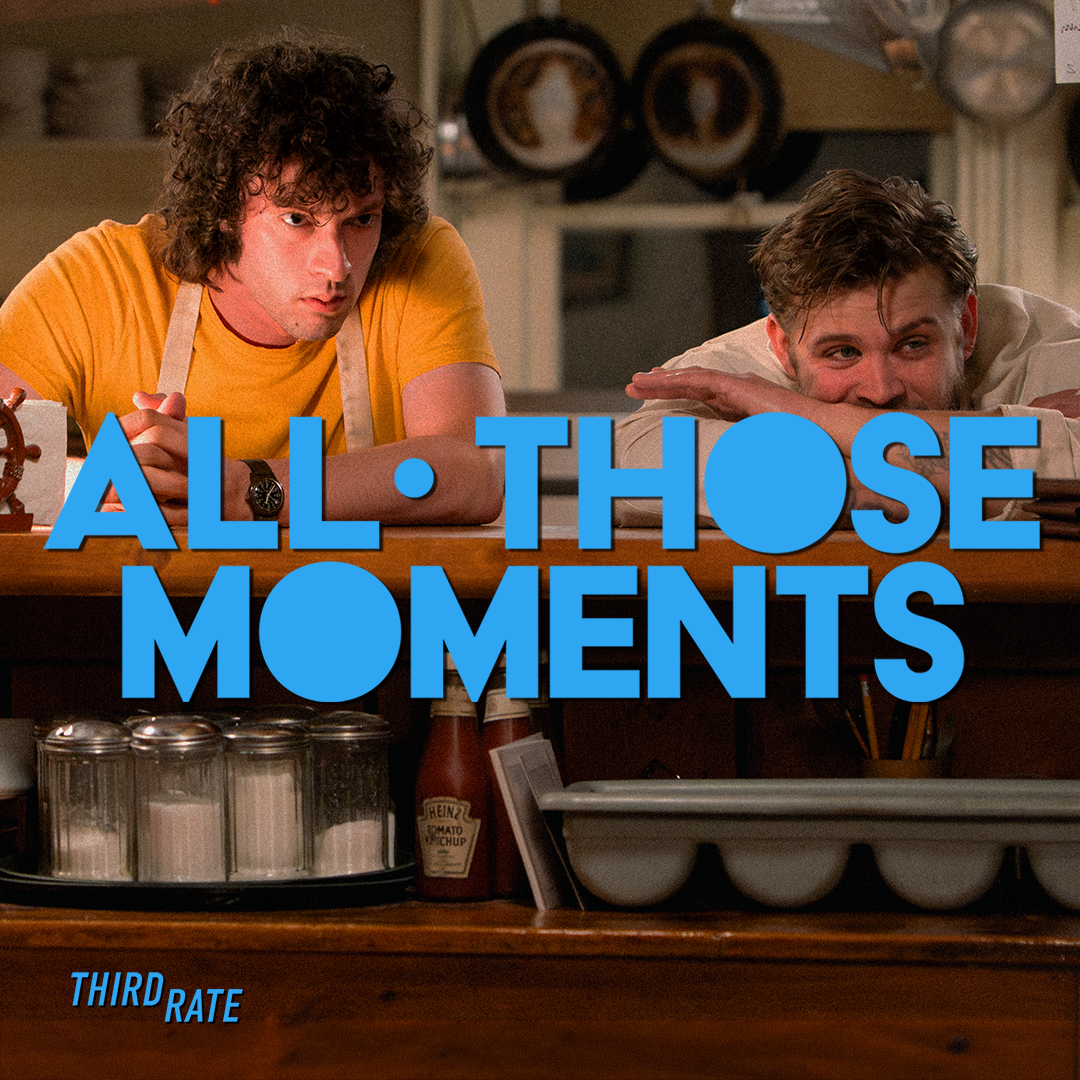
Tony (2026): A Hilarious & Profound Bourdain Origin Story
When we first saw the trailer for Tony, expectations were low. It looked like a biopic-by-numbers movie about “the coming of age of a future celebrity.” Instead, it's a deeply human portrait of a chapter in Bourdain's life constructed with humor, love, and collaborative invention from director Matthew Johnson.
In this episode, we break down Johnson’s evolution as a filmmaker, Dominic Sessa’s performance as a young Anthony Bourdain, and a movie built around self-invention and pathological lying all in the pursuit of finding meaning (and trade and family and purpose). We then discuss Bourdain's many transformations: from wannabe gonzo writer to cook, from liar to embellisher, and the way the movie Tony uses his lying as an entry point into understanding its protagonist.
Next up is a comparison of Tony to BlackBerry (2023), another movie from Johnson that feels less interested in conventional three-act structure than in lining up the hits and dramatizing the hell out of them.
And finally, Benji tells the story of meeting Anthony Bourdain in Livingston, Montana, in 2009 while Bourdain was filming No Reservations.
-
Tony (2026) — Full Episode Transcript
All Those Moments — Benji and Luke in conversation. Automatic transcription, lightly formatted; wording has not been verified against the audio.
When I first saw the trailer for the movie Tony, I will admit to you, I had very low expectations. That trailer did not do it for me. I actually was so worried when I first found out that they were even going to make a movie about Anthony Bourdain, it worried me. But the trailer was cut in a way that I feel like it baited people to come watch that movie that were into things like Ray or Walk the Line or your other kind of The developmental biopic. Biopic by numbers. Yeah.
Like the the coming of age of a future celebrity. Yeah. I had very low expectations, but I ended up absolutely loving this movie. Yeah. I think there's so much more nuance, detail, layers. I want to revisit the movie. Did you watch it twice or just once? Just once. So I will say this though. I love the movie. I think so many risks were taken. There were some pretty bold and I would even call it brave choices, given how much. Of a sacred persona Anthony Bourdain is in the cultural landscape. Okay.
This is so interesting. Yeah. I may have enjoyed BlackBerry even more, which I also watched within the last week. Okay. And I watched it in the last couple of days. Matt Johnson is a real one. I think he's real. He's a legit filmmaker. Yes. I have not seen any of his Nirvana, the band, the movie stuff, which is so weird. People love it. Which is a starting point for so many people. Yeah. but before I go any further, I want to talk about a text you sent me. This morning. Okay. Here it is.
Verbatim. I gotta say, brother, especially after reading Kitchen Confidential, I wish the movie was different. Give me the TLDR before we dive in deep into this movie of what the hell you meant by that. So you're the you're the like Anthony Bourdain super fan. I have like respected him. I like any time I see him on TV, I enjoy the hell out of it. I was coming along on this ride with you because like I know what a big fan of this of the dude you are and like I was excited to see to let you cook.
And so in that context, when we just watched the movie and then I watched I did a road trip recently and I listened to Kitchen Covenant on audiobook. I'm so glad you did, by the way. Well and it was your suggestion and I don't think I would have if I didn't have 1500 miles to cover in like three days. Yeah. and then it was after that.
So I think I'm actually excited to see why you think it or what in what ways you think the movie takes risks because I left the theater feeling like, you know what, that was
Like a pretty competent coming of age story with like the pr like a bit of Anthony Bourdain gloss, right? demigloss even. Yeah. but the as I was reading the or getting through the book and sort of recognizing that that was just a tiny part of his life that they took wild, very wild, wild swings with in terms of just like what happened, then all of a sudden it's like, well, this could have been magic realism, or this could have been something that fully enfleshed.
Or did something truly wacky with the coming of age story where you think it's about a girl, but it actually ends up being about food. Cause that's like sure he comes back to that so many different times where he's like, it was about the debauchery. No, it was about the food. It was about the women. No, it was about the food. Like that's a conceit that goes throughout that entire book. Yeah. And so for me, it's like a and and and parts in some ways his entire life. Yeah. Yeah.
And so for me, it's not like this is kind of me with like taking my critic hat off almost and taking putting my storyteller hat on to be like, how would I have done this differently? And what You know, and I don't have any answers about that, but I that's the thing that I'm interested to discuss today. It's like if we would have gone full Bourdain, maybe we would have done this at a different time in his life. You want to get into it? Yeah, let's get into it. All right, here we go.
The movie is called Tony. This podcast is called All Those Moments. I'm Benji Wade. And I'm Luke Vondgarten.
dude.
I think that the struggle with identity, which is so much about what this movie's about. Yeah. And if and you mentioned magic realism, I kind of think there is some of that in this movie. Because the truth is, not only were wild swings taken with the material in this, there's so much invention. A lot of Anthony Borb Dane's early life and s and in parts his his later life were about kind of self-invention, yeah, you know, and embellishment. Yeah.
Or as Bourdain described a lot of his writing and his appearances on his his many TV shows, hefty amounts of hyperbola, right? So affectation. And affectation. Something that he developed over time. So let me I wanna before we go super ham into the talking about this movie. Like you, I listened to the audiobook of Kitchen Confidential, but I couldn't stop there. Like Bourdain said many times, he's hungry for more. Yeah. I just wanted to listen to everything.
Having Bourdain's voice in my head for thirteen hours set me up in a structural way that I w I wanna to to tee up my next question for you. Okay. So and for my for my part, like I think I'm as a writer, as a guy who's like committed to reading words on a page and putting words on a page. This is one of those places where it's like, listen to the audiobook. Yeah. Cause his voice, there's parts that I think that are that would look Horrendously overwritten on the page. Yeah.
And that would be like a trigger for me. And like a a like a lifetime writer and a like a reluctant editor who's had to, yeah. I've had to unwind so much kerouac and so much Bourdain adjacent bullshit. And honorized Thompson all the time. Yeah. But when you hear him say it with his affect, this is one of the things that I really love about it makes it work. Because he's he's writing the way he actually talks. Yes. And he is a f brilliant. person.
So he can he can sort of stage a sentence and perform a sentence in a way where five like multi-syllabic words don't feel like you're tripping over it on the page because he can just rip through it in that patois of his. And he knows when to lean into or out of a turn of phrase that's gonna be really, really heavy duty. He will downplay, yeah, he'll downplay his own jokes sometimes.
Or the or the SAT words that he reaches for, which comes up in this movie, which I loved is one of the many conceits in this movie that I super love. So anyway, so go Listen, I
I didn't stop at Kitchen Confidential. I was hungry for more. I then listened to a Cook's Tour, which I thought was totally brilliant as well. I want to tee you up with a question based on the fact that I listened to all these audiobooks. 13 hours, right? Yeah. I thought to myself, and watching the trailer did not convince me that this was going to be good.
If they didn't get it right with the casting of a young Anthony Bourdain, and they chose this young actor who I was at the time unfamiliar with, Dominic Sessa, I I was like, I'm gonna shit all over this movie. So Let me just ask you this. What did you think of the performance of Dominic Sessa as a young Anthony Bourdain?
So one of the things that like Bourdain talks a lot about in Kitchen Conferencial from the very beginning is just sort of his naturally being like a bullshit artist and figuring out like when he's in France with his parents as a child, basically them teaching him a lesson about life and him being like, Well, fuck you. I'm gonna do the lesson even harder than you. You know what I mean? Like just w constantly one-upping, even like people who should be mentoring him, just being like.
So you really You do get a sense of him being like way out over his skis when he says something and then getting caught in it and just trying to like backpedal his way through. So like I that like all the like the personality sub the the personality subtext, I guess, or something, was really great to like I to who I know the like the little shit like shit talking little scamp that Bordeaux kinda prided himself on being. You know I can cook too. The kids say he's a cook, Jeff.
I'm actually not a fucking cook, I'm a writer. But I said I know how to cook. I'm sorry. I didn't understand that. Shut the fuck up. Yeah, for me, it was the movie begins, speaking of bullshit artists. It begins with him sitting down before this committee at Vassar College. He's lying there and he's lying later.
And I what I thought though is after just hearing a couple lines delivered by Dominic Sessa, his natural voice and all he had to do is pitch it ever so slightly in whatever direction was necessary to create to me an excellent affect of Bourdain. But it was still kind of like a performance entirely his own, you know. He didn't he didn't have to like he wasn't trying to like swagger around like Bourdain would do and Yeah.
And to jump ahead a little bit to the movie that preceded this, the movie, his first ever performance as an actor at age nineteen was Alexander Payne's The Holdovers, which I just watched the holdovers for the first time last night. And apparently Alexander Payne told Sessa when he was casting him, ninety percent of the role when you are cast is just you.
You just have to tweak that kind of remaining 10% to to twist yourself into the role that you're playing. So it's like the casting director and the director's job to find the person who like most closely embodies that director on the page. That's it. And then you've got 10% of your work to do. It also strikes me as like something that'd be really smart for a for a director to say to a young actor, right? It's really good advice, direction, and like especially as a young actor. Yeah.
Where you might be tempted to do the Daniel Day Lewis, Jeremy Strong, 9010, the other direction thing. Yeah, it's like slow down. Okay, Luke, we're gonna talk all about what we thought about Matt Johnson's semi-biopic about Anthony Bourdain. We're gonna talk about the role of self-invention and embellishment and mythology and imposter syndrome. We're gonna talk about Anthony Bourdain and the influence he did or didn't have on the two of us.
But before we dive in on the movie, what was your first ever experience of Anthony Bourdain? I don't know this, so we're gonna do this in real time. It was probably an episode of no reservations. It wasn't kitchen confidential or anything like that. Whenever it was, it was when he was like world traveler. Yeah. Like travelog and not as a like hardcore chef. Like Yeah, for I mean, did you see Top Chef with him when he was on it? No, I had no idea he was even on top. yeah.
Especially the early seasons. That was my first ever experience of Anthony Bourdain. And whatever. Okay, so I might have seen him on that show, but I don't think I knew who he was at the time. So I have no recollection of it. There was this one particular episode where some dude came on, one of the contestants, and he was like a like a poor kid from the South, and really was in over his head by being on Top Chef. Yeah. Like one of the least experienced or probably least.
Qualified in like the culinary arts, right? Yeah. And Bourdain was so cool to him. Yeah. He and it was like one of those things where I would say that a lot of what would characterize Bourdain is his empathy for struggle and his empathy for the vulnerable. So he never punched down. I wouldn't even say he punched sideways. Anytime he was going after someone, it's you could probably assume that it was somebody with power, clout, prestige.
Which is all the things that he weirdly kind of hated about his own upbringing. Yeah. He even said it w in one of his books, like the biggest sin of my parents is that they loved me and that they'd think that might be a good and that I had a comfortable upbringing. Yeah. He was one of those kids that just looked around and went, I need to find meaning elsewhere because something about the banality and of of his life in as a teenager in the early 70s.
Now, what I really want to get into at some point here is Is the corollary between the fact that Bourdain was 15 in 1971, during which are the events captured in the movie The Holdovers with Dominic Sessa, and the character that Dominic Sessa plays in the Holdovers is 17 in 1971. And it's it's interesting to me that if I'm Matt Johnson and I had seen the holdovers, that's of course gonna be the first person I would have thought of to cast in the role of a young Tony Bourdain.
I met Anthony Bourdain. In two thousand nine, while he was filming season five, episode seventeen of no reservation in Livingston, Montana. I'm gonna save that story for the end of the episode. That's the episode I just watched last night. You watched it. I'm so I'm so glad you did, by the way.
I actually watched parts of a couple episodes because the next episode after that, he goes to his second wife's home of Sardinia, which is a place I've been, and I was just just curious as hell to figure out what like what he saw in Sardinia. Yeah. The early aughts or mid aughts, like some of the documentary techniques they were using.
They were cu clearly using a lot of digital cameras and they were using, I don't know, there was just stuff where it was like, that looks like a bad render from a fucking video card. Is that an intentional choice you made? Yeah.
So just like the the grappling that the the creators of that show were doing with like the emergence of digital technology, which probably made it possible to do that kind of a show inexpensively enough that somebody like Anthony Bourdain and not somebody like, you know, Emerald Legossi could be the host of it or whatever. Also just made it kind of a tough hang in 2026 to be like, I kind of wanted like the remaster of it. Yeah, totally.
Can we just like take these like really jank transitions and stuff or like just extremely like almost 90s throwback? Dude, Nov Res Nove Reservations is super crude. Shot on mini DV.
Let's start talking about the movie itself. Luke, do you wanna give me the log line for Tony? In the summer of nineteen seventy-five, nineteen year old Tony Bourdain arrives in Provincetown, Massachusetts, directionless and aspiring to be a writer. After taking a job washing dishes in a local restaurant, he becomes fascinated by the chaotic, profane, and intensely communal world of professional kitchens, beginning the transformation from Tony Bourdain into Anthony Bourdain. Who made this, Benji?
It was made by Matt Johnson as director, co-writer, producer. This is actually his fourth feature length movie. He made the dirties, Operation, Avalanche, and Blackberry. I watched Blackberry last week in preparation for this. Incredible movie. I almost described Blackberry as kind of proudly wearing a little bit of a veneer of like Saturday night live wardrobe and set design. Yeah. Do you know what I mean? Like the the d the the engineer guy who becomes like the Steve Jobs character at the end.
Yeah. Like that hair of his in the third act of the film is has it totally s and l It's it's hysteric it's ridiculous it felt like it had to be a meta commentary on how fake tech shit is. Yeah. You know, just 'cause it's like that's you can find a better wick than that or whatever. Yeah. What what's with this apple thing? What what what about it? Are we worried? Okay, why? Because one of them uses as much data as five thousand Blackberries because it has no keyboard, because the thing is a joke.
But what you do see in Blackberry that you see much more of in Tony as well is just incredible scene construction. Yeah. Like whether you're using improv as the kind of DNA for putting actors in a room and having them do things, or you have a pretty tightly written script like he had with Tony, yeah, the results end up being the same. He creates a vibe and an atmosphere. I didn't I don't think I realized that.
Blackberry was largely improv. Yeah, a lot of it. But it's and that's kind of his go-to. But you can kind of see this trajectory. Like what the way I would describe Blackberry and being the most similar to Tony is that he is at his best when he's not being overly structural. He's not trying to follow three acts. He's not trying to do too many clever bookends and stuff like that.
You know what's really funny is it's like you're being set on a roller coaster and you just get pushed when you're in one of these Matt Johnson movies, of the two that I've seen. And Sometimes it's disorienting. Yep. Like especially in Blackberry. I was like, wait, did two years just pass? But it didn't matter because there's so much propellant that keeps you going from one scene to the next because he just lines up the hits and then the movie's over.
And I was like, I was so in on the way that Blackberry, that story was told. If the story were about solving the engineering problem, it would have been like less interesting and not as character driven and I would have been less interested. Well, and even when there was like an engineering thing, he's still just playing the hits. It's just the highlights.
It's like you literally you grab the Wikipedia page, you grab all the big moments and you go, let's grab that moment and dramatize the fuck out of it. And then also hefty dose of hyperbola, of embellishment, of flat out invention. I mean, one of the things that we're gonna talk a lot about is how much Matt Johnson talks about early in his life, especially he's just he was a liar to get anywhere he was getting in his life. And well and and Z Bourdain did the same. Tot yeah.
And that movie, that that character that's played by Glenn Howerton, Jim is the name of the character, the guy that ends up having 50% of the company and with Mike, and I can't remember Mike's Mike Lazaretus, I think is the name of the guy. Mike Lazaretus. The guy you're describing, played by Jay Jay Barroushell. Jay Barrochell in that movie as Mike, I did not know that guy could act like that. Yeah. Holy crap. And Glenn Howerton for that matter. Yeah.
Glenn Howarton was like He always kind of plays a dick and I that's why I like him as a character, but he's just off the rails in this. And that's a like a level I didn't think he could hit, or I didn't I'd never seen him hit before. And when he hit, I was like, wow, yeah, this is great. my God. And and so much invention because the real life guy, Jim, whatever his last name is, apparently was like, Yeah, five percent of that was real, but I don't care because it was such a great movie.
He's like, that's not how I acted.
That's so funny. Which is such a typical Canadian's response. Yeah. You know? Yeah. You you libeled me, you slandered me on screen, but it's fun. Yeah, but it's but I but I loved it. We're both Canadian. Okay. Tony was shot by cinematographer Michael Bauman. You may have heard of him. He shot this little movie called One Battle After Another. He was also known for extensive camera and lighting work on Paul Thomas Anderson's movies Phantom Thread and Licorice Pizza.
Licorice Pizza has a lot of shared DNA. With Tony. Insofar as it's just like it's also just like a movie about the 70s, too. Not only that, but also coming of age and the way it was shot, some of the choices that Baumann made. Tony was edited by Kurt Lobb and Robert Upchurch, who are both longtime collaborators of Matt Johnson, along with Jay McCarroll, the composer who did the score. The production design was done by Ryan Warren Smith.
And I want to talk a lot about Ryan Warren Smith's work on this because guess what else? He was production designer for the holdovers. If I was impressed by what I saw in Tony with not being familiar with Ryan Warren Smith's work before that, my God, the holdovers goes even further. Maybe it's because it was Alexander Payne, maybe they had a little bit more money for that, but the recreations of the city of Boston in nineteen seventy, yeah, in the movie The Holdovers were incredible.
Reminding me a little bit of legendary production designer Jack Fisk, who did Marty Supreme and the recreation of nineteen forties, fifties, forties. Yeah, New York City. All right, let's talk about the cast. We've talked about Dominic Sessa as Anthony Bourdain. Introduced in the holdovers. It was his first ever acting role, and he was only nineteen years old when they filmed that. That's incredible.
Antonio Banderas plays, I'm gonna say he plays Chef Cero, but then I looked it up and apparently they gave him a pseudonym of Jose Vatel. They made him a Brazilian or Portuguese descent character. Amelia Jones plays Nancy, and I only knew Amelia Jones from the movie Coda. The entire ensemble is great in this, which we'll get into. Leo Woodall plays the character Sal. God, I love Leo Woodall, man. We we have to pump the brakes and talk about Leo Woodall. Ugh. All right.
So first thing I ever saw him in was the White Lotus, season three.
Okay. So I already liked season two. Sorry. I liked him a little bit already before that character, because that character's insufferable. I will confess, Ray and I watched White Loto season two, and that character's so gross that I didn't like him as an actor. Uh-huh. Exactly. I held it against him so much so that when I then saw one day, and it's important for him in that role in one day to actually be charismatic, to be good looking, to be believable in both of those aspects.
And I Ray and I both looked at each other and went, my God, it's the White Lotus dude. I don't know if I'm gonna be able to do this. Within one or two episodes, I was like, wait a minute. Is Leo Woodall not only an amazing actor, but also completely hot? And I was like, Yeah, that dude's great. And he's so fucking charming in that in that TV show. I'm not gonna spoil anything about that TV show except for bring a fucking crate of Kleenex to watch it. I will.
I'm like a zero, I don't even know what the Kinsey scale is, but I'm like a zero on the Kinsey scale. Leo Woodall could get me to do anything he wanted me to do. Like he's the most push me to at least a three or a four. Seriously. so my the first thing I watched, and which is why it was I would have probably had exactly the same reaction you did if my introduction was White Lotus.
I had watched him in the Apple TV show Prime Target, where he plays like a really mousy like mathematician who basically discovers it's it's some sort of I think it's like a in An encryption protocol that he sort of discovers. And then I think the next thing I saw him in was tuner. Yeah. Yeah, of course. We were gonna do we were gonna do an episode on tuner. We saw it together. No, it was just Ray and I. Yeah. I loved it. I had qualms about it, but his performance was off the charts.
Was off the charts. And what I would say about Woodall, as far as what I think works so effectively with him, I mean there's many things, his physicality, his charm, his timing. His how he can go from pathos to humor really, really quickly is his eyes. Yep. How can you do your work without your hearing aids? It's not about hearing, it's about a feeling. pardon me. I almost forgot. It's about feeling. It's it's all about feeling. Yes. Feeling. Feeling. Feeling. You need your hearing aids.
Let me see the safe. Every actor, of course, has to have good control over their eyes, but it's the way he's got, of course, he's got these big blue
Eyes, but he also has this ability. He's often downcast, and then he'll he'll use his eyes to look up at people. And then when he does lock in for any period of time, it's just like almost like, okay, whoa. Yeah. The tractor beeps out. And for me, it was like with that character. So with the with the White Lotus character, it was unclear, like it was there was no remorse behind his no. With this character, he's kind of actually playing the same kind of asshole.
But he knows like there's some part of him that's like, yeah, God, the world owes me something. But I also know that in order to get what I feel like I'm owed, I have to treat people like shit to do it. Like, and he still did it because he kind of had impulse control problems. Yeah. But he's like there was the remorse behind the eyes, even as there was like like this the remorse was slightly behind the like I'm gonna fuck over everybody in my life. Stavros Halkeyus, aka Stabby, is in this movie.
I first knew Stabby from Come Town with Nick Mullen and Adam Friedman, of course. Dagmer Deminzik plays Gladys and Rich Summer plays Pierre, the parents of Anthony Bourdain in this movie. I first saw Dagmer Deminzik in the County Monte Cristo, and then she played a lawyer in succession. Yeah, I know her from Succession. and that's basically what I know her from, I think. I don't I don't even think I recognized her. So You gotta see County Monte Cristo if you haven't seen Okay.
Jim Cavizel before he was publicly such a weird dude. before his literal Christ turn. Yes, dude. great, great movie. she's great in succession. Rich Summers, Pierre, was from Mad Men. You probably remember from that. No, dude. Rich Summers, I love him as a character actor. Yeah. And I was stumbling a little bit at first, going, Rich Summers not old enough to be the dad of this character. Absolutely to be. He's totally old enough. He's like 48 years old.
You know, I know Anthony Bourdain's actual father had a different job or whatever, but like you could totally see like an advertising executive a la, the person he played. And actually literally the exact character he played in Mad Men, because he was kind of the one character in Mad Men that like didn't screw around on his wife and stuff. Yeah. And the real life Pierre Bourdain was a record executive. Yeah. So I mean Columbia records. Maybe it's like not that different. Yeah.
And I think this is where like one like one small criticism of the movie is like, maybe if I would have realized how privileged Tony's upbringing was, it would have made me feel less bad for the parents.
In Tony. I see what you mean. If you had listened to Kitchen Confidential before watching the movie. And maybe if there's a little bit of that in the actual movie, I see what you mean. Because like there was a time where it's like I was a first generation college student and like a lot of my friends had the like who also came from like poor upbringings, contrary to Anthony Bourdain, had the fucking Anthony Bourdain like chip on their shoulder.
So I was going through this being like, how's this kid just like walking onto Vassar? In the 70s. I was like literally thinking about how did financial aid work back then? Because I didn't know. Like if I would have realized that this was a like an upper middle thing, that he his family had the means. It would it might it would have actually changed some aspect of that relationship. So that's one piece that I was like missing that I wish we would have had in this movie.
I agree because the portrait of his parents in this is really limited. It's not like they get a ton of screen time, but the in the in those moments, you do get that sense that yeah, the his father, Pierre, was very encouraging. of and and gentle toward him, whereas his mom was very astute, smart, had a lot of the observational wit and humor and all that kind of stuff because she's a killer. Yeah, she she's a killer. She clotheslines Tony a few times. When he's being a pretentious douchebag. Yeah.
Yeah. It's really funny, man.
Right, those are the players. Let's talk about the world that they occupy, where this sits in this movie sits in the real life of Anthony Bourdain. I'm gonna do this quickly. 1956, Anthony Bourdain's born. He grew up traveling to France with his family and develops a love of food long before it becomes a career. He graduated from high school in 1973 and followed Nancy Poutkoski, his high school girlfriend, to Vassar College. He attends Vassar for two years.
I'm going to go through this really quickly. And these are the things that are the actual events of Anthony Bourdain's Bourdain's life, which we'll talk about all the differences and the choices that were made with the telling of the story in Tony. He spent three formative summers in Provincetown as a teenager working in restaurants and discovering professional kitchen life.
The two restaurants he worked at, this is one of the many times we'll probably talk about differences of the true story of Anthony Bourdain. One was called The Flagship. The other was called Ciro and Sales. He created pseudonyms for these restaurants in his book, Kitchen Confidential. He called and he created pseudonyms for tons of people as well. Cause he kind of wanted to protect their. I mean, some of the things he's describing, Kitchen Confidential, are quite illegal.
So and it turns out Ciro and Sal's is still operating in 2026. So keep that in mind. that's the book, that's the place he turned to Mario's in the book. He turned The flagship into the dreadnought, which is a better name for a restaurant. Like honestly, I would have opened a restaurant called the fucking dreadnought. Yeah, exactly. That's a great name.
And he turned Ciro and Sal's a real life restaurant, which you can still look at their website right now and go make reservations, is called was called Mario's. so that was the kind of composite that he created for that Matt Johnson created for this story. he compressed those summers that Bourdain spent in Provincetown into just one summer, which totally makes sense for storytelling. Nancy is not an invention of the film. She and Bourdain actually planned the province town trip together.
She really worked at the actual Spiritus Pizza, which exists today as well. And she's his first wife. And she's his first wife, which is a whole topic. The film changes the setup so Tony impulsively follows her there, and then necessarily it invents and compresses much of their interaction. Yeah. for the purposes of telling this story.
Important source material wrinkle. Bourdain kept Nancy unusually private in all of his dealings. He was married. I'm just going to get this out of the way now. Sure. They got married. So the character of Nancy in this movie and Anthony Bourdain got married in 1985, which is many years after the events captured in this movie. but they were married for 20 years until 2005. Yeah.
She is barely discussed in Kitchen Confidential, despite being a central to very central to his life during that time period. I mean, he cooked for nearly two decades in New York City. A cook's tour, his second book was dedicated to her, and it opens with a dear Nancy letter. Matt Johnson described Nancy as the big question mark in his researching this time period. Interesting.
Deliberately deliberately did not contact her or the estate, but he said that Bourdain seemed to keep her a bit of a secret. Nancy was very private and she preferred not to have anything to do with. The celebrity turn that he took that resulted from the success of Kitchen Confidential and later his TV shows. And I think it ultimately led to their breakup. Sure. which is super heartbreaking.
Later in his life, he described that as the great betrayal of his life. is the the separation from Nancy. he leaves Vassar for the Culinary Institute of America and graduated from that in 1978. He spent more than two decades working in New New York restaurants in kitchens. eventually becoming executive chef at Leal and he published two crime novels before his nineteen ninety nine New Yorker essay, which the essay that led to Kitchen Confidential.
After Kitch Kitchen Confidential s Anthony Bourdain's life blew up. He then wrote the book A Cook's Tour, which became a television show television show, and then had many seasons of no reservations, parts unknown, and had this unexpected second career as a writer, a traveler and a cultural figure. Yep. And died in 2018 at the age 61.
Okay, so Kitchen Confidential is obviously the foundational text for the movie Tony. and it it kind of focuses on Bourdain's tendency to embellish stories that complicate the idea of accuracy. So I went into this, especially having listened to Kitchen Confidential before we watched the movie, of just going, This is totally fine because the truth is so much.
Of his early life as he described his early life was a lot of self-invention, self-mythologizing, and just kind of faking his way into the circumstances he wanted to find for himself, to find meaning, to find purpose, to find a tribe. And I thought if Bourdain mythologist mythologized his own life, what exactly does historical fidelity mean in a movie that's being told about him?
And I think that's what made me feel so much better during and after watching the movie Tony is that nobody needs another fucking Ray. Or walk the line. No. In retrospect, I have some affinity for those movies, but I don't ever want to watch them again. I want the subjectivity of the filmmaker. I don't even care if they use someone else's story to as an excuse to tell to tell a story about themselves. So that's how Matt Johnson was originally pitched the idea of an Anthony Bourdain biopic.
Tell about the pitch, because this is curious. He turned it down because he didn't find that version of particularly personally personally interesting. So when somebody pitched the idea of him doing the biopic, he was just like, I don't know anything about him. I he wasn't not, he was admittedly not a Bourdain person, wasn't that familiar. but then it changed when he met Dominic Sessa and they went out and chatted a little bit about it.
And the way that they both approached the materials, they they said they basically co-conspired to find the portions of Bourdain's life that resonated with them both personally. that's interesting. Yeah. And so that process led them to toward the Provincetown Summers in particular, rather than the very famous Bourdain years. Sure. and their approach was to use that chapter of his life to explore things about themselves while telling the story.
So with that, let's take a quick break and then we're gonna talk all about our favorite moments from the movie.
Okay, let's try winging a non-spoilered description of the movie. The movie Tony is told about, I'll just describe it as a pathological liar. It begins with him at Vassar College, being interviewed for a prestigious fellowship. He doesn't get it, but he not only lies to his family that he got it, but he lies to everyone when he ends up in Provincetown following this his muse, the object of his affection, is character of Nancy. Yep.
And he uses that as like that's that's our entry point of like how is the character going to be explored and it's that he's lying about things.
Well and from my from my per perspective, as a guy who ended up being kind of an English major the way Anthony Bourdain was starting to be, like what I also saw in where he was lying to the fellowship committee about the book, he pretended to have been thinking about for a long time, but s the way that the scene goes and the way that like Anthony Bourdain talks about himself in Kitchen Up and Edgeal. He's like making it up on the spot.
So he talked about like the role, like, yeah, I want to type it out on a single roll of paper. Like that's what Jack Kerouac did when Jack, you know, like that famously, like there was like I actually think like a lot of this, what is so brilliant about this when I like sort of put myself in the the shoes of like being a 20-something aspiring artist who doesn't have shit to say about anything yet, but really wanting to be Jack Kerouac, you sort of like put on the vestments of process.
Thinking that that's a worldview. You know what I mean? So it's like, I'm gonna type it out on one big string because that's what made Kerouac important. No, Kerowak was a fucking weirdo in a million different ways. And he went, and he also Karowak went and did shit. Well, that's so it's like, and that's the part that like really resonates with me as a like an aspiring fiction writer in my early 20s, being like, Yeah, being like, okay, what am I gonna write a story about?
I haven't done anything yet. I haven't done anything. Yeah. So that that stuff all rang incredibly true to me. And if I would have been like a little ballsier, I probably would have been lying to fellowship committees like he was. Just to be like, I know I can fucking figure this out if you just give me an opportunity.
Which is another reason that like why I think like he was, I would have benefited from knowing he was more upper middle class because that's a thing that I think poor kids do in my in my worldview. And actually, you're one of these poor kids, Benji. Like you talked your way into a video game store in your twenties.
I talked my way into a any number of things that I had no business starting in my twenties. It's like that was that felt very real to me. And that's another I wish Johnson and like the screen other screenwriters would have given me just like a little bit more to know that this is gonna feel a lot like it's a poor kid coming of age story. It's actually a rich kid coming of age story, and we can add some texture to that. dude.
It's like the classic platitude that necessity is the mother of invention. Right. It's like this kid ha wants to be these things, but it turns out he had to go through 20 years of really hell. Just getting the shit kicked out of him. God, because the restaurant industry, without even getting into that, I can't even imagine how I just find it intensely as an O C D person. Like the last place in the world I'd ever want to apply a trade is a kitchen. Dude, okay.
If you think you're gonna start a restaurant. Go read Kitchen Confidential. Better yet, do the audiobook. So Anthony Bourdain can tell you the many reasons that that's a bad idea. Yeah. Just don't get into the restaurant industry. yeah. So I really like that framing. It starts with it's like that's it bookends the idea that he wants to be a literary figure. And then it's just basically goes from scene to scene, setting him down the tracks of, well, first you gotta go live some shit, my man.
And that's what the, that's what the The structure is of the storytelling in the movie. It's just again kind of like Blackberry. It's a highlight reel. Each scene just keeps coming one after the other, one banger after the other, because the truth is, you didn't stop laughing. I didn't stop laughing until basically the final credits. very minimal structure. The only structure that I can remember from it.
And by structure, I just kind of mean, you know, your classic beginning, middle, end, act, structure, et cetera, is really just a bookend and it's kind of lame. If I'm being honest, they use the word Providence. yeah, yeah, yeah. Early on when he's flirting with Nancy in a bar. I think it's misunderstanding because she he thinks she he must think she says Providence Town, not Provincetown. Yes. Yeah. It's very fun.
It's like, you're not going to Rhode Island, dude. there's a town on the end of it. But yeah, everything about this movie, I think, shows off incredible scene construction and timing. You just take these characters.
That are really good proxies for the real life person that they're portraying. There's a character that comes up constantly in Kitchen Confidential from this time period. His name is Dimitri. So, what effectively Matt Johnson did with the character of Sal, which is Leah Woodall's character, is he took the real life person, Sal, probably. He took the real life character Dimitri.
He took the real life character of Sal Adam Last Name Unknown and Stephen Temple. and he combined them all kind of lots of different things about those characters into one character. Interesting. Without getting into the details, there's a clam bake at the end that I feel like was an attempt to take real life things that happened with this character, Dimitri, who worked at the flagship with Anthony Bourdain in real life. And they ran all over Provincetown.
Doing these hoity-toity dinners that catered dinners for people, some of which were big successes, some of which were catastrophic failures. Yeah. and they kind of use that concept for the ending of this movie in a way that just felt and in the at the end of the movie, it's like these clam bakes. The Leo Woodall character wants to use this clam bake that they're going to do on the on the beach to basically just like make a bunch of money and then get skip town. Yeah.
And the flagship, which is the name of The restaurant in the movie that's, I guess, probably the flagship and Mario's combined into one, has just burned. And so there's like a philanthrop, there's a potential philanthropic angle of like helping Antonio Banderas' character get his restaurant back. and I think, yeah, this is where I think I That didn't work for me. It didn't work for me either. It it was a little too pat.
And I think this is where like, and again, this is this would be the way I write the script. So it's like a meta criticism. It's like, what if everything were the exact same, except It's a little truer to life. Like he already is Nancy's boyfriend. Then what how would that have changed that like relationship that they go to Provincetown together? Maybe he still lies about having a fellowship just to get up there. And then he has to get a job.
And then toward the end, he's the choice he's making, and then the choice Nancy would then have to make is like, well, actually, you what? I have two loves. I love Nancy, but I also fucking love food. And maybe food is gonna be the thing that dictates my life, and Nancy's just gonna have to be okay with that. And then
She chooses him at the end rather than him choosing food, then that to me is like that's a perfect fucking movie. And a and a more true to the Bourdain experience movie. I completely agree. And in fact, I think that the clam bake, which I'll describe, and this is my shorthand joke to make fun of these conceits and movies, is it felt a little ABC after school special. Yep. Because I'm old, I'm Gen X. So if you don't know what that is, it's a thing that was from the nineteen eighties.
And it just didn't it felt completely out of tune. Not just with not just with the real life of Anthony Bourdain, but also the movie that we had just watched. Yep. It didn't feel like Matt Johnson had. We're already spoiling the movie. Sorry, we can't help ourselves.
It it felt like he kind of lost the ability to thread those two narratives together because it's where the movie to that point, the story's the story tells you about how Nancy's there as this background character who was very private in real life, but has this kind of a very, very critical role. To not just this movie, but to the real life Anthony Bourdain.
And there was there was a either a clumsy or a a non-existent attempt to keep those things threaded together at the end of this movie with this clamp big thing. And let me tell you, brother, my experience as I was thinking on my college experience, there were a lot of female classmates of mine who were hanging on to shiftless but brilliant dudes, trying like hoping against hope they were gonna get their fucking life together. Yeah. And they then some of them did and some of them didn't.
So like that. That sort of a mentality would have been totally at home here where Nancy's like, you know, like I'm the one who's got the job coming up here to Provincetown. He said he had a fucking fellowship, but it was a lie. It's like if you're gonna invent, like go a little further, you know? Yeah. but it's also just like it's a mild criticism because there's the the movie on its own works really, really well.
And I think it's like when movies are like 80% of perfection, that's when my like, how would I have edited this? Like that's where my editor brain comes in. And like, God, if I was giving this script notes, what would I have suggested? It's interesting because I think the the thing we're describing about the ending of this movie is something that could have cratered it, but it didn't. It it was like it's fine. It was a little bit of a disappointing end for me.
I'm gonna come back to the end and the editing, but I first want to talk about the two moments from the movie Tony that I think work by far the most effectively. Cool. Hit me.
Early on and this is just a I I think kind of a quintessential example of many from the movie Tony. But when he first arrives in Provincetown in the movie Tony, he goes into the flagship just as a patron, as this young, like he's supposed to be, I think he's actually not even supposed to be 18 years old yet. He's in the the flagship, he's flirting with the bartender whose name is Mary. Mm-hmm. And he's talking some of his shit. And just getting eaten alive and he doesn't even realize.
Doesn't even realize it. Self-aggrandizing, he's flirty, he's taking down oysters and talking about his experiences in France. And and that actually that piece does did felt feel like a five minute introduction to what is like the first, I don't know, couple chapters of Kitchen Confidential. Whatever. And so like that to me felt perfect. It was perfect. And at one point, the character Mary is just like, all right, kid. Get out here. Go home. You've had too much to drink.
And he starts to flirt with her and ask kind of asks her out. He hits on her. And at one point she turns around to ignore him and he grabs her. Yeah. And he's a very handsy character in this movie. He has another handsy moment later with Nancy. Did you clock that too? I think so. He grabbed her hand at one point too, which is I'm I'm like kind of curious where that choice came from. 2026 could never. 2026 could never. And the Mary character is like, all right, that's it.
She goes and tells the cooking staff at the The flagship, what's going on. I think the character Sal punches him out and throws him out of the bar. Yeah, because he, I mean, he ends up like in the gut, literally in the gutter with his head on the curb. Yes. And he wakes up that way. Well, and at one point, and this is when somebody no, then like, no, then Sal rifles his wallet too. Okay. Yeah, I'm coming to that. So at one point he mentions in this he does mention this in the book.
And in the movie, he's got a a Bruce Lee, I can't remember which Bruce Lee movie it is, a movie poster. And he said he carried nunchucks around as a teenager. Well, no, he actually said nunchucks and a katana sword. So like this is a this is a point where I have to credit the filmmakers for not going all the way to real life. Cause him carrying around nunchucks was a sight gag in this movie. Totally. If he would have carried around a katana, it might have broke I might have like been totally out.
I'd be like, there's no way.
somebody was acting the way Anthony Bourdain apparently did in real life. Well, we all we have the disadvantage of having only seen this once, but he does it he at least brandishes, if not pulls them out when he's confronted by the the cooking staff. The thing about that that was so funny to was Dominic Sasso weighs a hundred and twenty pounds soaking wet. He's granny. Those nunchucks that he would like kind of brandish were like the diameter of his wrist. Totally.
It's like it he looks like a boy when he is They're poking out of his pants. So he gets handsy with a bartender. He gets thrown out. The cooks beat him up. I think it's Sal who punches him out, throws him out. And then pulls his wallet. He ends up lying in a ditch. Sal comes over and steals his wallet. And the Sal character, I think out of frame, says, Looks like someone robbed him. Yep. That was probably my biggest laugh of the movie. Yeah. And it was early on.
And this is another like this is the other thing we haven't talked about. Like Woodall is a really pretty good comedic actor, too. He's funny. Yeah. He kinda dude, he's super fine. Like I said, man, I've got a massive crush on that guy. Yeah, so charming.
Okay. This movie's a lot about we've we've already talked about this and established this. It's about embellishment, mythmaking, self-invention, but it starts with flat out lying. the character of Tony in this movie is very much aligned with another character we talked about from last year's crop movie. It just tells me that he's like a born storyteller. Cause like this is this is what fabulists do. Like this is what storytellers do. They make shit up. Yeah.
It's like you can close your eyes and picture that you're at a bar with him listening to one of these stories or all of these stories. Totally. Right. And like And he writes the way he thinks, which means he writes the way he speaks. And he's a very eloquent and he's great off the cuff, which probably honestly, and this is why it's like great to have a stavy doing that character of like somebody who's done crowd work.
Cause it really seems like those kitchens that he's describing were like non-stop circular like a circle it was like a circular firing squad of crowd work. And that's just like a really fun. In when it doesn't, when it's not toxic and when it's not like fucking picking on people, you know, like when it's not bullying, it can be a really fun environment of like kind of like shit talking mutual respect that for me shows up in newsrooms a lot, especially earlier in my career.
That's how it felt at the All Weekly I worked at. And I think there's so much happening with the way that Matt Johnson told this story that shares similar traits. Yeah. There is a lot of invention. And I think that's what I meant when I said that there's a lot of risk and a lot of bravery to the way that he went about this. Knowing how sacred Anthony Bourdain is to millions and millions of people worldwide. Yeah. To tell the story like he did was super to me is really risky. Yeah.
Like he's inventing tons of things. He's combining, you know, four different characters into the character of Sal, played by Leo Woodall. And that's just one example. Many of these characters are kind of composites that way. He's doing the same things that Bourdain did. And I mean that in the most flattering way possible. He's taking many of the fabrications and embellishments of Anthony Bourdain and using him during those, using them to describe those provincetown years.
Can I go one level deeper on you? Yeah. I think it also is sort of a testament to the beauty of preparing food. Like, think about this. This is like, and and actually it ties to Blackberry too. Like it's like an open like recipes or how like food construction. Like he talks in
Kitchen confidential so much about all of the book, all the cookbooks he uses to refer to whatever. It's like that's kind of like what was going on with BlackBerry and like open source software and stuff too. Where it's like you have a recipe and then you a chef makes it their own. Right. So in some ways, the filmmakers here are doing like exactly what Tony Bourdain did for 20 years making foods.
He's like beef organ, he talks about how you know him putting his own spin on like what's one of the most classic. French dishes. He talks about like having to learn how to cook Italian style, because he was only, you know, ever really instructed in French techniques. But then then the second phase of that being like good enough at cooking, like cooking to the recipe to then embellish and make a dish his own, right?
So it feels very much like that's also in one way the filmmakers are paying homage to Anthony Bourdain is by adding their own twist to it, right? Because like that's what a good chef would do. It would take beef bourguignon and be like, here's the Anthony Bourdain version of. Well, and making food, making a great meal is communal. Yes. It touches twenty to thirty hands, if not more, before somebody's sitting down to a plate and a dish, right? Movies are the same way. Yeah.
And that's one of the things that's one of the hundred people making a movie. And Matt Johnson talked about how he approached this super flat and that if anybody came and watched him making this movie, they would have guessed that he was the assistant to everyone else on set. Including actors, because he's just constantly on receive and scanning for input to people's comfort levels, to like what's going on here. so I I I love the the through line between making food and making movies.
It's very similar. Beautiful. The filmmaking is a communal art form. Yep. I say all this to set up the the sort of distillation of the embellishment and the lying that Tony is doing in this movie. It's the greatest scene from the movie. He has Lied to Nancy about his purpose for being in Provincetown. It's not just the lie about winning the fellowship.
He also lies and says he's writing a book. we're about halfway through the movie and they're reconnecting, and she says to him, So how's your book? And he dives right in on more lies as they're walking around Provincetown together. He says, Every day is pretty much the same. Wake up in the morning, sound alarm clock, make a cup of coffee. I immediately sit down at the typewriter.
Try to write as much as I can into my answer, which is usually around lunchtime. Then I walk to this little restaurant where they make this squid stew that I've become completely addicted to. He then rattles off one lie after another while the audience is seeing the truth of his experiences that summer, everything contradicted by what he's telling Nancy. Yep. Says, I try to imagine interesting places I'll probably never go, people I'll probably never meet. It is a stunning moment that.
Almost starts to look like the way an episode, god, this is like heartbreaking to even think about, of no reservations or parts unknown might be assembled. It was hard not to think about the collision between the movie Tony and Bourdain, the gifted writer Bourdain and the unforgettable TV show host Bourdain. And it it made me cry in the movie theater because you're seeing him walk around talking to Nancy, and then you're seeing all the second unit stuff around Provincetown from that time period.
And you're thinking, my God, this looks like an episode to your point. You want to go back and see those janky no reservations episodes shot with mini DV. Well, this section and this particular moment in this movie looks like that. It's shot beautifully by Michael Bauman instead of some dude with a like Canon XL one or whatever. And Nancy says, So you don't get out much. And Tony ends the scene by saying, No. I try to imagine interesting places I'll probably never go.
Well I'll probably never meet.
No and just sit at the typewriter. So you don't get out much? No, barely leave the house.
I barely leave the house. I know, dude. That's and you're thinking so much in this moment about the real life Bourdain, who very much struggled with his celebrity. Yeah. He would go on these long trips overseas to all these wonderful places, the places that his character in this movie is talking about. I try to imagine interesting places I'll probably never go, people I'll probably never meet. Anthony Bourdain went fucking everywhere on planet Earth and he met everyone.
He sat in a bar in I think Vietnam with Barack Obama and ate a meal and drank a beer. And I think that's honestly true to like at least my experience of being a storyteller or like an aspiring writer at that age. It was like, well, seems like these guys it's an it's it's fiction, so it's made up. So I have to think of the this all has to be sui generis. It all has to come out of my head and not from my life experiences.
And then you really quickly realize like, no, you can take any experience and turn it into anything depending on Whether you're writing a piece of journalism or a piece of gonzo journalism or you're right, which is kind of where he always stayed. He kind of stayed in the Kerouac Hunter S. Thompson mold. He did. Much to all of our benefit, because that's a really when with a competent storyteller with a strong sort of like personal voice, there's kind of nothing better than that for me, anyways.
Like I want, even if it's journalism, I want the writer. I want Hunter S. Thompson first person in the piece on the campaign trail or whatever. I I never would want to. Like the benefit of that is like no matter how much you're making up, you're still getting something essential about the writer. And that's really beautiful to me. So ultimately, yeah, like this this a a a coming of age love story is gonna happen a million more times before we die.
And then it's like the then it becomes like what's the thing that separates each individual one? It's usually the experiences of the creators, right? And that's why, you know, I love a really beautiful coming of age book written by a single person, but then this thing that you we're discussing here that's really kind of beautiful. It's like, what if it was a like a communally sort of sourced coming of age movie, right?
Like wouldn't you need to like do what Johnson did does here and like ask everybody what their childhood was or like what how does this fit for you? It's fucking great. Bring yourself into this role. Yeah. I read a note that editor Robert Upchurch said that he cut the lying montage together as a way of leaving the restaurant and just getting to show off other locations in the area in Provincetown.
You know, the the areas that production designer Ryan Warren Smith was working so hard to cultivate into something that looked like the nineteen seventies Provincetown to literally make fifty years ago, right? The mid seventies are were fifty years ago. It's incredible he was able to do it. You know what's funny is that I just watched the Mary Oliver documentary recently, right before watching Tony and it's about her life for decades living in in Provincetown.
I'm like, I kinda I want to quit a Provincetown so bad. Yeah, dude. And I thought it was really smart for A twenty four. So I sent you the clip of this moment from the movie. And I was really glad I got to revisit it in its entirety. Yeah. Cause it is the it is the probably third note that I took when I was watching this movie. One about you laughing, one about Michael Baumann's split frame compositions for over-the-shoulder shots with like a d heavily bokeh foreground.
And then the other note was that this this montage of lying made me cry. I'm gonna just move on to just kind of trying to wrap up the movie itself before we just kind of do our final thoughts on Bourdain and his legacy. Matt Johnson did two things simultaneously in this movie, but one of them kind of felt short. and I'll preview what they're about. The first one, the thing he did so well, is what I described in the intro to the podcast of Malevolent male bonding. Yeah.
That culture that is born around kitchens. And let's be honest, there's very few female characters in Kitchen Confidential. But on that malevolent male bonding stuff, and you talked about newsrooms. I think this is what made Matt Johnson perfect to do this movie because Blackberry demonstrated the same thing. It's Johnson has this kind of fascination, you might want to call it a preoccupation, with groups of men creating cultures around themselves. Yeah.
So you've got Sal, Ciro, Tony as competing versions of masculinity. Yeah. Much like the Mike, Jim, and Doug characters in BlackBerry. There's this kind of trio that forms. Then you think about the way that he then used the setting of Kitchens and how in real life and in this movie, Kitchens gave Bourdain something that his family and college, because he did go to Vassar for a couple years, but dropped out. Yep. And his literary aspirations couldn't give him.
and that's a big I think that's a big part of the tragedy of his death. Yeah. Hierarchy, tribe, competence, purpose, stories. Okay. So that's what I think the movie does really, really well. not so great. We talked a little bit about it. I'm gonna come back to it. Was the the epilogue about Anthony Bourdain going on to becoming there's this like on screen titles at the end and the clam bake thing. Yeah. And him going to CIA, right? Culinary Institute of America.
The two things he did simultaneously was the story of Nancy, which is it's cool that he went there, because it wasn't in the book. Yep. and then the malevolent male bonding stuff, but I didn't think the Nancy thing landed completely the way it could have.
I and I think that's why I ultimately like kind of my my sketch of what I would have done if I would have been offered an edit on a draft is yeah, like let's make it, let's make the the meta A little bit more about Nancy, but and not about like him just wooing Nancy, which is to me is like not the central, it seems like is not the central conflict of his later life. It's like I found this person who does not is attracted to Tony, not the celebrity.
And for whether he's trying to protect her or she just doesn't want the spotlight, if the the way sh he talks, it's he talks so sparingly about her in Kitchen Confidential, but to it was like. Yes. He didn't have to talk about her too much because that was safe for him. Like he he even mixes girlfriend and wife at times where I'm like, wait, is he talking about the same person? He doesn't even say her fucking name. He also like the chronolog the the book is not chronological.
So he's jumping around a lot. True. Yeah. And and that's like on the one hand, it's like that could mean and again, like if s if Johnson's already taken these liberties with the the source material, why not go a little further and like assume that this woman is like, okay, she's his safe place, but he doesn't want to be safe. He wants to be a chef and that's going to be dangerous for everybody in his life. You know what I mean?
Some something bothers me about the the epilogue and the post script in the movie. The post script is that he's he's being interviewed. So he bookends not just the providence thing between Nancy and Tony, but he bookends and I'm talking Matt Johnson here. He bookends the interview with Vassar College being becoming the interview and Eric Rapair, his good friend, who was with him during the time that he died. Yeah.
has a cameo as the committee that's taking him into the CIA, the Culinary Institute of America. Right. I don't know. I just feel like this is like here I am giving Matt Johnson notes. but it's like if I had seen 10, 15, maybe even 20 years later, of so much time passed even between the story in Provincetown where he and Nancy kind of ostensibly fell in love, right? To getting married.
There's like so much time that passes, like seeing the two of them in some, but maybe this is way of Matt Johnson saying, Look, I didn't I don't have any material to draw from. It would be complete invention. And maybe I'd be betraying the the thing that Nancy Pukowski in real life wanted, which is to not be in the public spotlight. Yeah.
So maybe that was his way of paying a little bit of a I'm gonna show her she's represented that she has a key part in this story, but I'm not gonna go there too much. Because the real life Nancy was a very private person and so I'll just I'll just at arm's length a little bit with that material.
Luke, I met Anthony Bourdain in June of 2009 in Livingston, Montana. Which would have been an incredible time to meet And and I think you know this, but in the spirit of Bourdain and embellishment and hyperbola, I'm gonna make a six-course meal out of this. I say I met Anthony Bourdain. for Bourdain, I would say he had just another random dumbass encounter him on the street. I have met famous people before, but I would never use the word met. To describe those experiences.
Before we start, can but I'm gonna say I met Anthony Bourdain. Can I help you with the appetizer course or the salad course of this story? Yeah. You lived in Montana at the time, but you didn't live in Livingston. You lived in Bozeman. So what were you even doing in Livingston to meet him? Yeah. So confession, Ray and I were very late to watching the TV show No Reservations. Had it recommended so many times. Yeah.
And despite having great affinity for Anthony Bourdain from his appearances in top chef, I just never Took the plunge. was on Netflix. Yeah. Had that great folk implosion song at the in the intro, and him saying, I'm Anthony Bourdain. I I eat, I cook, and I'm hungry for more, whatever the line was. No reservations. Yes, dude. so I didn't start watching the TV show until like the early summer 2009. wow. And I was binging it.
And so one night, Ray and I are in our favorite restaurant literally ever. I've been with Ray for 16 years. And I still say that. Livingston, Montana, Second Street Bistro. If you know, you know. I'm probably which is in, yeah. So that's in it's in Livingston. Yeah, but it's in the episode. Yeah. And it's in the episode. Yes. Yeah. Just watched this last night. So I know exactly what you're talking about. Yes, exactly. I'm probably two old fashions in.
And Ray spots a very tall, striking looking dude with silverish hair outside smoking a cigarette and pacing. And she's like, she looks across to me and is like, my God, I think that's Anthony Bourdain. And so keep in mind, we're literally in the midst of watching this TV show for the first time ever and binging it. And we're on like episode we're on episode nine and that's gonna be important in a moment. Or having your own fucking Anthony and Nancy moment, right?
Like she's we're having that moment becoming becoming a couple or have become a couple. Totally. We were together at that point for three years. And she's gotta decide if she wants at that point to hitch her wagon to do an artist. To stay with my dumbass. Yeah. And we went to restaurants all the time.
So we're super into food, but this was our favorite restaurant ever. And when I looked out and saw what Ray was clocking, I was it was immediate. I was like, that is Anthony Bourdain. I'm gonna go say hi. And I remember something about Anthony Bourdain, not just from his shows, but from this from I met him, always scanning eyes, meeting mine as I'm running out to see him on the sidewalk outside of of Second Street Bistro. I'm smiling as big as I can.
In a kind of, I would say presumptuous, you know, he's gonna be excited because I'm excited kind of way. In a very benchy wade way, which is totally wrong, to be clear. Cause I could tell he was a little like, shit. You know, he's smoking a cigarette and he's smiling, but like, you know, he's probably talking under his breath. yeah. And I walk up and I just say, It's so good to see you.
And he flashes what I will always tell myself was a very sincere smile while finishing a cigarette. shakes my hand. And he talked a lot about his hands and the wounds and the injuries and the whatever. I do remember that dude having big, meaty hands. Yeah. Like long fingers. he's six four.
So I'm standing there and I just I anytime I've ever run into somebody with just a modicum of fame, I just want to say something not interesting for the sake of being interesting, but just like, what is something that I'm kind of curious about or whatever? And because it's Anthony Bourdain and I already held him in such high regard, and this is in 2009. The first thing I could think to say, again, we'd been watching no reservations is I'm so glad you didn't die.
He stops, barely keeps a beat, and he looks at me and he's like, you know, I think that's the nicest thing anyone's ever said to me. Which was such a like, of course, that's what Anthony Bourdain would say. so just so you know what I mean by that, we had just watched an episode, I think it's technically season one, episode nine. He's in New Zealand for anyone keeping score. Okay. And he's on An ATV, a four-wheeler. And he's going up a sand dune. Now, right here is where I make a big mistake.
I'm so hot on keeping up with Greg, I don't bother to listen when he yells back at me, don't do what I'm doing. Big mistake.
Yeah. I told you not to follow me, yay! Sorry, I didn't see that part. Are you all right? Yeah, I'm fine. Ugh. At least you're all right. That's the main thing, I'm I'm fine. Because normally that you get hurt doing that'll tell you. So I immediately explained to Anthony Bourdain what I'm talking about. I'm like, Hey, we just watched the episode where you were on that ATV.
He looks at me and he's with this kind of aha moment, he's like some relief as to why I just told him I you know, was glad he didn't just die. And he's like, Well, thank you and and thank you for watching the show. I well, I remember looking at him and just thinking, I don't want to bother this guy. I just got to shake his hand. I got to tell him how much I love him and his show. I got to tell him I'm glad he's not dead. I think he found it amusing.
So, anyways, I walked back into the restaurant, left him alone. But that is all Ray and I talked about for the rest of that dinner, man. Yeah, man. and I this is what I kind of want to say as a post script to meeting Anton Bourdain. Dude, he clearly had so many flaws as a person. As a human being. He was self-destructive. I'm sure he hurt plenty of people with the things he did, choices he made.
But if somebody asked me what it was about him that moved me to tears when I found out he died, I don't ever get sad about famous people dying. Ever. Even if they're people that have meant a lot to me. Something about Anthony Bourdain's death made me cry. Yeah. I would say it's because every single time, whether it was his writing or his television shows, his described experiences, we would see.
His experiences of breaking bread with someone or sharing a meal, especially anyone who is from a vulnerable or like a a hard background, right? Who faced difficulty and adversity in their lives and had to work hard as hell. Like he talks about Ecuadorians all the time that were working in many of the kitchens here he's at. You could very plainly see that his heart. grew three sizes yeah every time he had these experiences with people. You can see it in that Montana episode, I feel like.
I think it's pretty much every episode. And because we got to watch him have these experiences and have such an open mind and open heart, I think as audience, we our hearts grew three sizes as well. And that's how I would describe him. And I think Matt Johnson's movie absolutely shows you an entry point into the version of Anthony Bourdain Bourdain's life and that trajectory from this teenage lying, snivelling idiot
Who then has 20 years of experience in some of the very worst and the very best kitchens in New York City restaurants and and earns his stripes. For me, man, not to not to try to like put my own spin on this too much, but when I see somebody like that who's clearly very, very skilled and very, very driven, it's like he's probably a pretty good writer to begin with, right?
Like he's you don't get that kind of a vocabulary purely and and you don't sorry, you might get that vocabulary, but you're not gonna get the command of language at that age. unless you have some innate talent and then then also get like a a very upper class education on top of it. Like you always feel like a You feel like a fraud anytime you have to tell somebody's story. Yeah.
And if you don't, and and you know, when you're especially when you're a journalist, you have to, you know, cleave to some sense of truthfulness about it. And you pretty quickly realize that if I'm gonna keep doing this, I don't need to just like get a lot better at telling individual people's stories. I need to like understand the human experience at a like a much deeper level than I currently do when I was a 24-year-old dipshit.
So the thing that breaks my heart because of the way he did die. he took his own life. to me, it's like every story I hear from somebody else makes me a little humbler and a little clearer about the way the world is experienced by everybody. You know, like each individual conversation gets me one person closer to understanding, you know, something universal about human experience.
And I just wish like maybe there would have been more people like you going up to him and being like, the journey you're on is enough. Yeah, man. Yeah, he was rendered and embodied through those two decades in Kitches in New York City in a way that basically said, I had all this privilege. There's that kind of that great ennui or whatever you want to call it of the early nineteen seventies that he was experiencing as a as a 17, 18 year old that made him feel like whatever
He sees in the struggles of people that don't have the privilege he has. He's like, I want that. I feel like I'm going to be fully rendered as a human being. but a detail that stuck out with us that also broke our hearts was he's standing out second stri standing outside second street bistro smoking a cigarette.
And he said on no reservations. that at one point he quit smoking after the birth of his daughter Ariane in 2007 because becoming a father made him feel obligated to try to stay alive longer. Yeah, dude. that's brutal. I wrote this after his death. Watching Bourdain's shows was an instantaneous mood lifter for me. Each episode felt like a checkpoint, mid-adventure, a postcard from a friend. He was sharing incredible experiences that he knew most of us would never come close to having.
But more than that. His creative and prolific storytelling was a demonstration of unbelievable generosity. To watch his show now, knowing that he's not still out there somewhere sharing and tasting and exploring, it really won't be the same. I feel like I will never be the same. I know my story was barely memorable to Bourdain, but it was unforgettable to me and quintessentially descriptive of his humanity. He both endured and enjoyed countless interactions with strangers like me.
And by most accounts, Most accounts struggled profoundly with his own celebrity. I'm so glad you're not dead, is what I said to him. And almost 10 years after meeting him, yeah, I met him. I'm so, so damn sad that he is now dead. Yeah. I'll just finish by saying this. I was so fucked up by his death that I didn't even watch the Livingston episode. What he did in the Livingston episode was really simple. It was basically a nature documentary.
It was three or four vignettes that sort of talked about some piece of life. You know, it's like it's like wild America. It's like nature, you know, the PBS show nature. It's like you're just getting a sense of the ecosystem you're living in. And that's what he did. So it's in some ways, and again, it's and how that ecosystem informed the cuisine of the area. So he approached storytelling like a chef, in my mind. He took what is a very well-trod formula, right?
Beef morgignon or the nature documentary, or you whatever, just like the travelogue documentary, didn't try to do anything crazy with the narrative structure, try to
draw like too many too this maybe what I probably would have done it's like draw too many parallels and just presented those three vignettes three or four vignettes the way that Richard Adenborough would. Yeah. And then but just gave it his sauce. Like it gave it his juice. Right. And that that's what a great French trained chef would do is like take a classic, add his twist and present it. And that's exactly what he did.
One quick mention of Intertext and other movies. We love to do that. We talked about BlackBerry. We talked about the holdovers. I would wanna mention one movie that is my favorite coming of age story that has a lot of similarities to the life of Anthony Bourdain and the the movie Tony, and it's This Boy's Life. Sometimes I'd go downtown and stare at the merchandise. Maybe I'd shoplift, maybe not.
I used to imagine I saw my father coming toward me and wait for him to recognize me. I knew it couldn't be him though. He was living back east, married to a rich woman.
Directed by Michael Caton Jones, starring Leonardo DiCaprio as author Tobias Wolfe, growing up in rural Washington with a single mother played by Ellen Barkin, an abusive stepfather played by De Niro, shot by the legendary British cinematographer David Watkin. incredible score from Carter Burwell, whose work is most famous from the Cohen Brothers movies. I would definitely compare the two performances and the characters.
The character Tony lies in the story of Anthony Bourdain because he's trying to find meaning and purpose. Yep. And he's trying to get laid. the character of Toby, Tobias, in the movie This Boy's Life is lying because he's trying to escape the horrible abuse at the hands of his stepfather and his struggling mom. But In similar fashion, Tobias Wolf goes on to become a famous novelist. He wrote Bonf Bonfire of the Vanities, among other things. so yeah, check that movie out.
Dude, if we start getting to a point where we're doing rep screenings, like that would be one that's on my list. Cause I've never seen that movie, but I hear it's like Mount Rushmore for writers, movies about writers, and I've never seen it. Like that'd be rad. A young Carla Guino plays his sister. I love Carla Guino. Sorry. That's I'm gonna have to edit that out. Fucking Jesus. This is a family show. Down boy. All right. That's gonna do it for I already did the same thing to Leo Woodall.
I had to get, you know, I had to balance out the total scale to prove where you're at on the yeah. You've proved your heterosexuality. Go to Blue. Thanks. that is gonna do it for this episode of all those moments. We're so glad to be back. The next episode is going to be first-time filmmaker Isabel Hagen and her movie. On a string, I'm going to interview Isabel Hagen. sweet. I don't even think you know you know about this. No, I don't.
So Isabel Hagen, who's a stand-up comedian, a classically trained violist. It's a somewhat self-reflexive, I think autobiographical to a degree story about her. And it has Eric Bagosian and Dylan Baker in it. And I saw the trailer and I was like, hell yeah. So can't wait to chat with
Isabel Hagen, who was on Stabby's podcast as well. So now I need to listen to that. Thank you, Stabby, for providing a backbone of research to all those moments. We really appreciate you. Check us out on Instagram if you want to see any more updates. Thank you to the Magic Lantern. Thank you to everyone watching or listening. And thank you to my friend Luke. Thanks, Benji. You can be my sous chef anytime. Gay. It's back to a three or a four, McKinsey scale. He's getting gayer by the minute.
He's humping my leg right now. All those In time.