
Boys Go to Jupiter with Julian Glander
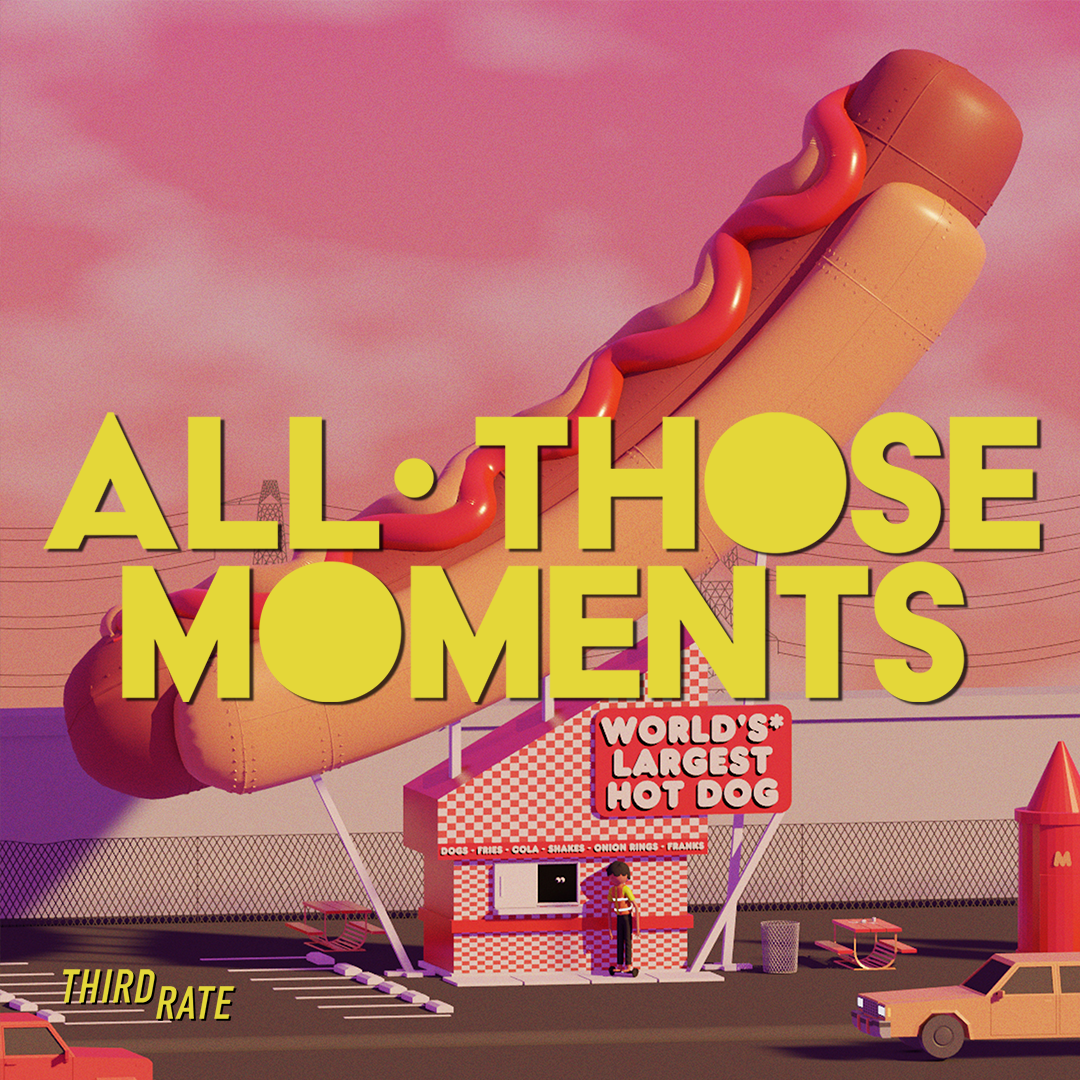
Boys Go to Jupiter: Director Julian Glander Interview
3D artist and filmmaker Julian Glander joins Benji and Luke for a conversation about Julian's background, influences, and the origin of why he wanted to make the animated film, Boys Go to Jupiter. He also shares stories about spending his teenage years in Florida and how those experiences shaped his perception of American life for millennials.
Then, Benji and Luke play audio clips of audience feedback from their screening of Boys Go to Jupiter and discuss these moments with Julian.
The podcast concludes with a discussion of the relationship between Boys Go to Jupiter and The Florida Project, in particular each film's critique of American dream-peddling capitalism.
-
[00:00]
A coming-of-age cartoon that is both dystopian because it takes place in contemporary Florida, absurdist and surreal because it comes from the singular mind of filmmaker Julian Glander, who we will be speaking with today. Get ready to talk about idle youth, grindset, and extraterrestrial influencers. The movie is called Boys Go to Jupiter. This podcast is called All Those Moments. I'm Benji Wade. And I'm Luke Baumgarten.
In time, my
All those moments is a podcast built around connecting social, political, or cultural moments with moments from our favorite movies. And Boys Go to Jupiter is one of our favorites. For this episode, we're gonna try something a little different, Luke. On all those moments, we like to talk to the audience. We like to get the thoughts, the feelings, impressions from the people that we watch the movie with. We invite people to come watch the movie with us, and we take those responses that we get from people.
And we bring them into the podcast and it sets up a conversation around moments from the movie. I think it's something that we're doing that is, I think, fairly unique in the movie podcast space. And I'm having a ton of fun with it. Yeah, I think you listen to a lot more movie podcasts than I do, but yeah, I don't know of any other one doing this, bringing people in has been really joyful for me. The other thing we're gonna do that's gonna be really unique and high degree of difficulty, we'll see if we can
Pull this off is we're actually going to bring those responses into our conversation with filmmaker Julian Glander. So speaking of going to the movies with these very fun audiences, Luke, I want to share something with you. I think watching Boys Go to Jupiter with my family and friends and colleagues and you, it's like and then talking to everybody about it afterward. That's probably the most fun I've had in a movie theater in as long as I can remember. And once again.
For this podcast, it seems to be something we can't run away from. Not that we're trying. Themes of cultural decay, alienation, actual aliens, just a feeling of everything sucking were on full display in this movie. All of this during a week that Sam Altman of OpenAI announced the release of Sora Two. I don't even want to get into that because we can't seem to go one week without tech bros trying to gag us with AI's Slop Factory. But
More thoughts on AI when we actually get to some things that we loved about this movie on a technical level, aka the absence of AI. But Luke, what did you think of this movie? Like, give me your general impressions, like where it sits with you a week after watching it. Man, I have I have so many thoughts on this movie. It's so charming and weird. It's bleak and sad, but also hopeful and even heartwarming at times. the doing this much animation is such a massive undertaking. You know that better than I do, but I've I have had some experience doing animation work.
The way Glander executes it though feel feels like the movie equivalent of like a recording an album in your basement. And it's a vibe you just really don't see that often anymore. So it kind of reminded me of like this early Ots aesthetic of like people just doing w with much less you know, amazing technology than we have today, just doing whatever it took to put out art. And that's really, really cool. So there was this really nostalgic piece to for me as well. I of course love that about it as well. And I think it's another reminder that
A trip to the movie theater is just a great way to spend your time. It's equal parts, beautiful and ephemeral. It was like Saturday night, the night after we watched it. It'd been less than 24 hours. And my 11-year-old daughter Ivy, who went to the movie and she was part of our audience that gave feedback to what she thought of it. she says to me, We're sitting in the living room, she's like, Dad, I really loved that song and Boys Go to Jupiter. And I was like, Yeah, me too. And so we fired it up and
played it and sat there and smiled. And you you know, it it been less than a day after we'd seen it. And I already kind of felt nostalgic for the experience. It's a smart kid, man. I think she could she should come on as a third mic. I think she could actually replace either one of us on this podcast. You know, you mentioned the basement album idea. I think the last time I saw a movie that was made with a piece of software called Blender, which was what Julian Glander used to make Boys Go to Jupiter, was Christmas Day 2024. Same movie theater that we just watched Boys Go to Jupiter.
And that was, of course, again Zilbalotus's film Flow. Did you see Flow by the way? I never saw it, no, I didn't. put it on the short list of things. It was my favorite movie probably of the last five years, if I'm being completely honest. So why is it remarkable that Glander made this movie with Blender and and Zilotus did with Flow as well? I think it's just that if you think of a Pixar movie, your average Pixar movie probably has three hundred to four hundred people on average working on it. Zilbalodis's movie Flow had like fifteen to twenty.
Whereas I think Julian Glander's movie Boys Go to Jupiter ha was like one or two. I think he hired a a friend to do some character animation. Yeah. Otherwise he did this entire project by himself. The reason that this piece of software called Blender is important, it is a it's open source, it's a suite of tools and software. It's been around for probably twenty five years, but it's available to anyone. You could go download Blender right now and start working on your own three D movie if you'd like. All right, should we get to the plot summary? Gonna do it. Yeah, quicker this time.
Agree. Let's do a spoiler f we're gonna do a spoiler free plot summary. There is kind of a plot twist in this movie that we wouldn't want to ruin in case you haven't seen it and you just want to hear the two of us chat with Julian Glander about it. At some point in the conversation, there will be some spoilers, but Okay, so in this movie, the protagonist, Billy Five Thousand, voiced by Jack Corbett, has a New Year's resolution. He wants to make five thousand dollars so he can move out of his sister Gail's house. To make this money, he works for Grubster, which is like Uber Eats, a food on demand service.
Billy believes he's found an exploit in the app that allows him to make a lot more money than normal. and he does. So for a while, we I think we start the show and he's got like already got $3,000 of the $5,000. So it's like, things are actually kind of looking up for Billy. He's kind of a grind set kid and it's in the grinds working for him. meanwhile, all of Billy's friends are typical tweens and teenagers who waste their days in Florida heat.
Doing nothing of consequence. They're middle class kids, which is going to be important because we're going to talk about the Florida Project. It's a different film. So it's at one point, Billy's best friend Freckles, voiced by Grace Kuhlenschmidt, pretends to get hit by a car so they can guilt the driver out of money to buy beer, is one example of like the antics they get up to. During one of his grubster deliveries, Billy runs into Rosario Dolphin, a friend, a former friend from high school, who now goes by Rozebud, z Rose with a Z, voiced by Ma Miya Folick.
Rozebud is the heir to the Dolphin Groves Juice Company fortune, a big company that invested in bio and agricultural tech. They make juice, but they also are doing all this hybridization and and bioag work. Dr. Dolphin, who is Rozebud's mom, and voiced by Janeane Garofalo, is up to no good. She's unethical. She's a tech sort of fetish capitalist. And at this point, I'm gonna like stop with the spoilers and keep them to a minimum, but the
Glitch that Billy exploited with Grubster is discovered by the company, and he wakes up one day to basically find himself back at square one. He's nowhere near that $5,000 mark. And so he's increasingly faced with a series of decisions about money, friendship, and community. We will probably be talking about this the surprise ending a lot during this podcast and in the conversation with Julian Glander, but we don't want to spoil it quite yet. But in broad strokes, Boys Go to Jupiter is this absurdist, touching, very entertaining coming-of-age story with incredible voice.
Performances, a really interesting and weird art style. And the music and sound design complements all of it really perfectly. did I miss anything, Benji? No, I think you got everything. Let's get to our conversation with Boys Go to Jupiter writer and director Julian Glander. Julian is a 3D artist, a musician, and now he can add filmmaker to that list. Boys Go to Jupiter had its world premiere at the Tribeca Film Festival in 2024.
Julian, I think, was probably best known before this movie as a contestant on Jeopardy when he sang the alphabet song in reverse in front of Ken host Ken Jennings, which became a kind of semi-viral moment on social media and back in 2022. But now Julian is definitely best known as creating one of the best animated movies I've ever seen. So please enjoy our conversation with filmmaker Julian Glander.
Julian Glander, welcome to all those moments. Thanks for doing this. We both loved your movie. I just want to say that. Thank you. Happy to be here. Right now, my eleven-year-old daughter Ivy is in the next room, and I just have to say, I feel like the coolest dad in the world. She knows I'm talking to you right now, and she's just kind of like You took her to see the movie? yeah. She's part of the feedback. good. Okay. I honestly didn't obviously it's an animated movie and like a lot of kids have seen it, which I was not expecting at all.
Or like I just hadn't really considered it. So it's always nice when a kid, a child of any age, like makes it to the end of the movie. she made it to the end of the movie and then participated in the hour long conversation we had with all my animator nerd friends and Luke. She's ride or die for it. Her name's gonna come up a lot on this podcast, Julian. I also just want to start by saying as somebody who works with animators in the for an animation studio, I do business development and some creative direction. Julian, you did the damn thing.
All of my colleagues, like the dream is to make an animated feature, to make a feature film, period. one of my friends in particular, Mitch, made a five minute, you know, like a teaser or a trailer to like a show he would love to develop at some point. And and it took him the better part of three months to produce this five minute piece. So I can't wait to get into talking about what you've done with this. But where before we do that, where do things currently stand with the movie? Are you going to more festivals with Boys Go to Jupiter?
so we did I'll I guess I'll tell the whole life story of the movie. Yeah, we premiered it at Tribeco last year. we did a full basically a a little over a year of festivals. So we had a a f a festival every weekend, basically, 45 festivals around the world. And then we had our theatrical run. we opened in about a hundred cities, mostly at independent theaters. And we're kind of, I guess, getting to the tail end of that. It's still showing.
You know, a a number of cities, little dots around the country, and then then it will go on to the next thing, which is going online somehow. That's what I was gonna ask. When does it st when can we stream this thing? I don't think I'm allowed to say. Okay eventually. But I would say if if anyone's listening and they're feeling very impatient, they really want to see the movie, they should go to Boysgo to Jupiterfilm dot com and see the listings because it is still playing here and there.
Okay. And it's and like any movie, it's more fun to see it in theaters. totally. a hundred percent. It's just the we get constantly reminded part of us doing this podcast, not to bore you with our backstory, we have to make good on all of our beliefs about going into third spaces and the loss of them. And so what I have no excuse. This is my whole life has been dedicated to a love of movies. I went to film school once upon a time. I narrowly dodged a career in LA, but
Like we want to go to movie theaters and spend time in them. So watching your movie in particular, the movie theater, I every single person we watched it with was like, this experience was made orders of magnitude better because we were doing it together. I'm so glad to hear that. Some of like I I think of like so much of the media that's gonna be made right now, and we didn't even really intend it this way, but like every even highest to lowest in weird ways is kind of about alienation and digital alienation. And like
It's just impossible to feel alienated when you're in a room with people and then you start talking about something in anything, but especially about a communal thing you've just experienced together. Yeah, it's special. I I will watch any movie in the theater. I really I kind of really only got into movies like movie going in the movie pass era. And then when they were free, I was going like every single day and
it is so special. It's like a dream. It's like a h hallucination we all have together. And it's the only time that you can't be on your phone. You know, it's Or that you shouldn't be. Only time. Yeah, exactly. It's the for me, it's the only time that I'm not on my phone. I just don't have the willpower unless a movie is on. Okay, one last question about your movie. Physical media, please? Blu-ray? I think we'll I think the Blu-ray heads will be very happy. but again, I don't
I don't know what I'm allowed to say beyond that. That's okay. Just as long as you can say that it's gonna come. It's like and I know Zach Krager keeps getting asked about barbarian, and that's like the number one conversation about physical media these days. But I want to know can I get Boys Go to Jupiter on Blu-ray at some point? Someday. Yes. Okay. All right. Let's do this. I have done a little research about you, but I would love to hear some of your background as a 3D artist and animator. And now you can add to the list filmmaker. Sure.
That's a that's a nice little tee up that pretty much covers it. I've been working as a as sort of an independent animator illustrator for about 10 years now. prior to this, I I well, I started making animation in the animated gif era. And those little two, three second gifs sort of turned into 10, 15 second things, turned into short films, turned into TV. And then I I I think right before this, I just directed a 10-minute TV episode. And my thought process was.
Could I just do that nine times in a row? And would that be like, is that so like it's just math, right? It's just doing something nine times in a row. And like, in some ways that is kind of true. Like your friend who made a five minute proof of concept or something, it's like, well, the first minute is the hardest. And then the next getting it to five minutes is pretty hard. And then scaling up to a tie you know, a timestamp you've never been to before, like 30, 35 minutes is is it starts to buckle, but it's not
It's just labor, you know? It's just like or I I guess how I would think of it is like instead of like this one big massive object that you have to lift, it's like carrying like a million little pebbles across a room. You know, it's like there's just it's just a lot of little pieces that I that I think anyone who has the time could do. One thing that's missing from that bio is is musician. Cause I was the one thing I did do on my phone in the theater, and I'm apologizing for this.
In advance to you, but this is so great. Every time a song came on, I was like, my God, this is fing rad. Who sings this? And I kept seeing your name popping up. And so these were all original songs you made. They're they're great. Like tell me about being a musician and and maybe what that adds to adds to your creative life as a as an animator and filmmaker. Yeah, sure. I think like probably a lot of animators start out as musicians or have a background in music. It's very
They're very linked as disciplines. There's this sort of idea of working on a timed grid, or you know, rhythm is such a big part of it. I yeah, when I I moved to New York right out of college, I started a band with my best friend Payson, who is the producer of this movie. that was like our first time working together, or really how we learn to work together and how we learn to do things DIY, which carries through into the movie. And in some ways this was my revenge as a failed musician to get people to listen to the songs.
and you know, I I wouldn't say I'm a big fan of musicals. Like I I love some of them and I really love the idea of a musical. Like I love that it's a kind of a widely accepted art form or media form that like can be totally mainstream but also totally surreal. That like in Wicked, totally every conventional story can be broken up into a bunch of music videos. Like it almost feels kind of avant-garde.
and so like West Side story, they sing their way through a knife fight. And it like if when you're in it, it totally is like of course they are. And life kind of feels like that sometimes. Like especially when you remember things, you know, later on and the edges are kind of dull, then you're you things are a little hazier. But I think you know, the idea w the the musicals I love are like Grease, like and what I love about it is one
35-year-olds playing teenagers, which we have in this movie, and to the kind of musical point of view, like, it's the 70s doing the 50s, and it's very specific and tight in terms of the scope of the music. And that's something that Payson and I talked about a lot. It was like, what does this world sound like? You know, is it like and I I think like one of the sonic kind of guiders for us was this idea of like a distant ice cream truck. Like
This sort of fuzzy, hazy bell sound, this idea of childhood kind of getting away from you or of chasing after something.
Really have to give credit to the cast though, because the songs are good because of the way they sing them. Yeah. It didn't even occur to me until re-watching it, and we're gonna get into some of the specific specifics of the songs. They were treated as almost chapter headers where you get a bit of more exposition from the characters because it's the characters that are accompanying y the music that you have laid down. So there's the bed of the music produced by Julian, presumably. I'm making some assumptions here, and then you have this
a vocal track by the characters and the performers that were doing the voices of those characters. I that did not occur to me in real time. Like Luke, I thought I was listening to an album from some artist that had just not quite hit my radar. That's super cool. yeah, it's interesting to think about like obviously the different ways that music can be in a movie. and this is
Probably something you learned a lot about in film school is diegetic sound and when music is on the radio. And it's something that also like I I read an article somewhere a long time ago about like what is happening in a musical when the singing is happening. Like if you if you woke up and you were in West Side Story, like is the idea that like they are actually singing in real time, or is the idea that it's like somehow being translated? Like
You know, that the actual experience that those people had was translated in the same way that cinematography kind of translates an experience. Luke, I know you want to chat a bit about where Julian is from culturally and geographically in the United States. But before that, I just want to ask a f a fairly too long didn't read version of this, but we just had a conversation with the writer and director of the movie Ephus, names Carson Lund. Have you seen that movie? I haven't seen it, but I'm hearing a I have to see it. Yeah. I can't see everyone's talking about it. Yeah. I think
Of all the films that we have talked about on our podcast, yours has the closest relationship and like in terms of like the traditions of slow cinema. But Carson was talking about financing independent movies. It was a big part of a two hour conversation we had with him recently. And I just wanted to ask, like, how did you was this all just out of your own bank account? Like how did you whatever version of you would want to share about resourcing and financing your movie? Yeah. I mean, it was it was really micro, micro budget. And it was basically it was out of my own pocket.
I think that was just that was the only way it was gonna get made. You know, I had been working on a lot of other animated projects kind of tangentially or with one foot in the industry. Yeah. And you know, what kept happening to me was the same thing that happens to every animator. I would pitch something, it would spend two years in development, nobody would ever see it. And I, you know, I finally got to a point where I said this can't happen again. No matter who the studio is, nobody can guarantee that they're gonna make your movie.
And release it unless you are the person who owns it. so it was ch I mean, it was cheap to make. Again, I don't know that I can get into the exact numbers, but it was like micro, it was like one day of craft services on a big movie, you know, was the budget of our whole movie. and it kind of like, I don't know, it was so freeing to not have to check in with people, to not have to keep track of that stuff and just to be the decision makers.
A lot of time or the the general understanding of animated features is that it's a very big industrial process, you know, that it's a pipeline and that there's a story department, and before that there's the I even the idea department, the story department, and then a script, and then it goes to storyboards and it's sort of passed through a series of technicians, and then you get this big hundred million dollar movie. And I love those movies, and like I think Pixar has made like the most amazing entertainment machine of all time. But I also
had a thought of like, what if a movie was like a novel? You know, what if one or one person or a really small team came at it from every angle and what and what what does it feel like when the person who designed the characters also wrote what they're going to say and the person who chose what the music is going to sound like also chose what the, you know, what the visuals are going to be and what the camera moves are going to be. And I think it's something that has resonated with people is that it's very cohesive in that way. You know, it's it's a movie for a specific kind of person, but
It's really for that person. Knowing that a movie like a Pixar movie, if you took the money and you were to divide it into a a pie for making a film like Boys Go to Jupiter, that you could probably make several hundred of them for the price that it costs to make And think we should. I we shall I think you know. Yeah. I wanna be like T Bone and I wanna bulldoze the Pixar machinery.
And just replace it with a tree that produces Boys Go to Jupiter movies, Julian. That's what I want.
Okay, you said it. I think I think again, I I feel like I'm often I'm sort of like being led into a beef with Pixar just because they so dominate the idea of 3D filmmaking. Yeah. And I really just think I think we would all be better served as audiences if there was this ecosystem where we had animated features at every budget in the same way that we have live action features at every budget and like video games at every budget.
It's so true. I could go into such a tangent about my love for Gint Zilbalodis's film, Flow. I'm sure it'll come up in this conversation. But that movie had fifteen to twenty people attached to it. Your movie, I think, had one or two attached to it. Yeah, flow is flow is big budget for me, you know. So it's hard. Totally. I think it in in movie industry terms, it's like there are people in the film industry who wear shoes that are more expensive than the movie that we make. You know.
And I also sit there sometimes and I go, Could we do it a little cheaper next time? Yeah. I had a you know, there was a couple like lunches where I was like, could we have just gone to could we have taken the whole crew to McDonald's that day instead of like a nice restaurant? But those are kind of mandatories. Like a nice lunch is kind of a mandatory at any scale. Yeah. Right. Luke, you want to talk about where Julian comes from? Yeah. So you're is it right that you're from Pittsburgh? I live in Pittsburgh now. Yeah. I've I've lived here for about six years. interesting. Okay. I grew up in
I grew up in suburban Florida outside Tampa. Okay, okay. So it's somewhat biographical. Okay. So this is a wild coincidence, but we actually had a couple in our screening who are from the Pittsburgh area. and the guy, Joey, still lives nearby in West Virginia. I think he said Wheeling, but don't quote me on that. But he did say West Virginia, the home of the world's largest teapot. Yes, exactly. Well, I have to I have to go on a tangent here and talk about my trip to Wheeling. Okay, go for it.
Because it was a big inspiration for the movie. That's crazy. So in the pandemic, we my wife and I took a trip to see the world's largest teapot in Wheeling. It's kind of what you'd expect. It's like a big wooden teapot on the side of the road, and it has a little window in it. And like a menu, there was a menu on the side of it. It's like they serve tea and snacks and stuff. And it was closed. So I walked across the highway, I walked to the gas station, and I asked the woman, like,
Is the teapot like is the teapot ever open? Like is there a way to get in the teapot? And she said, only on teapot days.
And I was so I like, Okay, yeah, sure, thank you. Like walked away like that made total sense to me. But that like I don't know, somehow that like felt like a very special like cosmic American moment. and it directly inspired the world's largest hot dog scene, which is kind of a one of the centerpieces of the movie. Unbelievable. The hot dogs we sell here, they're good. And I'm not just saying that out of a point of personal pride, I'm saying it because I'm a hot dog guy.
I've eaten quite a few in my day. This might well be the best in town. And no one seems to care. I've lived in Spokane most of my life, and Pittsburgh and Spokane have always felt really similar to me. Both second cities, both very blue collar, post-industrial in different ways and kinda to varying degrees, but people's economic horizons and kind of their dreams tend to be pretty modest, nowhere near the sort of like chintzy, gaudy glamour of like
everything I associate with Florida basically, like the place it gave us Disney World and Clear Water and Gator Wrestling. So, you know, as you're writing this story about poor kids coming of age in the app economy and late capitalism, like we're like how much of that was coming from Pittsburgh? How much of that was coming from Florida? And like that is so interesting. I mean, you're exactly right. I think it's one of the things that I love about living in Pittsburgh is that, you know, i when I lived in New York or when you go to LA, it's true. It's like everyone thinks they're gonna be like really rich and fame.
You know, everyone is very ambitious and intense, and you know, it's people here are just nicer and like all I can say is they're more normal. but I think like I mean, I think across the entire country, people's expectations for how good their lives are gonna be have really been dashed in the last five years. Yeah. you know, I grew up I'm pure millennial, and when I was a teenager, I really thought I had a future.
You know, I thought that I would you know, everything was gonna work out and that everyone who worked hard was gonna, you know, achieve their wildest dreams. the young people that I know now don't feel that way. The adults I know now don't feel that way. Yeah. and I think like it's one of the big questions that I was trying to work through while I was writing the script was what does somebody do? What choice does somebody make in their life when there are no good options in front of them? Yeah. Yeah.
So it's weird to hear you say that you felt like you had a future because it felt like to me when I was I was a journalist like from basically the beginning of my career, like I was able to buy a house in Spokane. And I think this used to be true of Pittsburgh for like less money than it cost to rent. So it was just kind of a no brainer in two thousand nine to buy a house so I didn't have to pay. you got the you got the snag. Yeah. I was a little too young for this because they were they were giving the houses away in two thousand nine here in Pittsburgh. I got those Obama bucks. Yeah, for sure. Yeah.
Yeah, well congratulations. That expression, Julian, the snag, upon rewatching your film, I'm like, huh, I'm not familiar with the snag. Is that a Florida kind of cultural lexicon? We need a good snag. Yeah, it's been a while. I don't think it's real. Okay. Or is it a Julianism? Well, okay, so at the time when when I was writing it, there was a trend on TikTok of Audacious Licks. Did you guys re do you guys remember this? No.
It would be like a a young person would be like a audacious lick from my high school. And they had stolen like a desk or like a statue of the mascot or like whatever, like audacious lick from the like people were basically stealing kind of all outlandish things and showing off. Okay. and I think one thing that I was very self or that I was conscious of was like trying to make a movie feel contemporary without like using lingo because it does take so long to make a movie that it's like
You know, there's there's a character in the movie who's kind of a Nepo baby, but if if we threw the term Nepo baby into the dialogue, it would have been like so cringe. Totally. So snag is sort of a little just work around there. So it's a ju it's a it's an actual Julianism. It's Well, I'm sure other people have said Okay, okay, all right.
Okay, I want to get back to I'm already trying to stop myself from drawing analogies to Julian moving to Pittsburgh is like Billy's decision to move to the middle of the earth. okay. That is exactly right. You're exactly right. Okay. All right. We're gonna get there, I swear. So at one point, I want to talk about Florida a little bit, and I'm gonna use Billy to introduce the topic. When he's crooning in the song No Batteries, it's this beautiful scene. I think it's the most poignant moment. Well, maybe second most poignant. We'll come, we'll get to the what I think is the most.
Poignant moment, but Billy stays at the empty pool until late at night and he sings no batteries. And it goes like this. I'm not gonna sing it, but the the lyrics are this is beautiful, Florida at night. It gets cooler, then they turn out all the lights. Florida sometimes. It just feels like this place wants me to die. Where am I going? I just turned 16. I know everything. I don't know this next line. Julian's I'm gonna need your help. I rewound it 50 times.
I just need some cheese. I think he says I think he says, I know everything. I just need five G's. I just need some sleep. Five G's. Thank you. I yeah, I need five G I just need some cheese is good too though, because he does. what is your relationship to Florida? Now that I know that you're from there, it's already answered part of the question. But like what are you working out, Julian, about Florida in this movie? Okay. I I so I lived there from for my teenage years, from about thirteen to seventeen.
My memory of Florida is just melting. You know, just being hot all the time, miserable, wearing tight girls' pants and like death cap for cutie t shirt and just like just sweating and melting. Like that's all I remember. And I haven't been back in fifteen years. And your hair was probably too long too, so that trapped heat. Too long and str and straightened. my god. Which is like again, just yeah, just tagging myself in as as millennial as you could possibly be.
Wait, so you lived there for how long? Three d how long do you say? For four years. Three or four years. Okay. And where did you live between then and Pittsburgh? I was so I was born in Michigan. I lived in the suburbs of Atlanta, then down to Florida, then up to the suburbs of Philadelphia for a year, then school in Boston, down to New York, over to Pittsburgh. Is the full route. Yeah, you've been around the US. Okay. This is the So you're living the furthest west you've ever lived right now. Yeah. wow. That's really true.
Yeah. I think it's probably as far west as I'll as I could go. come on, I think so. Who knows? Come visit come visit us out here. come visit smoke. Yeah. But I think okay, but my the relationship with Florida, I think like it's more the cultural idea of Florida. I think it's more the way we all understand it as like America's hell and the place where
Anything is po you know, we hear about Florida man all the time. We have an understanding that it's sort of wild. I was just gonna say, when you said Atlanta, there's the TV show Atlanta, there's gotta be some Florida man in here. Yeah, yeah. There every character is a Florida man. so I think you know, I had written a early kind of NoteSap outline of this story that was that took place on like a alien planet, like a sort of fantastic planet type situation where everything was like from the ground up imagined and
A big centerpiece of that was going to be that there was this like dome where someone was growing oranges. And the more that I kind of worked it, the more I thought, like, actually Florida is weirder than any anything I can think of. Or like if I if I can put it there, then the weirdness can make a little more sense to people. The Florida truth is much stranger than fiction. Yeah. Yeah. Mm-hmm.
So before we get to the moments that we will play from our audience and use to drive some good conversation here about your movie, I wanted to just give a quick impression about why I have found what we're doing now and having this conversation so interesting. It is the ultimate trust fall, Julian. I had not seen your movie and researched it and was like, this sounds great. Let's do that. And and I knew that I had was gonna have you on the podcast, but I hadn't seen the movie yet. So it was like this.
Like, okay, what happens if I don't care for Boys Go to Jupiter? Well, that's the test of your of your chops. You know, Jimmy Fallon does it every night. He goes on there and lies about having seen people's movies and laughs through it and you know. I'm kind of the antithesis of Jimmy Fallon. I'm incapable of saying, I thought this was great, and here's Julian to talk about it. Yeah, I gotta I gotta step on you for a second, Medgie, because
The proof of that is that right beforehand, he Benji and I grabbed a beer at the brewery next door. We might actually need to cut this. So this might just be for you, Julian. and Benji could not help himself but tell the person behind the bar at the brewery how bad the beer was. So I love that. I love when I love when, you know, my feeling is you have to establish some credibility by being negative sometimes. Dude. Yep. Well, I will save any spoiler content for the end, but for me, I felt like I was in safe hands.
literally within the first 30 seconds of the movie. And here's why I would say that that's the case. It begins with this great series of edits, almost montage of the beach life that's being kind of depicted. And before that first note of music even hits, I hear the voices of the characters. And I swear I was like, I am fing all in on this. There's just something about the very textured and quite personal, almost dictaphone level
delivery of voice and the hygiene of, you know, mic etiquette and all the things of like these are professionals that are and they're also playing it in a way that's just so naturalistic that I was like, this is instantaneously, I am all in on whatever's happening here. did Luke, did you feel the same way where you I didn't even ask you about this. I'm kind of putting you on the spot like
We're we're in Dion Warwick. There's a kid with weird freckles, may or may not have nipples, they kind of come and go. I knew something was weird. And I'm like, all right, I'm along for this ride no matter what. If nothing else, and to your point, like I I actually do love Pixar. I was gonna suggest that you two split the difference and be like, we could at least d not do Cars Ten and give you enough money to, you know, fund your entire career, Julian. I'll direct Cars 10 if they want me to. I have ideas.
Actually that's not easy to Evil Swagway shows up and tries and evil electric vehicles try to derail their whole sh Hell yes. Yeah, and yeah, make it a the return of the internal combustion engine. Yes. the Trump family might actually fund that now that they're on the outs Elon. I'm really glad that you said that about the voice acting, the dictaphone quality of it. Cause that's exactly that was like one of the kind of directives that we gave the whole cast is like
Don't do a cartoon voice, don't do an anime voice. And then also like the whole approach to sound was like almost could we do this documentary style? Like, could somebody maybe be convinced that this was just picked up? And part of it is because the I mean, part of it is because the cast is just incredible. Like Grace Kuhlenschmidt, who kind of opens the movie and is a this freckled teenage boy character, is like every line is a banger from her. And
It's stuff that's not funny on the page. Like it's it's just like written as just like a person talking and being kinda rude and nasty and it's so alive with her. I don't know. Yeah.
You're going to festivals, you're doing these panel conversations and Q and A's with audiences. Julian, we are bringing our screening to you. so I'm going to attempt to share a screen that'll have a YouTube clip pulled up of all the feedback we got from the audiences. We're just gonna work through it one piece at a time, see how this goes. Let's do it. I definitely thought it was supposed to be a a take on yeah, how to try to find meeting in capitalism. In the end, I don't know if they're going for theirs
Meaning to be found in something other than money, but other than railing against grindset culture. There is a little bit of railing against religious undertones as well. I very much loathe having to work for the man. But also I understand that we kind of just have to do that for the role to go by. So I love the coming-of-agedness of it, seeing a new generation, but yet it feels so much like it felt for me as a kid. Like that's what it was like, just being like, you're
Dumb kids who like don't know what the world brings, but you're just trying to make the days go by and you have each other as company. And then there is always the one or few who are like trying to get into the working world before the rest of us. And then by the time you're there, you realize like, this is just a joke. Like they just took half my money. What? So this is just kind of some feedback that people gave about what they found the movie to be riffing on thematically.
I wanted to lead into a question here with you, Julian, from this feedback we just heard. Luke and I were co principals of an ad agency for almost ten years. You have worked in advertising. I just wanted to ask you, is there something you felt that was influencing your approach to Boys Go to Jupiter about working in advertising, like something about the gig economy, maybe that you were working out while writing this? I was yeah, sure.
It was probably more about the gig economy because it's been a really long time since I worked in advertising. And when I when I was at an ad agency, the gig economy didn't really exist. As a f as a freelance illustrator, you know, I have some of the same it's not the same as delivering food, but there's some of the same problems where you tell yourself that you're your own boss and you're in control of your destiny, but actually everyone in the world is your boss. You know, anyone with five hundred dollars could email me right now and like ruin my weekend if they wanted to. Like
And for years I was just gripped with just that feeling of like a a potential client watching over me or like feedback coming in and I'd have to rush home and address it. I think like, yeah, I I I think what the last person said about the the coming of age elements really is really beautiful and is really right. that was my that was my teenage years. It's like I was so ready to be an adult, so ready to be part of
I don't know, the workforce or just part of like the world. Like I felt like as a high schooler, I wasn't living in the world and I would like skip school a lot just to go you know, be at the mall or like I started a business in high school making t-shirt designs. But but I had that same feeling of like I can't wait to be an adult. And then it's like, wait a minute, why did I do that? Why did I rush through?
This one magical time that I'll never get back. And it and I all I want to do is get through those days and now they're gone. And it's like I would, you know, I'd cut my hand off to just have like one more day as a teenager, you know, just to feel just to be bored in Florida one more time. man. And I think like, you know, I think like that's I guess for me, like that's that's what the ending represents is like Billy hanging on to something that he's losing. You know, like
realizing that there's something special and pure that's more ancient and more real than money that as we as we leave childhood we all kind of lose to some degree. And the choice that he makes is just is I think just to hang on for a little long. Yeah. So we were in j advertising together for a while and now I'm back doing journalism. I started something during the pandemic and and now I spent like so much time thinking about both local and national
Culture and politics, watching transform, watching influencer culture just swamp almost every other aspect of culture, especially among my younger colleagues. Watching AI slop just cook our brains, you know, whether we wanted to or not. I can't even get away from it anymore. Like, traditional advertising seems quaint and almost principled by, you know, the standards of today. And how we've gone from quizzical think pieces about this thing called grindset to grindset being like the default position. Everything's a hustle.
so much human endeavor is almost by default reduced to how monetizable it is. And if and if you somehow find a way to do something outside of that like hyper monetization, it's it's you it's so unique that, you know, that might not even have a path for other people to follow. You really have to make you really have to fight to make art for art's sake. And I felt every ounce of that dread as I was watching your film. But I also felt this weird sense of hope. And and not just by the end, I kind of felt it throughout in weird ways. And so
And and you don't have to agree with that read at all. But if you were trying to kind of leaven this film with hope, how did you accomplish it? Because you did. that's really beautiful. yeah, I think hmm. I think the film is hopeful because the characters are hopeful. you know, we and and and what you're talking about is exactly right.
We're looking often down on these characters isometrically and we see them in their little world as ants or as like figures in this sort of gamified world. And and so when they're talking about, you know, when Freckles is talking about how he's gonna be a really big folk music star, or when the, you know, Sarah Sherman's character is talking about how she's gonna go to heaven, we kind of know that none of these people are gonna go to heaven or get rich or get the thing they want. And so there is a sense of like, there is some dread here.
You know, T-Bone is not gonna win the lottery. We know this because nobody wins the lottery, because we're, you know, and yet we kind of are these people. But at the same time, I think it's just like I don't think the movie is judgmental of really almost any of these characters. Like I I think like all of them are like have real valid, you know, things that they're getting out of work or out of or, you know, ways of viewing the world that are like not necessarily my way of viewing the world and they're very silly, but they're very valid. So I think it's like
It's hopeful because the characters hopeful. And because I think because intercut between all of this dread and this world, there are just like what was really important to me is just like little moments of life. Like there's this sort of time lapse shot of orange blossoming. And like that's kind of like that's like the shot of the movie for me because it's like
with everything happening in the background and with our lives happening at this kind of hyperspeed, there's also this slow, beautiful, unstoppable cycle of nature that is that is still happening, that we can still access, even in a world that's trying to take everything away from us. I can't wait to talk specifically about that moment because it is when I was talking about ranking the poignance of scenes from your movie, that would be the moment that sits out as number one with T-bone talking over top of that. We will get back to that, I promise. But I wanted to
Ask you about your feelings on the word nihilism because humanity in your movie is basically being completely enveloped by cynicism. There's a billboard montage twice in your film, and I think once it's the lottery, fireworks, the Bible. This is like classic, almost Soviet montage. And then the second time it's like this predatory company, dolphin.
Grove juice company, followed by a predatory like lender who's trying to buy your home, followed by the Bible. And then you have this charming elderly woman who dies alone by slipping in the shower, which is played a little bit for yucks by the the EMTs that show up. But and her death becomes not just symbolically transactional, but literally transactional because Billy only discovers her dead that she's died because he's there to deliver food.
And at one point the character Rozebud half-heartedly accuses Billy of being a nihilist. And I just wanted to ask you, is that part of the turn for Billy at the end of the film? No spoilers really, but that he becomes he's he's shedding this nihilistic view. I think he is I think at the start of the movie, he is young enough that he has not curdled into any specific person yet, and he's really looking for a person to be.
And you know, we see him in one of the first scenes, we see him watching this like toxic YouTuber who's like into this like five-dimensional money consciousness. But as Billy goes around the entire town, he's as he's, you know, using this sort of vehicle of food delivery to meet all these different characters, he's looking for a person to be. And you know, I think like each each of these little characters, and they're all voiced really well by the cast, but each one of them.
Has sort of one view a view of one piece of the disco ball. And his kind of role in the movie is to see all the different pieces of the disco ball and then, and then find the best path for himself or find the best person to be, which is really, I mean, it's like what we all do as teenagers. See, that's super beautiful. Your animation style allowed you to make some decisions that allowed me to interpret things in certain ways that I thought were really great. Like I just wanted to quickly point out that.
I think most, if not all, of the Grubster customers, but then also the lady they try to scam by running into her with their skateboards are literally like flattened out almost to look like the front of an ATM or something. Like these are all these aren't people in in a certain way. They're just they are just the transaction. Yeah, I think it does a lot of it does come from the restrictions of just like
In the same way that it's hard to film someone in a car in live action, it is kind of hard to film someone in a car in animation. And so just making her be the whole car or like making Julio Torres's character just be the gas station. Like it's just one of those, I think, like silly sitting there going, What if I just did this and made my day a little easier? But I actually do think is a little bit like thematically exactly what you're saying, where it's like, well, sometimes it does feel that way.
As a teenager, sometimes it feels like the whole building is yelling at you or like that the whole car is trying to kill you and not just the person driving it. Yeah. Or Chris Fleming as the Mr. Weenie, which was an astonishingly funny performance. He's so I mean he's so good. He and he a lot of that was like him just taking it, like not really looking at the page, just coming into the booth and like we we have like an hour of him talking that could be its own movie as the hot dog.
When the Blu-ray comes out, okay. Yeah. Yeah, throw put throw that in. Yeah, our friend Mitch described it as almost like a Charles Schulz intervention of like wah wah wah wah all the floor. Well, I'm so glad I'm so glad that you brought that up because he's my you know, the the graphic blandishment that occurs in the peanuts specials is like my like we t we talked all the time, like, what if this was a peanut special
for now that had no holiday attached to it. You know, what if this was what what would Charlie Brown do in the week between Christmas and New Year's? And But yeah, the resourcefulness of those peanut specials, but also the tone and the sort of the patience that they have and the willingness to sit is like all time great stuff.
Okay, let's get to our second response. I'm glad I came to see it. I thought it was nice. I wasn't thinking about the animation style because I don't know what I'm talking about in that regard. But I have an older sister and it kinda felt like it was a new take on the kids these days are just, you know, they're on their phones and they're using their phones to get jobs. And there's it was just my first thought was that it's just like changing of times.
definitely got like just a casual coming of age story where I felt like you could have been one of those kids goofing around saying dumb stuff. You just couldn't like sit back and relax and watch this and be like, yeah, I'm one of those dumb kids on the beach again that doesn't have any money and like maybe one of my friends cares a little bit too much about it. I don't know why my daughter did that accent. She didn't know either. I love it. It's great. She's a a voice actor. but I w I just want to ask, were you
Do you feel like you were reflecting on your own child experiences? Of course you were. You've already talked a little bit a little bit about this, but or your feelings about your own family or do you want to start a family? That might be an inappropriate question, but you know, do you have kids? Do you want to have kids? Like what's going on there? I so I have my my my baby girl is almost one year old. So congrats. Yeah. So it has been, you know, I was working on this movie in the lead up to that. and kind of knowing one, that I was going to be a dad, which I think you do see in the story.
And also just like knowing that this was the only time in my life that I was going to be able to do this. and yeah, I mean, you have kids, you have kids, so you know it's like the this past year has just been like the it's been like being on drugs the whole year. Like to experience childhood again like this is like I like I can't believe how much I love it. it's like so much better than I thought it would be.
I'm like tearing up. I don't know. Yeah. But I don't, I don't know. I don't really have, I wasn't really thinking about my own family, but I also think, you know, this is one of the great things about writing a script is you can work things out pretty subconsciously or like bring things from the subconscious to you know all the different characters. Like somebody at another QA was like, is Dr. Dolphin your mom? And I was like, no, I'm Dr. Dolphin. Like I'm the
I'm the overbearing, like obsessive controlling, like obviously I'm an animator. So it's like that's actually me. This like hunched over, like sickly character who has to control everything. So there's this part of you that feels like you have been able to create a kind of childhood like experience with Boys Go to Jupiter that I'm sure you can fast forward and imagining sharing this experience with your kid. That's really, really lovely.
I g I g it's gonna be a while though. Yeah. You know, it's not really a film for like even a five, six, seven, eight year old. So I think like I think by the time she's ready to watch it, I'll probably be ready to actually see it as a movie. I have two daughters. All I can see now is like the changes I wanna make. Yeah. I have two daughters who're both quite precocious and so my eleven year old enjoyed every single bit of your movie. I'm so glad.
For me it felt like it was a lot about wasted potential because the Billy Five Thousand's basically like a savant. This is where I feel like that those kind of top down angles where it's like we're almost looking at a diorama. It makes you really pity him and like how I'm so sad for you that you're wasting your gift on hacking a grub strugger. Like they tell you to go to college, they tell you to do whatever and if you're intelligent you'll succeed, but there's not enough jobs.
out there. There's not enough jobs for you. Like he's just he's using his incredible intelligence to hack an app. And even if they're super intelligent, like what the heck are they supposed to do in the attention economy? And the attention economy comes back again with the aliens. They're in s they're influencers. The aliens are influencers. Yeah, that's a really that's a really interesting kind of take on it. I think like for me
Billy is is like like he he has the nickname of the human calculator and everyone calls him a genius, but I actually don't think he's that smart. I think he's just smarter than the people around him. Yeah. And I think one thing that I was kind of coming to I so I I started writing this story basically right after I appeared on Jeopardy. I was a contestant on Jeopardy and I lost. And I think like a lot of a lot of millennials.
have kind of gone through this unraveling of like the gifted child narrative where it's like, I actually have found that the limits of like being a pretty smart person, like it's actually a pretty low ceiling what you can do with like above average intelligence. And the things that are going to get you far in a career are actually ambition, viciousness, you know, a sort of people skills, you know, all these other things. And the things that are going to get you far in life have nothing to do with intelligence at all.
You know, your ability to be nurturing and caring and patient and, you know, be decent. Ultimately, none of it has to do with intelligence. And I think like I think Bill what Billy learns is that his sort of ability to crunch numbers or see patterns is actually just a magic trick. You know, it's it's not gonna be the thing that saves him. It's just a gimmick and he has to find something else. And so
When he's sort of outsmarted by Rozebud, it destabilizes him and allows him to find this new ver version of himself, I think. I see a lot of teenagers and I have this mentor that's all about like how do you balance hyper individuality and our culture with like understanding how to be community. And as everyone was talking, I was thinking about the beginning quote, which I'm trying to remember, but it's like
Time goes so fast and then so many stars are blah blah blah and pumping gas. Okay. But as everyone was talking, I was just thinking about a question I often ask my teenagers, which is like the whole Mr. Rogers thing of you are absolutely special. It you are a creative moment from the universe. You are special and also like what do you have to give this world as a way of saying what's the give and take? Because we've all
Lost the give. We all know the take. So, just so you know, my wife Ray is a therapist and when she's saying talking to her teenagers, she means her clients. Wow. Very smart read. Yeah, I think I guess the quote is I'm I'm trying to think like
It wasn't in the movie for a long time. It was at the top of the script. It was like the first thing that when I presented the movie to the cast, it was like in the little like teaser graphic I sent them. I think like just to set the tone for this idea of like, okay, amongst all of the American dreams and these big magical fantasies that we have, especially in Florida, you know, this sort of home of America's magical kingdom.
This idea of like, well, what? And I I think again, it's something that I was really in the pandemic, I was feeling like my life hadn't worked out. You know? And and and then the question is, you know, and I think this is a thing that my whole generation needs to go through, is it's like, well, somebody promised you that all your dreams are gonna come true, and they're not going to, and you should have known that, but you believed it. So now what? And that's the question of like of like now what? And it's like, well, can you
Can you get through life with a little less? Can you find something external that's not your own like hero narrative about yourself that can give you your life meaning? Yeah, I think like in the original song, it's you know, do you know the way Jose Susan Jose is very cynical? It's it's about it's about giving up on Los Angeles and and packing up your car and going back home and hanging your head in shame.
But it's also kind of beautiful because there's the lyrics like I've had lots of friends in San Jose, wah, wah, wah, wah, wah, wah, wah, wah, wah, wah. Yeah. and you know, again, this is like, well, this is me living in Pittsburgh. It's like you don't have to be on the front page of the newspaper to be a happy artist and successful and make the things you want to make and and have beautiful friendships and a beautiful family. Saying it like that, it's actually such a Pixar message. Like it's so it's so simple. We can't couldn't help but joke about.
Your awareness that San Jose is now the capital of Silicon Valley when in nineteen sixty eight it's a quite different situation for right. So all those losers that went up there are probably billionaires now. Absolutely, a hundred percent. One, it's just there was that line later in the song. I was I wanted to write like you can really breathe in San Jose. They've got a lot of space. There'll be a place where I can stay. I was born and raised in San Jose. I'm gonna go find some peace of mind in San Jose.
Really made me feel like, whether intentionally or not, once I like dug into those lyrics, it was like, my god, this is the exact opposite of what San Jose has created in the last thirty years. You know, it's like the it's crunched us all into box these digital boxes and are all losing our minds because of San Jose. No, that's so that's so true. But I I actually I hadn't made that connection at all to the tech industry. It's so good. So I I will I'll take credit for it going forward because I it's your your discovery. It's your movie, brother. Should if we do the final takeaways piece?
Yeah, probably that was I think so. let me fast forward to that. He tried to make something of his life within this capitalist grindset thing. But the people who are the least happy in the movie are the mom, and I don't know if the other one was the older sister who was working as a nurse, and then the actual main kid Billy, who's are all people who are working for money.
Rozebud and the kids are all chill and having a good time. And the subterrestrial people. We don't get a good idea of whether or not what they're doing is for money. They're on vacation. In a world that we live in right now, it's hard to imagine being able to have like a carefree vacation with a single mother who has twelve kids. Question mark. And then
Also, I was very surprised at the ending that he actually chose to go underground because I feel like that is a huge difference for the newer generation versus ours. Like for mine, I'm very much like the people pleaser, millennial generation of like he's not gonna leave his little brother, he's not gonna leave his family and his friends. They're his home. But he absolutely did. So to me, this is what I see in the newer generation, is that they're more for like, no, I'm not just gonna keep doing the same thing all the way
Till I die every day like I'm gonna go on an adventure even if it's being in love with some alien with these little creatures. I was thinking about a little more and at the end when he was like sitting with the worm lady and all his kids and he's a father of twelve at sixteen which yeah, worm life. I was thinking like, you know what's okay. Your kids can be wax jobs and that's okay. They're special. And everyone's different and that community is important and you don't need
all money. Like sometimes like she doesn't have a lot of money. She lives underground. But but you're having a great life with your children. Okay. This is this is what that's what we're gonna end on with you here is to ask you your thoughts on some of these takeaways. Yeah. Yeah, I think like I do f I do definitely like I think those are great reads of the ending and like thematically I agree. And I also think it's the biggest element of the movie where I felt like
What's the one thing that no financier or executive or distributor of film studio would ever let me do? And it's like end the movie this way. Yeah. Like, you know, this is like I think and I think it's like part of what makes it so fun is we all know how an animated movie ends and it always ends in the middle.
You know, it ends with him finding some way to have it all, or yeah, the aliens leave and he's sort of he has a special magic amulet that reminds him of the beauty of life, but he goes back to his thing. And you know, that was sort of the first inning that I wrote. And really this came from just when I when I was pitching the part of the worm to Tavi Gevinson, I wanted to just give her something that was worth her time in the booth. And so the thought process was, okay, what if instead of just take me to your leader, she was like a vlogger?
and what if she was like kind of like a flirty mom and she was like hitting on Billy and then like you know, just like I just like, you know, in a sort of very yes and way of like, well, what if that actually was the best thing for him? You know, what if this like sort of throwaway joke of like the thirsty worm was actually like all he needed to push him in a different direction? Yeah. none of us in the theater saw it coming. I think we were all kind of like
The Rozebud character is set up, you described her as being a Nepo baby, and I can see why you didn't include that terminology, but it was she was set up to be like, This would be an awful conclusion if he's like, let's get together, Rozebud. If he ends up with that, well, if they I think that's it's the centrist conclusion is that they like find some common ground and ride off into the sunset. It can't work out with her because she's It's classic disequilibrium becomes equilibrium. Exactly. Yeah. And I think, you know, we have a lot of movies that do that. So it's fine.
I just want say thank you so much, Julian, for coming on all those moments and chatting with us about your wonderful movie, Boys Go to Jupiter. What's next for you? Thank you for having me. It was a real treat. Yeah, of course. What's next for you creatively? A sequel? Something else entirely? Boys Go to Jupiter. Yeah. Yeah. I just I just finished a a project for adult swim. It's on they're running it sometimes, but it's also on the Adult Swim YouTube channel. It's called Cool Hooper.
And it's part of this program they have called Ambient Swim. The idea is that it's videos to kind of help you relax or fall asleep. So it's a 30 minute video of a little character hula hooping in a variety of different locations. wow. so I I would encourage everyone to check that out. And beyond that, I'm very superstitious and secretive about this stuff. That's fair. Thank you once again, Julian, for for coming on all those moments. Really appreciate your time. Yeah. Thank you. Thank you.
Luke, that was incredible. I wish we had had a little bit better time management so we could get to all of the audience responses with Julian before he had to go. He had to pick up his young daughter. But I have to say, this is why I really want to have filmmakers as guests on this podcast. I don't want to do the typical junket 15-minute bland pre-approved questions kind of version of an interview with a filmmaker. But when you get somebody like Julian, and I don't think he'd mind us sharing this, he jumped on the call.
And the very first thing he said to us before we even recording was, I've really been looking forward to this all morning. He's been painting his office. He's like, This is my the break I'm taking from painting my new home office. Yeah. He's a new homeowner. He became a dad about a year ago. And he was just like, I need a break from this. And I've been really looking forward to talking about my movie with you guys. And I was like, That's so cool. What a great way to like set the table for a good conversation. And Julian
Clearly very much enjoyed talking about his movie and was yeah so gracious and so thoughtful about it, just like Carson Lund last week. It does in conversations like this really show how powerful it is to kind of add all these different voices and let a filmmaker in real time hear from your daughter, for example. And you know, like you you see his face light up on screen. He was like, my god, like a couple of times when when we were giving him the audience feedback. So it was just really cool.
Yeah, let's get to the questions that we couldn't with Julian and dive back in. Here we go. This is one more section of response from our audience. From that unconscious perspective, the dreamlike perspective, it's like you get this space to imagine. It kind of forces you to imagine. And I feel like that is such a loss these days. There's no room left to imagine. And because you have all these inconsistencies and these blanks and these
Expressions you don't see. It's like there's all this room for your own human projections of like maybe what you would have felt in that situation, but also that imagination piece of like that's what that would have looked like if that had been there. I just want to say my favorite shot of the whole thing was the zoom in on the coffee pot as it was filling up. Because the whole the whole family is just doing stuff outside of it. And what you're saying about kind of like filling in the gaps, you're using your imagination.
I don't know, that felt very intentional and very cool and yeah, I love that. I appreciated being able to daydream during the movie and not feel like I was going to miss out on anything. especially during the coffee scene. I remember just totally zoning out and I was like fixated on it was like I was in a trance and I had so much imagery going on in my head and some of it not even about the movie. There was no pressure to constantly be watching the screen.
In case you miss an important detail or a plot point, because there's it does feel like there's a lot of shows where there's just so much information. It's almost like it was intentional, like it was holding space for that. Like it was creating the space for you to daydream. So you could like actually have that moment and it was like, I'll just give you this little moment to do whatever you would do while that coffee pot fills. Creating space is the best phrase for that. I couldn't believe when Mitch brought up the coffee pot moment.
How everybody just agreed. I did too. I remembered in that coffee pot moment of just being like, Yes, this is such a great way to provide kind of a punctuation, some sort of ellipses that let you soak in the vibes of the movie. And obviously this movie has a lot of vibe. I was reading a article in the Harvard Business Review of All Places recently that was talking about how we need boredom. And maybe one of the problems with our like hyper app, you know, but we always have these devices in front of our faces, is that we're the boredom.
Triggers a different like process in the brain. Like, you know, your active senses, like vision, taste, sight, smell, all that stuff. Like that's sort of you're prowling for threats. Like you're looking, whatever. And when you're bored, it triggers a different process that sort of like asks that gets you to ask like bigger questions, maybe more human, like the the parts of our brain that make humans unique, like questions about meaning, happiness, work. When we're bored, our our brain moves us into like this.
what's called the default mode network, that switch on when you don't have anything else to think about. And it forces you to think about things you'd rather not think about, like, am I happy? Am I fulfilled? Is my job working for me? You want to talk a little bit about the voice actors? Like we have some response from the audience about that. And I think it's w it's worth visiting. So it's really fun. Yeah. This is what our audience had to say about the voice performances, which we did get to chat a little bit about with Julian, but here's what our audience said. All of them I think had a kind of home video esque
voice vibe to them. It just not because of audio quality or anything. It just felt like they were go going for a you know kind of and and just casual, like not delivering their tenth take of a voice line for perfect dramatic effect, but they're just kind of chilling and vi like it it it yeah, it felt kind of home videoish and I like that. But then there was Joe Pera's character. Holy crap. Talk about texture. Just the there's like a gurgle in there. So
Like I wanted to see more of that guy. I wanted because it's Joe Pera, but like I instantly recognized him and I just wanted to hear him talk more. I felt like the voice artists were speaking like this close to the mic on everything. Everything felt so up close and personal that at the beginning when Billy Five Thousand is talking about Grubster, he's like, I have my own job, I do my own hours, it's mad tight and they like cut they cut c really close up on his face and you can hear h like the texture of his voice.
That those moments were really cool. I feel like the a lot of the movie relied on just the awesome voice work and that was great. I thought that it was so cool the chemistry between the different voice actors, specifically having Grace Kuhlenschmidt voice Freckles, the chemistry between her and the beatbox character. Really added to the nostalgic feeling because you've been a Motley crew of kids like that before at some point in your life, if you've had friends, hopefully.
so the charisma of those characters were like really riding on the vocal performance of these kind of like relatable kids, from Grace, from Elsie Fisher, from I'm not sure who was voicing the main Joe Pera, Jack Corbett, all these people. The character that I really want to chat about, we're gonna have many more thoughts about this character, T Bone, but Billy keeps showing up at the juice company in the movie.
Yeah. And he's been spotted by the surveillance at this big company that has, you know, cameras and you know, they have a s a gate gated security and all these things to get in and out of the building. T T Bone's kinda seems like he's like the head of security, but he's also kind of Dr. Dolphin, like the mi the CEO's body man kind of like He completely reminded me of Mr. Drummond from Severance. Yeah, totally. Yep. You know, he's like the body, he's the muscle. You you we're gonna come back to T Bone and kind of surprise twist with him as a character, but
When Billy's been coming to the Juice Company over and over again, and Dr. Dolphin asks T Bone, who's voiced by Julio Torres. Julio Torres has a couple voices in this, if anybody got Billy's name when he keeps coming to the juice company. And his response was just like this very slowed vocal fry. He's just kind of goes. Yes, you brought in some grubster. Bad attitude. And as per security protocol, did anyone get his name? Hmm.
They hang on it for quite a long time before editing. And yeah, we talked about the dictaphone sort of style. Mitch alluded to that. I thought that was really good. okay, so I think that's all of our audience responses. thanks to everybody who spent time with us as always. For now, we we have had this sort of history of bringing in other movies and letting the text sort of talk speak to each other. And I've gotten a lot out of it. And it's been something, Benji, that you were really passionate about. you
when we got out of this movie almost immediately, you were like, You gotta have you seen the Florida Project? Have you seen is Sean Baker's 2017 film about a very similar set of circumstances, very similar place? I had not seen it. So you were like, God, dude, I want to talk about Florida Project. You gotta go watch it. I did, and I was kind of blown away by it. So thanks for pointing it out. full transparency. I did ask Julian about the Florida Project, and he said he saw it when it came out and loved it, but
The same with the other movies that come up when people watch Boys Go to Jupiter like E.T., he made sure to stay away from it so that it didn't overly influence what he was up to. So Florida Project. It was the sixth feature film from writer and director Sean Baker. It follows the story of a six year old girl, Mooney, who's living with her young mother Hallie, in a budget motel called The Magic Castle. We will have many more thoughts on the Magic Castle in a moment. One of the darkest. Yeah. For a
For a building that's entirely purple and like a little bit yellow, one of the darkest places I've ever seen on film. And it's it's still there, folks. It still exists. It's just outside of Disney World. Mooney and her friends from families in the motel are running around together and they turn their very, and I'm putting that in all caps, marginalized circumstances into kind of a adventure playground. And while they're playing, all the adults in the movie, in the the setting of the movie around them are struggling with poverty.
Job instability, the threat of being evicted from the motel. And then you can kind of like fast forward, essentially the threat of being homeless. The manager of the motel, played by Willem Dafoe brilliantly, is depicted as a tough but like very compassionate dude who's trying his best, despite circumstances, to protect all these families as best he can. But Mooney's mom, Hallie, is over the course of the movie, is running out of money. She's running out of time before she's
Faced with a series of increasingly desperate choices, and it pushes the two of them, her and her daughter Mooney, toward a crisis. Before we get into the comparison, I want to talk a little bit of like the format of these movies. And Luke, if you have examples, hit me with them. The style of these movies shot more or less like fly on the wall with non-actors, and they're putting they put these non-actors into real-world scenarios and circumstances.
It's written to be structurally loose for to so that the actors and characters can kind of effectively be themselves. And I couldn't help myself when watching the movie. I was doing some quick Googling and I was like, yeah, they cast a bunch of people that are literally living in these motels outside of Disney World in Florida. And yeah, the the style of this type of movie, I will confess, it can be it can feel a little ropa dope.
very slow build, I feel a little unsettled by it sometimes. It's like, is this it's super unsettling. Like is it exploitive even, you know, of let's go bring cameras into these poverty stricken s stricken circumstances and what are the ethics of that? It's a constantly a question that needs to be answered by filmmakers. But what what typically follows in these movies, you get this these vicarious moments start to burrow into you. And then when the crisis and the purgation and what follows from that catharsis happens, for me
Of course, I'm sobbing at the end. Like this is gonna be pretty spoilery if you haven't seen the Florida Project. It came out in twenty seventeen. So just go watch it before you proceed into what we we chat about next. But let's talk about how this movie is speaking quite directly to Boys Go to Jupiter. Luke, you sent me a a text within ten minutes of the start of the movie. What was that text about? I said the color palette, pastels, lavender, peach, I think is what I said.
I mean, yeah, like the motel that Glarba, the space alien from Boys Go to Jupiter, is staying in, the Moonlight Mermaid, I think is what it was called. it's the same color as the motel in the Florida Project, which is a real motel. It's literally called the Magic Castle Inns and Suites. There's just all these tablea re like retail spaces that are very similar. Like there's this giant I don't even know what it is, like a store that just is like shaped like a giant orange in real life in Boys in in Florida Project, and there's
Similar sort of like and then there's like the giant hot dog in Boys Go to Jupiter. It just paints this picture of a place that's like an entire state that's been built to sort of be this larger than life, but also chintzy kind of yeah. You found another one of these places, Twisty Treat, the place where they get ice cream in Florida Project. Do you and do you say it's closed? Apparently, it was a real place, but only the slab exists because it got n somewhere between twenty seventeen and today again.
Closed and got knocked down. So apparently it's just the concrete slab is the only thing that's left. There's a moment specifically in the Florida Project that I really want to chat about. It's toward the beginning of the movie. Mooney and her best friend Scooty, they're idling in that sweltering heat that Julian referenced and he talked about his few years of living in Florida. They're sitting outside of Orange World.
Mooney and Scooty are sitting in front of a mural on the side of the building, and the mural is of a man and a woman hovering over a basket of oranges. And above them, the words take some home, presumably the slogan of Orange World. Yeah. And I would say that there are at least two radical critiques of capitalism and Boys Go to Jupiter. Billy's decision to go live with Glarba, the space worm. That kind of goes without saying.
But I don't think that's nearly as radical as a confession that is made by the character T-Bone. So we've talked about T-Bone. He's the sort of the analog for Mr. Drummond from Severance. The head of security, kind of like Body Man, kind of like second, kind of the person who's like the whipping boy of the CEO. You kind of think that he's an unquestioning loyal servant of Dr. Dolphin. So there's this moment where he's sitting in his truck parked outside the juice company and Boys Go to Jupiter.
And he's got a lotto ticket in his hand and he's listening to the app tell him whether or not he he won the the lottery, right? And Rozebud asks him, What would you do if you actually won the lottery? And he has this moment where it ends by him saying And in the middle of the night I had everything bulldozed. I'd bulldoze the R and D building, the bottling plant, even this greenhouse. But it'd leave all the trees and there would be a little sign that said free oranges.
Take as many as you want.
Wait, I love that. From the time I got the ticket up until now, I was just ranting that fantasy. That's really what you pay for. And you're like, where did this come from? And he says, free oranges, take as many as you want. And it's just kind of a moment of profundity. And it's this radical critique again of capitalism where he's saying, If I won the lottery, I would bulldoze the company that I work for. And we often talk about movies being in conversation with one another, and I just kind of want to stretch that and say,
I want to imagine T Bone saying that to Mooney and Scooty. Yeah, just take one. Yeah, like the the slogan that's painted on the side of Orange World. And there would be a little sign that said, free oranges. Take as many as you want. And I think for me, this elevates T Bone to one of the greatest characters in the history of animated movies. And it kind of comes out of left field. It's just it's such a moment of brilliance that it's not something you would have ever expected from that character.
It's heartbreaking, but it it kind of underscores the like kind of capitalism comes for all of us.
There's a lot you wanted to say about the element of surrealism and some of the absurdity and absurdism in Boys Go to Jupiter. I didn't have a ton of exposure to fine art until I went to college. One of the first painters, like I mentioned, I connected with as a freshman was Salvador Dali. I would just like stare at his pieces and convince them myself they meant one thing and then convince myself they meant something else. There's probably a hundred choices Julian Glander makes in telling the story that could really mean something.
any one of them might mean nothing at all. And it's kind of up to us and and and it's really sort of a beautiful expression of it's just a it's a really it's a beautiful gift that a filmmaker gives when he chooses to do something sort of surreal to like let the audience make their own meaning, I guess. The other thing about Boys Go to Jupiter in the Florida Project is that they they both end with a version of kind of a Deus Ex Machina and a fantasy sequence following a moment of trauma.
Spoiler alert again for the Florida Project, the moment of catharsis that follows the sort of crisis in the movie is that she is separated from her mom. Her mother has made some decisions that have meant that that they've been called and they take Mooney away from her. But what happens is, Sean Baker makes this choice to have the character Mooney run downstairs in the motel and grab her friend. Not just run downstairs, she runs to a different motel because that friend lives like in a different she does, that's right.
Jancy lives in an entirely different motel and it's like future world or something like that. Yes, I think that's exactly right. Yeah. And so Mooney runs to bang on her door. She answers a door, and this is where I mean, again, spoiler alert, but she's sobbing. She realizes that her mother is being taken away from her, or that she's being taken away from her mother, and that she runs off.
It turns into a kind of a fantasy sequence. How would you describe it? Here's how I read it. You thought it was a dream sequence. Like I think when we were talking about this, you said there's no way this actually happened. I would that's not how I read it, but I'm I'm curious on your read, because you were like, There's no way security at Disney World would let these two children into the park. But also they're really good at sneaking in places. And we've been watching that the entire film. So it wasn't weird to me at all that they just kinda like could have run through the gates or gotten through.
It's felt through the entire film. Like Mooney is the one who's like sort of imagining this better world for them. Like she's the one taking Jancy on all these adventures. Jancy's sort of like just her sidekick. And there's that moment where I think this is what I'm getting chills thinking about this. Jancy is like sees like just how much pain her friend's in, and she's the one who grabs Mooney's hand and is like, We're going. We're gonna go. I'm not gonna let this happen to you. And they they're off. I'm like getting emotional thinking about it. It's really
So you read it. You read it as actually something that happens. It's shot differently. It has like a change of Sean Baker shot his pr the film before this on an iPhone. iPhone S or iPhone 5S, Tangerine. Yeah. Yeah Yeah. So this this was shot 35mm, except for that scene, because they snuck into Disney World.
So they shot that everything was thirty-five millimeter except for that scene which they shot on an iPhone. Interesting. So it's kinda so that's why it's different. It feels left open to interpretation, but it also feels a little the end of Francois Truffaut's four hundred blows when it ends with Antoine Dwanel running to the beach and just staring off at the horizon as the tide comes in. So it has that kind of an element to it, I guess, but it feels very surreal because of how it's shot. You're it I I don't know. But so to compare it to like
Boys Go to Jupiter. There's a moment where Billy is basically hit by a car, but Donut, the little the child of Glarba is space worm now wife, I guess, or she becomes his wife. Warm wife. Warm wife. Donut saves Billy from being hit by the car. And after that, he
makes the decision to leave Florida and hook up with Glarba, the alien worm that lives beneath the earth. And if you think about it, it's like these are ultimately meditations on the same topic. And there's no escaping that what capitalism and especially like consumer culture is doing to people. There's no seduction. There's no Jane Austen ending where it's like, everything's okay because the poor people became rich people. They fell in love and became rich. The moment we're living in is broken and it's making us all miserable. The question that the movie like lets us ponder and obviously
Florida Project does as well, is like, okay, so what now? Like a lot of times art with a point of view to me feels like you're putting together a puzzle to understand what the artist intended. And in the case of Florida Project, the puzzle's pretty simple. The beauty of imagination, especially in childhood, is like what allows us, what allows kids to build worlds that are hopeful and less desperate than the ones the adults around them inhabit. The tragedy, of course, is that the kids grow up and then
you know, the the the tragedy is there for them. And so throughout the movie, there's like this real dread, like we know where this is headed. And and that's why Florida Project really made me think of like the naturalist fiction of like Émile Zola and stuff, where it's like intentionally built, you know, these this is Victorian literature we're talking about here where, you know, society was really stratified. People could go their entire lives without seeing poor people. And Zola's whole point was like, look at this. This is what our society's creating. Look. And so it's not like a deeply interpretive
style of writing. It's intentionally built to make you look directly in the face of suffering that you maybe have never seen. Boys Go to Jupiter, it's more like it's encouraging you to play in a sandbox. You're not built you're not putting together a puzzle. You're you're playing in a sandbox and building your own meaning out of it. And I really I I love both films so much and and I kind of love them in in conversation with each other because there's two different approaches to sort of the same topic. And what occurs to me is that the despair in Boys Go to Jupiter
is such a totalizing force that there's like no way that Billy or really anybody would turn down Glarba's offer to go live beneath the earth. Like, so what did she say to him? I think this is really profound too. She says that staying here and doing nothing in Florida is also a very specific choice. And the way that that choice has been presented in the movie, that would be a horrible choice indeed. Any final thoughts before we wrap this up? No, I mean I think we've covered it.
Our next episode is gonna be Catherine Bigelow's latest film, A House of Dynamite, starring Idris Elba and Rebecca Ferguson. So we're going back to something a little bit more mainstream, obvious mainstream, obviously. That podcast will come out on October twenty first before it goes onto Netflix streaming on October twenty fourth. Be sure to follow us on YouTube, Instagram, Spotify, Patreon. What were you gonna say?
I'm just gonna try to keep my jaw closed because I love Misa Midgeus Elba and Rebecca Ferguson's pretty hot too. So it's gonna be I'm gonna have a hard time keeping my wits about me watching that movie. I think Me too, except where I will preview how I think I'm gonna feel about that subject matter going into it, which is it's very difficult to take quite literally anything seriously that involves the US government and its law enforcement, among other things. So whatever it's about, I'm gonna have a hard time taking it seriously. Anyway
Can't wait to chat about it with you, Luke. Thank you for listening, everyone. And thank you, Luke. Thanks, Benji. And thanks, Julian. Thank you, Julian. Thank you, Julian Glander.
In time I'm
Yeah.