
Eephus with Carson Lund
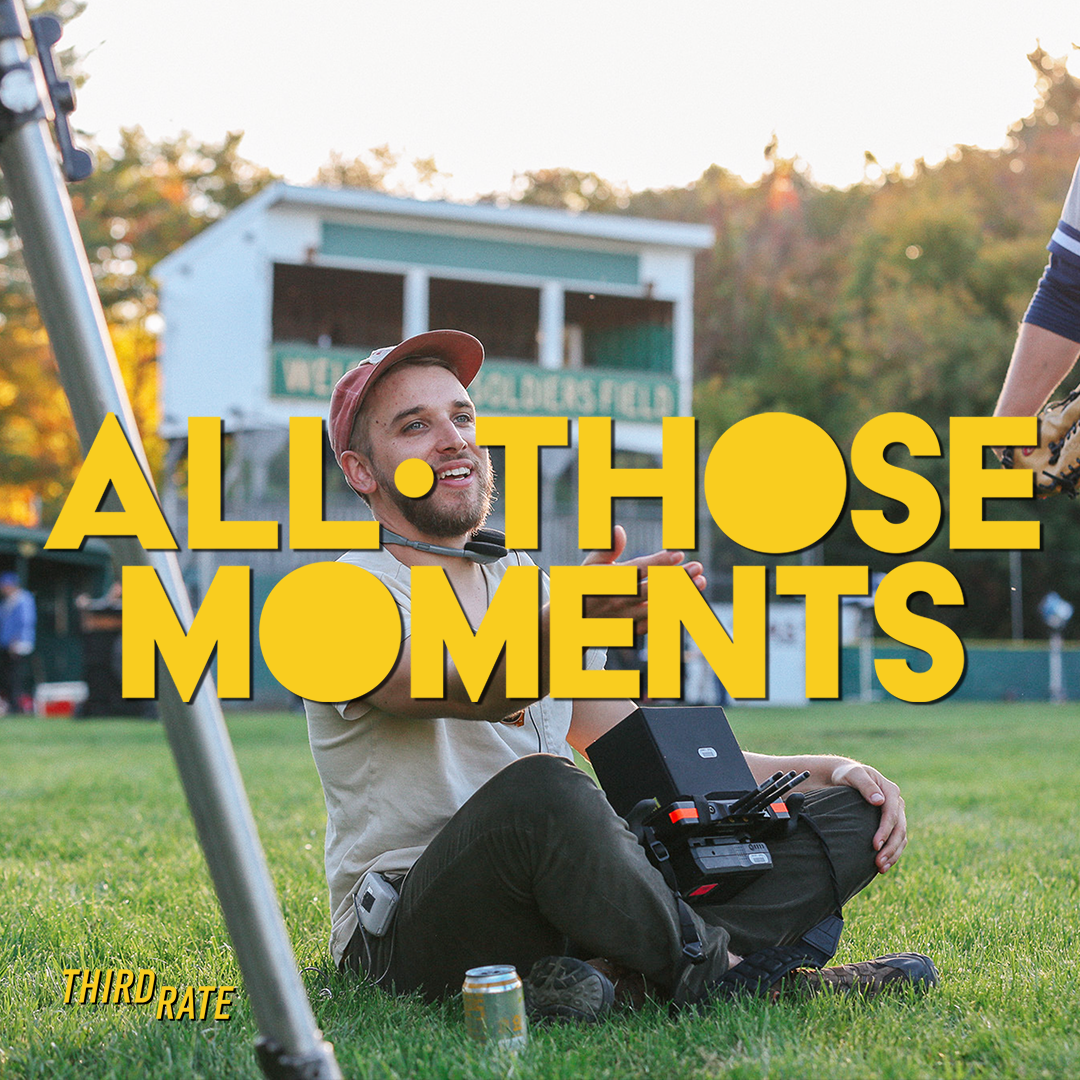
Hosts Benji Wade and Luke Baumgarten are joined by filmmaker Carson Lund, writer and director of Eephus. After premiering at the Cannes Film Festival Director’s Fortnight in 2024 and releasing in U.S. theaters in 2025, Eephus has become one of the year’s most acclaimed films, ranking near the top of the year's best on Rotten Tomatoes among critics.
This is not a typical interview. It’s a wide-ranging conversation that touches on both the challenges and joys of producing independent films. Carson shares stories about making his debut feature, the quirks of shooting a baseball game across shifting daylight, and the details of financing films with help from supporters like Chapo Trap House. We also dive into Carson's influences (Hollis Frampton, James Benning, Liu Jiayin), his thoughts on modern film criticism, and his upcoming project about a candlepin bowling alley -- another film that will contemplate the loss of communal spaces.
Whether you’re a cinephile, indie filmmaker, or just curious about the creative process, this episode is a thoughtful deep dive into the thoughts, feelings, and ideas of a talented young storyteller and filmmaker.
-
Eephus (2024) — Carson Lund Interview
All Those Moments — Full Episode Transcript
[00:00:00]
Our guest is Carson Lund of Omnes Films and the writer and director of Eephus. This podcast is called All Those Moments. On behalf of my co-host Luke Baumgarten, I'm Benji Wade. Enjoy the show. All those moments will be lost in time.
Carson Lund, welcome to all those moments. Thanks for chatting with us. Our podcast started with Eephus. It was also your first feature-length film as a director. Before we even get started, is that a banjo? What's going on over there? That's a banjo, yeah. It's not a very good banjo, but it is a banjo. I think I read your Matewan review on Letterboxd this morning. yeah. So I can't help but think of, isn't
Bonnie Prince Billy doing some isn't there s there's a banjo in Matewan, isn't there? There is a banjo in Matewan for sure. Yeah. Yeah. Yeah. Also Bonnie Prince Billy has been in my house. What? He didn't All right. Go for it. Tell us the story. He didn't he didn't see the banjo. I don't think he came in this room. But no, he was that we were we were considering him for a period of time for Topology of Sirens, a film I shot several years ago. And
It didn't end up working out. He didn't make it into the cast, but he was here in LA and and visited and and my director brought him over and introduced me. So that's my god. That's awesome. So right off the top of the dome, do you listen to a lot of movie podcasts? not really. I'm not a big podcast person, to be honest. I I used to be when I had a commute. Yeah. When I had a day job, but now that I don't have
Extended periods of sitting down and listening to something. I I I don't really listen to podcasts to be honest. Mostly I'm gonna recommend one. Yeah. Have you heard of a podcast called To the White Sea? No. No, I haven't two filmmakers, Jordan Fish, Ray Tentori. They grab the script of the Cohen Brothers defunct project called To the White Sea. They read two pages at a time and then they do like intertextual reads of all the Cohen Brothers movies based on a particular theme.
That is introduced in the two pages that they read. It's incredible. The main character was going to be played by Brad Pitt before the project collapsed. You know, it just showed you like the Cohen brothers with all their pull and even Brad Pitt back in two thousand one, I think, is when the script was doing the rounds. they couldn't get to financing because around page twelve or thirteen of the script, there's no more dialogue. And they were like the financers were like, We can we can't do this. This sounds like a movie that Carson Lund would want to make. All right, I'll I'll I'll have to check that one out.
For sure. I'll send you a link to it. Okay. Here is my kind of icebreaker for you. Eephus, Carson. Top ten lists from movie critics all over the world. It's number three the last time I checked on Rotten Tomatoes for 2025, as far as like the critic score goes. And I know how much all this means to you. That is purely critic score. It's it's fairly arbitrary. I mean it I mean it's just about the overall number, and it doesn't matter how many reviews the film has. So I'm not saying it isn't a feat, and I'm not
proud of it. I i it's very nice, but you know, I can't re I can't remember what was number one on there. It certainly was a film I'd never heard of. Well, we know that the plural of anecdotes is data and I have only seen the critics who I pay attention to saying great things about Eephus. So for you, is that like noise or does it feel affirming in any way that people like who get paid to talk about movies for a living are, you know, saying such glowing things about Eephus? it's extremely affirming.
And validating, you know, and I don't know if that's true of every independent filmmaker, but I'm in a unique position because I was a critic for a very long time. I shouldn't say was. I mean I I still write periodically. Yeah. but yeah, I've always paid very close attention to film criticism and and and film reviews coming out of festivals and not just not just writing on new films, writing on old films, repertory films. I d I stay I pay close attention to that whole beat. So I know a lot of writers.
Personally and and just a lot of writers on Twitter that I've followed for years. So, you know, when I see a certain writer praise Eephus or or, you know, write a glowing review or even just write a mixed review that that that has a lot of insight, I I'm I'm very, very pleased that the film's being you know, engaged with on that level. Dude, the topic of engagement is so like I was a film critic for about seven years, in addition to other sorts of art writing and then like
I got to this point where it just felt like it was a job. And then I kind of lost my interest in movies for a while. And, you know, life, life moves on and stuff. But part of how I've gotten back into filmmaking, we talked about this in an episode that's going to come out, is a friend of mine just started inviting me to movies and we would talk about it afterwards. And just that
The engagement piece, not just with critics, but with just like your fellow movie goers and having these conversations is one of the things that like we don't have very many universal experiences anymore. It feels really beautiful to me that we can still sometimes do that with movies. Yeah. Yeah. I know for sure. I mean, the culture is very atomized, the culture is very alienated for sure. I I'm someone who really cares about having those experiences and and I I
And I build my life around it. And I live in Los Angeles where I have access to those sorts of experiences. So I basically only watch films in the theater. so while I recognize that that is a what you just described is a problem all around the country, I I I've sort of insulated myself in such a way where I can live the the film going life that I want to live. but but yes, I I certainly recognize that that this is a a dwindling
Honestly, it's a it's a privilege that I that I have and other people have that are able to go to movie theaters regularly, you know. As you can tell, I'm we're in the bag for Eephus. My gimmick completely fell flat because we had a tech issue, but I I love the shirt. Did you get that at a from the music box store? Is that I got it from the music box store. I will admit to you that it is it is it fits exactly okay. Okay.
Carson, you're gonna keep me from drinking beer because if I if I don't change my habits, I will no longer be able to wear your shirt. It is right on the cusp my man. I'm between a medium and a large. So I would say, you know, just go buy another, but unfortunately we did run out of that full stock on a recent tour. Yeah, it's the only reason I got the medium because a large wasn't available. The the t shirts were slow to sell for whatever reason. and music box wanted to stop.
putting them out, I guess, because they felt like they weren't as popular. But sounds like we need to print just one more. Just one more for your guy. Yeah. Luke, do you want, do you want to dive in? Do you want to Yeah? So I mean, I would you you already got a chance to chat with Benji and I was a little jealous about that. And I just wanted to say I'm super excited to meet you, man. Not just because of this beautiful film, but like and how it helped us launch our podcast and kind of really nail down
This idea we had about actually kind of bringing the audience into every episode. Cause I I heard about this film when you guys went on or when you went on Chapo. And and then not be honest, like I kind of forgot about it because I've heard about a lot of media on that podcast. And then in a completely separate part of my life, some baseball dork friends, the people that are, you know, the South Hill Turkeys, O and 17, just the one of the most incredible beer league teams of all time, incredibly bad. we're also talking about, and these are not chapo listeners. And so
We they were like these friends of mine were like, Hey, whose house are we gonna go to to watch this movie? And we had this and Benji and I were just like, Let's just host it at the theater and see what happens. the discussion afterwards was so beautiful, not just like as a meditation on baseball, but it also like touched on life and death. It like just organically touched on civic bonds and a lot of the things that you were clearly thinking about in the movie, like people got it so clearly. Yeah. Whether or not that was any of your intent as a filmmaker, it brought up stuff.
For me as a as a viewer, that I don't know, it really unlocks some stuff for me. So you've been barnstorming this film all over the place. Are you all are all of your audiences getting as much out of it as we did? You know, that well, first of all, thank you so much. And and yes, it was our intention to specifically target you. We had we had you Well, you nailed it. Yeah. Original mood boards, we had you up there. You got our asses. Yeah, you nailed it.
no, but seriously, that's that's really sweet to hear. of course, yeah, I mean w w I wasn't thinking about, you know, changing American society with the film, but I was trying to question American society and in in in the current world that we live in, and dredge up all of these ideas about change and and and what is America, quote unquote. and where are we now and where were we then? All of that was very much
[00:09:08]
floating around on and on my mind, but also kind of secondary to just making a really specific and personal and heartfelt baseball movie, you know? That was that that's that's where everything has to start, you know? You don't get at big ideas if by targeting the big ideas. You have to keep them in the background and and focus on the people in in the film and and the world you're depicting. So
I am very really moved by by how well the film has connected. I it's really been kind of a shock to be honest. I felt like I was making something fairly esoteric and and and very specific that maybe only baseball fans would would would connect with, but it has connected not only with baseball fans, but with fans of other sports, fans of other hobbies, hobbyists.
speak and also with an international cinophile audience, you know, 'cause we've screened the film all around the world and people who have no idea what baseball even is. They don't even understand, you know, how how it's how the game is scored, you know, and they they are at attracted to the movie, which is very interesting. I think as someone who knows baseball, and you guys clearly do, like, you understand the shape of the movie very intuitively. where it's going and why it's going there and
And why the teams are sh are shifting back and forth from field to dugout. These are things that not every viewer intuitively understands and yet it it hasn't, you know, read as some sort of like completely esoteric object for those for those viewers. It it feels very human and and relatable. So yeah, I I mean, that's all that's all a surprise to me, but I guess I if anything, it just validates the idea that, you know, as as an artist, you have to just pursue extreme specificity.
and and not worry about you know alienating people, not worry about the audience, quote unquote. Just just just make the truest film you can. And so so you're saying your international tour wasn't just Japan, Korea, and like Taiwan or something, the other four countries that play baseball? We haven't even touched a lot of those places yet. The film opens in a few weeks in in Japan actually, I think October seventeenth. wow. maybe, yeah. So a month month away. But we've
As far as like international theatrical runs, we've only had a very small run in in France, which had a lot to do with us, you know, premiering in Cannes and finding supporters there. It's not that fr France is necessarily much of a baseball hub. I was surprised nonetheless to find quite a few recreational leagues in France that really rallied around the film. But the you know, we have we have distribution in India and Indonesia, but
I don't think it's open there yet. So it it's been hard to gauge, but what I'm really talking about is more so like the festival run. I'm gonna come back to the word esoteric in in a moment when we end up talking inevitably about Hollis Frampton. But when it obviously wouldn't scale for you as a filmmaker, or maybe it would, I don't know, to go take your film out to audiences and have all that direct interaction. But
The thing about our podcast that I have found super interesting and when Luke's describing the reception from these adult league baseball players, it included Bill Spaceman Lee's son, Mike, which I think I don't know if you if you recall that from the podcast when that was revealed. I didn't know it when we were in the audience that that that was a thing, but his yeah, Bill's son plays in this league. But just this idea of not only getting people into movie theaters, but also getting them to
share conversations and responses to the movies that they're watching. So it's I'm just kind of curious like how your movie and its reception with these audience has maybe changed your feelings going forward as a filmmaker. Nah, I mean yeah, I I I guess only in the sense like I said that it it validated that I should pursue the films I want to make as that you're good at it. Okay. Like I don't need to water water things down, you know?
I still, you know, when you're pitching a project, you still need to water things down to an extent or or or kind of play up certain elements of the project that may be more commercial. but but no, I think I I just want to pursue exactly what I what I want to make and and not think about quote commerciality so much. and I think that yeah, the this this experience with Eephus just showed me that like a wide, wide viewership can embrace a movie that has
Qualities that they're not familiar with, pacing that they're not familiar with. and they can embrace it because they relate to something about it or that it or it feels true and human and not cynical, you know. And I think a lot of a lot of media in the in the current American culture is very cynical. So it hasn't changed my ideas about how I want to make films. It just I think just reinforced it. You you mentioned to me Hollis Frampton.
Can we explain who Hollis Frampton is for the viewers who might not know? Famous experimental structuralist filmmaker, and specifically Zorns Lemma. Just in terms of you you said that you thought you were gonna make, I think, a more structuralist film when you set out to make Eephus. Were you initially going to make like and show and depict an entire baseball game in the sort of rigid structuralist approach of like Hollis Frampton's experimental films?
That was a a the kind of initial idea or that was the seed of the idea. And it it evolved quite a bit from that. But I think the movie is what it is because that idea took root at the very beginning. yeah, I I I think once we started writing the script, we got very interested in the characters and the world, and it became more of a, you know, narrative film in a lot of ways. But, you know, I I think there was always this idea in the back of our head, like, let's let's make this almost punish link.
punishingly long surveillance of a baseball game and and really sort of a way of like capturing the light passing across a field over the course of a day from a number of sort of rigidly chosen angles, because baseball is such a ge rigidly geographic game in terms of the diamond and and the spacing and the and the the fence relative to the to the home plate and and these sorts of things. So I was like if I can if I can choose certain
critical angles with which to shoot this this action, we can we can kind of create a full itinerary of this location. And we would make sort of something like a landscape film that is composed within nine innings of baseball and in told in real time. And we would have this sort of Zen meditative experience. Maybe maybe it's something more like that makes more sense in a museum installation or something. it might have just been purely conceptual because I think I am more of a I I I'm
I'm drawn to both the conceptual and the the narrative, you know. So so I so I found that as we started writing the the movie just kind of became a hybrid of those two impulses. And it is what it is now because of that. But but certainly like watching something like Zorns Lemma, or you know, there's many other films that I'm very drawn to because of they have a form and a structure that is not germane to narrative. It's the alpha like with Zorns Lemma, it's like it's the alpha.
bit or it's the role of or it's the role of film, you know, that that runs out in the in the final scene where it's that out of the the field. and the and then the the alphabet it forms the the structure of the first half of the film. And what you know that once you reach the end of the alphabet that you're going to move on to something new. You don't know what that will be. But it it just creates these fun sort of perceptual games that for the viewer. that that when you watch it, I think it it provides a little more
just unexpected kind of titillation, I guess. Yeah. I mean, I I think since we're going there, I guess if I had to give like a coloring book version of Zorns Lemma, it's starts with a presentation of the alphabet, then words as signifiers in like a cultural landscape. And then eventually those words give way to the it's like it's like a it's like a treatise on semiotics almost and the relationship between images and how we
interpret and take in watching movies, frankly. I mean, that seems like it has a lot to say about that. I guess that's is that a does that cover that movie a little bit? It's two hours long. Absolutely, that covers it. Yeah. Yeah. And then and then the the the film reel itself becomes a another form of semiotics that is then, you know, posed in contrast to the the written word. and that's that language. It's it's very the film's very much just about the limits of of different forms of language and
How cinema is its own language and it transforms the written word as well by by you know through editing and and through the camera. So you know the i i the film's quite different from from Eephus, but films like this and films like James Benning's one way boogie woogie, or or there's another film, a Chinese film I really like called Oxide Two by Liu Zhayen. that
[00:18:29]
Also has a I would say a s a structuralist form in the sense that it's a movie about the preparation of one meal of dumplings in a family. And and the camera basically moves 360 degrees around the table. It's all static compositions, but you know that you're gonna move kind of it clockwise to a new position after a certain length of time. And then when the meal is finished, that's kind of the end of the movie. So yeah, this this idea of just like
imposing the film form with a different structure than than what is provided by most three act structure narrative cinema, you know, was really exciting to me. Like what what kind of spontaneity and humanity can be contained within one of these structures? And I felt baseball a baseball game is such a, you know, speaking of semiotics, like it it's like a foundational semiotic of American culture, you know, of our language. We have so much
So much shorthand that's derived from baseball, you know, and many people probably wouldn't even know that that some of these quotes we have are are derived from baseball. It's it's such an intrinsic part of our culture. So if I can make a movie that just captures that the that that that captures the flow of a single baseball game, there'll be especially for viewers here, there'll be like this in in kind of intuitive sense of okay, I I know what the shape of this thing is. You mentioned to me that related to this idea of approaching it like a Hollis Frampton film that
Franny was not initially going to do the quotes and the scorecard conceit between innings. Here's that old Hank Aaron motto. Keep swinging. Keep swinging.
And that ended up helping you w when you were committed to the, you know, maybe we're gonna end up doing a four hour movie about baseball, but we can't. Do you wanna talk a little bit about that? Yeah, absolutely. I mean, it's a it's a long answer, pr potentially. Franny, the the character Franny is is based on a a figure from my past from my hometown that everyone kind of knew. He would he would show up at all local baseball games. He was just someone who had a sense he was a very boisterous character, quite different from what
Cliff Blake does in the film with him. But he's someone who I never really knew. No one really seems to have known him intimately. He seemed like there was there was a loneliness there that was hard to penetrate or or understand. But he was also, you know, dealing with that by going to all these baseball games. So I we wrote this character around him and actually my co writer Michael Basta is also from Nashua. So we were both drawing on similar memories of this person.
And then I think the character really transformed when Cliff played him the way he did. He brought so much soul to this character and really, really played up the loneliness. And and would, you know, he's a guy who just knows everything about baseball history and it's it's all just sort of second nature to him. And this is how he how he finds meaning and how he spends his time. Cliff took him somewhere entirely new and he brought things to the character on set that that surprised me, and including the quotes, actually. The quotes were not written into the script.
wow. It was actually a day when when he just said, Hey, we we had a little extra time that day. And he said, Do you mind if I start reading? I I prepared some some quotes actually. Do you mind if I just read them while we roll, while we roll the camera? And and I Sure. And and I I think we rolled for five minutes and he just he just rattled off a bunch of quotes and I said, All right, we should probably move on now, Cliff. And he said, I got like five more pages. Is that okay? Maybe maybe just do two more pages. And it's all in like, you know.
point like like eight point font, you know. did it include the manhole covers thing or was that a separate thing? Was that written? That that was written, actually. That was a reference to our hometown. But yeah, he he had he just brought so much preparation to this role and and all these different ideas. And then when we shot the scene of him when he when we shot the scene of him looking out over the field at the end, he he he he pulled that the Lou Gehry quote out.
out of his ass, you know. Like he just did it in the moment and it it felt exactly right. and I said Can we can we do that again? You know? Like that and then but basically we we we went back and we did the edit and then I realized like, okay, we should kind of bookend the film with that. So we actually had to go back and shoot him doing the Gehr quote at the beginning of the film, now with a a very different tone so that the book ends are have a different kind of emotional register. But
Essentially as I was going through through the post production process, I I I'd realized through a like a local Facebook group that the real Franny had just passed away. my he had been in a long battle with COVID complications, basically. like many people in this country. but yeah, so
That just hit me like a ton of bricks, you know, despite the fact that I didn't really know this guy very well and but I'd written an entire character around him and then suddenly in the edit he was seeming to be the kind of like soul of the film. But at that point when I discovered that we didn't even have the chapter structure. We didn't have the quotes, you know in the you know, from Franny that that that kind of segment the film in in terms of the times of day, you know, the first pitch, the afternoon, the the
you know, I can't remember all of them. Day, afternoon, sunset, and then twilight and and and night. So that was a a way of structuring the film and giving it a sort of propulsive sense of it's moving towards something that that wasn't there before. It was sort of this nebulous, you know, long game that that felt more like a purgatory. I think the purgatory tone is still there, but but this gave it a sense of going towards something.
Yeah. and I did test screenings with and without this. And I I usually got that sense from people that like, okay, I feel like I'm more situated within the film w by having this. and then I also had ended up changing the the final shot. So it's for any walking into the woods. That was not the final shot of movie. It was somewhere else in the sequence. the original final shot was actually Graham looking out at the the fireworks display.
In th what an interesting difference that would have been as a read in the end. That would have been like triumphant, you know, almost. Yeah. So so the movie really became more structured around Franny as kind of the soul of the whole thing. In a in a way that it almost suggests that like the game is all happening in his mind. Like who is he? He's like a s he's like a wood woodland creature who comes out and imagines a baseball game and then walks back into the woods. You know, so it it gave it this
For me, like a kind of fairy tale quality. But but but like I said, I mean originally he was just local color in the script. Yeah. He wasn't kind of this grounding force. That's so fascinating. So the even starting with the the structuralist talk and like kind of this was the my my question generally, we've already started getting into in specific is like
This is a baseball movie, but it doesn't really feel at in you know, in the final edit like a sports movie in the sense and you feel free to push back on this, but in the sense that we it doesn't adhere to any of the traditional motivations of a sports movie, like you know, the outcome doesn't actually matter who wins or loses the game, the the the the field is already kind of condemned. and a lot of the sports action literally happens off camera. So maybe could you talk a little bit and just keep maybe just keep cooking on like how the
those choices sort of came to go coming from this like maybe this will be a nine inning structuralist thing to the stuff you just described with Franny. And like these other little elements that feel make it feel like such a unique baseball movie and and kind of an anti sports movie in some way in terms of the motivations. like how did that come together as you were writing the film with with Michael Basta and Nate Fisher? And then, you know, maybe just keep cooking on like the things you discovered as you were shooting as a director.
Yeah, I mean, we didn't really set out to make an anti sports movie. I would say we wanted to make an ultimate baseball movie in the sense that it actually feels like baseball. Yeah. Totally. I think a lot of these famous American baseball movies, many of which I like, don't really feel like the game, at least as I've experienced it as a as a player. because it could because they they often sacrifice the the pace of the game and the
[00:27:11]
poetry of it. for sure. Yep. You know? and I wanted to put all that stuff front and center and and and kind of, you know, really f spotlight the downtime and the moments of stasis and the socializing. That's all part of the sport, you know? Totally. All the anticipation is a is very much a part of the sport. and I think it's also a game that that that there's always a sense of frustration and failure and and built up expectation that that can that then gets shattered, you know.
Yeah. You have a rally and you come within one and then the game's over because someone strikes out. So the these are these are intrinsic emotions of of this game that I mean in terms of like the kind of setup and then lack of payoff. You know, that that was all that wasn't me like, you know, trying to get my kicks over like messing with the genre. That was just me trying to really reflect how it feels like to play baseball. Yeah.
and that was something we definitely talked about quite early on with with the writing process was, you know, if we're gonna if we're gonna hint at fireworks, we're not gonna show If we're gonna hint at a close game, there's a little bit of a rivalry between these two teams and one's an underdog and one's, you know, more well manned. Like one of it it can't end her triumphantly. That's just not how it's gonna happen. It has to be a walk off walk. That is like the funniest way for a baseball game to end.
very it feels very plausible to me in the context of of how we we played it out. But yeah, I mean it's a huge project to tackle because you're you're thinking about twenty twenty baseball players, two umpires, a handful of spectators. You have to you have to try to find ways to make them all important in some way in the story because I think this is a film about a community coming to grips with saying goodbye to the field that has
giving it meaning, giving these people meaning, you know? That's something we talked a lot about is that your movie gave some purchase to not just all the players, but the people on the periphery, the kids that come to watch, the the kids of the Belinda, Bill Belinda character. The everybody has just a moment to say something and to participate a little bit and and it ends up it it feels like it gives a t a tiny bit of weight to everybody and sort of
load balances, the the sort of narrative threads that are being explored. Yeah, yeah. I mean that was the the goal wasn't to say like let's make sure everyone has this amount of minutes on screen or whatever. But we did want a we had we did target a kind of a feeling of equity between the different characters. And the way we did that was we wrote the film as sort of a box score in addition to writing it as a script. so we kind of like we figured out what do we want to happen
What what do we want to happen in a baseball game? how how is this game gonna go? When when are the runs scored? What what are the lineups? What are the rosters looking like? You know, who's playing in the field? Are there any substitutions? This kind of thing. Like we had to figure all that stuff out. So we knew where anyone was on the field at any given time, that we knew how many outs there were, what the situation was, who was up, who was in the dugout, having a conversation.
You know, and it allowed us to sort of see the film as like a bunch of units of time. You know, a baseball game, nine innings, twenty-seven outs, or sorry, fifty-four outs. And each of those outs and innings provides sort of a question of like, well, where where's our camera? What is worth seeing in this moment? And sometimes that's the baseball game, and sometimes that's what's on the edge of the baseball game, sometimes that's the dugout, sometimes that's just the trees, you know. it's it's
And it was it was sort of an an intuitive process in finding out how we toggled between those different threads. but we knew we had certain benchmarks we wanted to hit, certain narrative guidelines. We wanted some tension to arise thirds through the all the way through the movie. So it's even even when you try to escape three acts, you still land the both of three acts in a way. Like there's a there's a sense of of of tension and release that's provided by that.
structure, but so so we are we are figuring out where is where does it make sense for these beats to happen. And then where does it make sense to kind of let some air out and and just hang out with some people on the bench, you know, and then back to the game. So it it was it was really a challenge, but a fun a very fun one. And then and then the edit I feel like we we had to make quite a few changes. I mean, like I said, we wrote this as a we wrote this as a much longer game.
Like it was a 10 inning game, actually. Originally it was a an extra innings game. And actually a lot of a lot of articles still describe it as an extra innings game. It kind of feels that way when it gets dark. Yeah. Yep. But if you actually go down and and map this game out on your own score sheet, you'll find that there's all these sort of inconsistencies that that resulted as a resulted from the editing process. Just interesting. By nature of me trying to condense, shorten and and and find different
Different flows of energy that weren't just stasis or purgatory. Yeah. so so yeah, but but I also felt it was justified because as the game gets dark and as their as the umpires leave, they are sort of forming their own makeshift democracy and now they're kind of losing a sense of what inning it is anyway, you know, or who's a you mentioned anticipation. I was thinking about distraction. you know, in especially in the the the shots or the moments where
p characters are talking and then like somebody hits the ball and you don't even see it because it's off screen. And I was mostly thinking about that as a as a spectator of the sport. But when I I played a lot as a younger kid, and I probably wouldn't have played as much if a coach hadn't to taken me from like left field where I started to catcher because I had ADHD I didn't get diagnosed with until my thirties. And so my experience of playing the outfield is nothing but distraction of being like, I really want to be the hero. I'm the left fielder, whatever. And also I
can't it's the you know aspects of this game I'll just like f notice a butterfly and stare off into space and then I'll hear the crack of a bat and it's like yeah I'm playing a game. Like that that part was really great to me. and how that never ends like it's both what you love. The pace is intrinsic to baseball. It's and it's what creates so much of the drama but it's an it's a really interesting kind of slow paced kind of drama. It well baseball also has I think the closest relationship to cinema
Of any sport. And I don't think it's close. If you think of all the punctuation, all the pauses, well, that's what being on set is. You're constantly stopping, moving, resetting. I think of also the process of filmmaking. You never know when you're on set when you're going to be needed. You have to keep your head on a swivel because the gaffer might call for a light or anything, you know, at any given point. And I think even the way that you approached this distribution of weight across the different participants in the movie.
I would imagine that was happening on set as well. We started this podcast before we even recorded, I think, talking about John Sales and Matewan. And I remember his book about Matewan, him saying he wanted everybody on set to kind of know at any given point what's happening, what's the motivation behind using a Dolly in this particular shot so that the grip feels invested and can feel like a participant. Do you think there's a a through line there? Or am I talking shit here?
No, no, you're not grasping at straws. I mean y yeah, our set felt very I mean, I was the director, obviously, but but there was a there was a democratic sense of creative input, I think. And it was a small it was a fairly small crew. We got really close. We all actually we lived in the same house. Like the crew lived in one house, the cast lived mostly in another place. There was this familial feeling to it and and yeah, and I mean people did need to know what the
game situation was within the movie. Yeah. at any at any given time. I mean, certainly my AD and my script supervisor and but then the actors knew too. Sometimes they would correct me and say, I'm actually supposed to be on second right now. So you can't put me in the scene in the background in the dugout. So it's like we all were contributing equally, I'd say, to to making this thing happen. I feel very, very close with with my crew because we've worked together many, many times and
these were a lot of my closest friends. so so there was a teamwork aspect, much like you know, when you form when you join a team and the roster has this chemistry, you we built that ourselves. as for like the baseball cinema analogy, you're you're talking about it from the perspective of you know, being on a team and then being on a crew. I think also being a spectator of both, there's a similarity there too. I mean, obviously there's a massive pastimes i in the twentieth century.
they remain very popular, but not what they once were. Watching movies and watching baseball, or at least watching the kind of movies I like to watch, requires a sense of patience and being present and immersing yourself and and being open to watching people stand around for hours on end without a lot of you know, catharsis sometimes. Yeah, that analogy of the participants then going to the dugout to watch, you know, between innings their
[00:36:44]
Teammates do things and then it's like, it's my turn. It's very much like being on set. It almost goes without saying that that's what it is. Luke and I joked when we did the podcast. I I would like to think that I've watched so many movies and I had, you know, a background in going to film school and being on set and doing all these things enough to just kind of sense that the vibe must have been really strong on Eephus of not just the.
people in front of the camera, but the all the folks behind it. We also joked about the fact that you, your brother and Michael Basta and others had like five roles apiece on the project. So like these guys were doing so many different things and We actually have more roles than that, but at some point you're like Yeah, it looks ridiculous. Yeah. It looks ridiculous. Yeah. It's like the film school thing of like, editor, you know, sound department.
Dolly grip. Yeah. It's like okay, I'm not gonna give myself all the credits that I had in it. But if you go by the evidence, Carson, of like how the people that were in your movie feel about it, I can't tell you how many people have reached out to us about the podcast to just talk about how they not just appreciate the podcast, but how much it meant to them to be part of your movie. I don't know if I I haven't shared that with you in our previous conversations, but it's anybody from the people that were
Of course, the actors, like so many people reached out, people that were just involved peripherally with the production that are like DMing saying, We loved being on this movie so much. Thank you for doing a podcast about it. Wow. I'm I I I am curious who has reached out to you. That that's always great to hear. I mean, yeah, I I this this casting crew continues to be just very close friends and and they come to so many of the epis events. I mean, I can always count on many people to be there, sometimes too many people.
at show up at a screening. I'm like, well, we can't all fit on stage, so what are we supposed to do? yeah, but it's it's it's really great. I mean, this is when I first got into filmmaking and I and I I watched like behind the scenes on on Days to Confused. I was like, man, I want I want to make I want to make a film where that it feels like that. You know? Yeah. Everyone has a great time and it feels like a summer camp. And this what that's what this did. I mean we're on a baseball field for a whole month and it's like that's one of my favorite places to be. I'm I'm throwing I'm
playing catch in between shots, you know, or doing batting practice when we have free time. It was yeah, it's it's extremely fun. You know, this is a very banal thing to say, I guess, but I think it it hopefully you feel that coming off the screen, you know. Yeah, but the thing is, I and I don't think that many people who haven't participated in the process of being on set during the production of a film, it can suck so much. Yeah. It's it's kind of hell.
I loved pre production and post production. I never wanted anything to do with physical production because it's so freaking stressful and people it's the worst side of people can come out. The best side can come out, but often the worst side of people comes out. Yeah. You know, I went to film school and at at Emerson College and there were so many of my peers were on set like every weekend working on their their peers' films and and I would often turn down these opportunities because I just didn't enjoy being on
being on set in the same way they did. and I've been on a number of sets in my life that where there's no air conditioning, it's it's hot, everyone's sweating, there's not enough food, not enough water. you're s you you're cramped in a small space, maybe right next to a Fresnel light that's making you sweat even more. You know, so like I've been in a lot of very uncomfortable filming situations. And at some point I said, I don't I don't want to do this. I why not if if I'm gonna direct a film, I want to make it really fun.
really pleasant and just to have a good time, everyone's gonna do better work in that situation. So in in a in a very primitive way, like I I made Eephus because I wanted to be in New England autumn, you know, for a s for on a baseball field for a whole month, to be in great weather with beautiful scenery and a bunch of my friends. Like so it obviously made a huge difference to how it came out in the the film. I mean
I have to ask one dorky question because I can't help myself. I thought for sure Luke asked me about this during all the different transitions in the lighting and just like the continuity nightmare that must have you guys endured. And I was like, well, they must have shot a few nights at Magikar or whatever. But then I heard you in an interview say that you guys shot some stuff day for night and you had some particular technique. Do you mind sharing just a little bit of inside baseball about that? A lot of the pre production involved.
Very long conversations between me, Greg Tango, the cinematographer, and Michael Basta, who was my co-writer, but also the A D. And just going through scheduling the film and figuring out where the camera should be any day and and and where and how many cast members we should have for that day. These sorts of things. really, really intricate scheduling to try to save money, essentially. But we we we p basically realized early on that like there's no way we're gonna shoot these dusk and twilight scenes at actual
Dusk and twilight because that that's such a short span of of a day. We started putting our our heads together about how to do that and and and Greg Tango brought up an effect that they actually used in I think it was Mad Max, the original Mad Max. Okay. They were shooting on overcast days during the day, and there's a certain camera process, a certain LUT that you use.
You apply to the image that and you overexpose by two stops and then you apply the LUT and it and it it brings the image down and it's very dim, but you're s you're retaining all of the information in the shadows that you'd otherwise lose if you were exposing to true dusk or true twilight. Yep. So, you know, we shot a lot of the we shot all those scenes during during gray days when we couldn't shoot the other parts of the game. and then we ended up having too many gray days and we and we shot we had already shot that in a
entire passage of the film and we're like, now what do we do with this time? Start lighting the dugout and make on a gray day to make it seem like it was a sunny day and that sort of thing. But yeah, it was it allowed us to be to shoot more freely and not worry about rushing to beat the clock. so yeah, it was it was Tango's idea and I think it really paid off. And actually in the color coloring process, you know, that that was fun because we were at company three with our colorist Miles Kula was with us and and
He was he was pushing for us to to brighten up those scenes just a little bit, to bring them back from the murky unintelligibility. and and Tango and I were really pushing, pushing for for you to not be able to see very much. No.
for the help.
Fucking garbage. I'm so glad you did it the way you did. Because first of all, I'm gonna give myself the excuse of modern cameras and high dynamic range of them that I didn't detect that it wasn't actually magic hour. because when Luke asked me about it, I was like, I was even referencing Terrence Malica's like, well, see in this movie Days of Heaven, they just shot in Magic Hour every day. And I think credit to these boys, they did the same thing. But like you're like, no, we did we did it differently than that.
Well, no, there are there are scenes. So Magic Hour I consider it the time when the gold golden light is still out. Yeah. and we did shoot a lot of the sunset scenes at true sunset or true sunrise, you know, to get the the low light. so we did shoot a lot of that that way. And actually a couple of the scenes at what we call dusk before it's like the blue twilight, we did shoot those practically as well. So there is some real, you know, beautiful dusk and and sunset.
imagery in the film, but but that twilight section that that happens in the blink of an eye, you know, in reality. Totally.
[00:44:51]
I was like listening to a random podcast about like the the crisis that of boys, you know, that people are facing. You know, kids are you know, boys are behind, blah, blah, blah. And was this the boy crisis. Is that what they're calling it now? Yep. They're calling it boy crisis. and this this guy was talking about, people say you need to spend quality time with your kids. He's like, I actually think you need to spend garbage time with your kids. It's like the moments when you're driving them to soccer practice that really matter, and they're we're not having like a big family moment.
It strikes me that that's I mean, you were when you mentioned like what you were doing on set to kind of create a like a fun atmosphere, it's like I think we think so much about and whether it's like politics or political organizing or making art, you think about the work without thinking about the garbage time around it. And it just strikes me that that's a really beautiful baseball itself, we as we've talked about at length already, is sort of a g game with a lot of garbage time built in.
And not just at the end of games, like I'm a big basketball fan. It's like, okay, we're in garbage time now, so we're who's gonna like pad their stats? it's like a whole game filled with garbage time. And and it strikes me that that's where community and culture is built. It's not necessarily like yelling at your city council members during the city council meeting. That that process starts maybe at a bar or it starts in an organizing space. And what you're definitely meditating on in this film, what I think we're really trying to meditate on in this podcast is like.
There's the thing you go to a place for, and then there's all the community that happens around it while you're there. And it doesn't have to be baseball. It can be knitting, a knitting circle or something. And and there's just something it feels like we've lost, and I don't know where we lost this exactly. Maybe it's the hyper efficiency that we're all striving for in our lives, or that, you know, has become kind of a cultural like god that we all worship, or or the loss of these third spaces for for digital spaces. But
That's the real shit, man. It's what it feels like to me. And I feel like you've cat we've talked about that on so many different levels already today. Yeah. I I wanted to treat the baseball game as as a ritual that they can go to once a week as a as a respite from whatever chaos is going on in their lives, you know? and it's a place they can just go and not worry about other responsibilities and truly just experience what yeah, what you're calling garbage time. I like that. It's the ba the basketball fan in you.
This is people are very afraid now of of boredom and that that at any time there's not a sense of productivity or or you're not a you're not accomplishing something or you're not looking at your phone or something, that that is you wasted time or something. And and it's it's this hyper productivity mindset, the the grind set, as they say. The grind set of contemporary culture that that has made us very fearful of boredom and dead time.
And I think these are really important for just the for the brain to sort of reset and and I go camping a lot and I and I spend days out in out in nature and obviously we don't have any service and it's just me and a group of friends and we're cooking and we're looking at the sunset and just just hanging out. So yeah, I think that's really crucial. And I think in in the in the s socio cultural context that we depicted in Eephus, that is their form of camping, going going
To a baseball field for an allotted three, four hour span once a week. You know, that's the only way that they've carved out this this little escape, you know? And I think that's really crucial to just just like for our health. When my wife and I talk about this, we we describe it in terms of like we have cultivated a pathological intolerance for discomfort. Whether that discomfort is boredom, anxiety, whatever it is, it's just I can just, you know.
Always there. Just give me some dopam give me some dopamine. And we have no ability, as as my wife would describe it, to to be. We don't know how to be. We always have to be going somewhere. It's like what what I'm transitioning toward, an outcome, an objective. There's something that I'm supposed to be doing. I have to be doing. I can't just be. Mm-hmm. Yeah. Yeah. I feel that completely. I I'm not, I'm, I'm, I'm guilty of it as well. Like I look at my phone quite a bit. I'm I'm now
a filmmaker who needs to try to make ends meet by making the projects I want to make, you know? And I have to always be on call in a way, but this this movie is my way of sort of reckoning with that and trying to make sure that I'm, you know, I I have a North Star, you know? It's it's partly my fault, Carson. I think before we recorded our Eephus podcast, I was DMing you. I'm really sorry, man. I was excited. I I was exuberant about your movie.
I wanted to say a couple things about like marrying the kind of high and low reading of your movie and not go like post structureless dissertation on people here. But like we heard a lot of people say it's sandlot for adults, which I think is super accurate. Yeah. But I think that underestimates all the deeper readings that people are making of the movie actively, whether they realize it or not. I mean, we did have responses from people that were so stoked on the one liners because
G look and I mentioned that we were a little we had some regret that we didn't describe enough with how funny Eephus is. That's a funny movie. Yeah. And there's so many reasons for that that we don't need to go into. Just watch the movie. It's extremely funny. But there are there's so much poignance and profundity, like from ideas of death and decay, all the things that are on the Omnes website, that describe what w how you you are all approaching movies.
I just want to ask you, like, have you experienced this with audiences to where and you mentioned that you also found yourself creating more of a narrative structure that might make it more of a a pleasant experience and a kind of a pop culture experience, the movie, but it's still packed with this all these deeper readings that are very, very readily available to people if they want to put in the work. Yeah, yeah. You know.
whether it's Frederick Wiseman or you know, you and I did talk a little bit about that. I went a little ham on that topic because I was like, I can't believe this dude put Frederick Wiseman in his movie about a baseball field that's being plowed by the guy who made high school. Like it's what? We have to talk about this. You put it in there. It's your fault. Yeah, I know. Well, I'm glad you brought up the comedy because it's something I I I I just hope it
I hope it connects with people when they watch it, but it's not something I usually talk about because they just had the experience of watching the movie. I don't need to reiterate that it's a funny movie. but but typically I'll I'll dwell on the death and and decay and and all that stuff. And then in a QA where it's me and Nate. Nate will be the court jester and he'll he'll remind everyone that this is actually a very funny movie. Nate is Nate is a comedian, and he has a great podcast called the his podcast was awesome. Yeah, yeah. It was very important to him that this movie be
A joke per minute, you know, like a lot of jokes. But I'll not not but and then it was equally important for me to offset a lot of those jokes, to make them ambient, to sort of put them in the background. We agreed that that was an interesting strategy. It it it sort of results in that what I've called like ambient comedy. You know, it's like you might laugh at it, you might not, you might not even hear it. So maybe a certain part of the theater will hear it and then another part won't hear that joke. So I like that there can be a variability in the in audiences' responses. That was my way of sort of like
Not making it just a joke machine or a gag machine, you know. I didn't want that. But but I I'm I'm very proud of the comedy that we did arrive on. It feels more textured and lived in. it also felt really true to like the experience of like hanging out, you know, spectating in a baseball game with a bunch of friends. You're like you don't catch every joke that everybody says. There is a lot of that you call it ambient comedy. That kind of feels like my experience of going and seeing sports games with my buddies. How I'm curious when we were talking about the just like the
the cultural ease or you just like the the community that was built on set. How much of that was a lot of that on the page or was there some improvisation happening too in those in the com in the in the jokes and stuff? Well yeah, so it it wa almost all of it was on the page because we didn't want to just have a framework and then let everyone improvise. It we felt like it would just be a sloppy film. I mean I I I maybe would have had to do that if we didn't raise much money and then we we just have to go out and shoot something. Right.
but we had time to write and really, really work on everything and and and Nate was very careful to make sure that scenes had sort of like a like a punchline structure, not all the time, but but that there would be threads that would come back around and and we'd land the little rim shots here and there. But but a lot of the background chatter, sometimes that was material.
that was cut from the film, like the you you'll hear a line that used to be a scene and now it's now it's just in the background. Interesting. Yeah. And other times it's just banter that I encouraged to happen in the background, you know, that sort of like plays behind the scripted scripted lines. So it if I had written the script out with all of the background chatter included, it would have been a four hundred page script. You know, constantly talking on a baseball field. So
[00:54:11]
So a lot of this stuff I had to just let the actors go. So I would say that the dialogue that is foregrounded is scripted and and then a lot of the background stuff is just just them playing around. And and there were a lot of great lines that that we landed on because they were just playing around and because they had built their the actors, I should say, they have they built their own chemistry offset and then brought some of that into s into the set.
I was gonna say just briefly that's a real testament to that chemistry that I couldn't t like there was there were foregrounded lines that felt improv to me in the in the really amazing way of like two actors who feel super comfortable together riffing. and then so it's like I couldn't tell, and that's a real testament to the the community that was built on set sort of I agree, Luke. It's a it's a gr great observation. And another plot it to throw at Eephus is that it's indistinguishable.
And I can't help but ask because we brought it up on the podcast, because I I found this moment so incredible, like when Conner Marx is waving the branch around at the tree. Was that something on the page or did he just was he just dorking around? Yeah, that that's dorking around. I mean, Connor Connor actually is one of the greatest improvisers I've ever worked with. intergalactic dude. Yeah. And if you if you buy the Blu ray, you can see a number of his improvisations that
didn't make the cut. and he has a great scene with with with Chris Goodwin, the the catcher on the river dogs, where they where they're behind a shed. I don't want to give it away, but but it that that scene was entirely improvised because we had a little extra time in the day. It didn't really fit in the movie, but I'm really excited about it on the Blu-ray. I did I when we watched the movie, I didn't know Nate was Nate. And so his description of the Eephus when talking to Connor, I we actually made jokes about that scene because we're just kinda like
The way that Nate performed that that moment was kind of like, yeah, dude, it's it's obvious that I'm describing the Eephus pitch as a metaphor for baseball. Go, but go ahead and say the quiet part out loud, dude. I know we're we're gonna end up talking more about Eephus, but I have to ask you a little bit about your role as a film critic and your history with film criticism. If if is that of interest to you to talk about a little bit? Sure, sure. Let me tee it up this way.
You've written some reviews and some criticism for Harvard Film Archive and Slant magazine. And I actually just want to read something you wrote on Letterboxed in 2014. let's see. That's 11 years ago. This is unb this is unbelievable. Until now, I've been hopelessly ignorant. Foxcatcher reveals a deep dark secret about America, and the secret is this.
This country's legacy is founded upon an unhealthy mix of greed, wealth, and megalomania. It's truly upsetting to hear now, as a citizen of this country for over two decades, that there may be something evil brewing beneath the sterilized narratives of American excellence and glory portrayed in mass media. How could I have been in the dark for so long about this sad truth? All right, two part question, maybe not even a question.
As someone who made self serious films as an undergrad in film school and really likes Bennett Miller movies, I felt very attacked by you. And I want you I want you to account for this scathing review. Because if anybody can't tell it's it's of my whole personality. Deeply satirical. Yes. I feel like I've just had my entire approach as a student filmmaker attacked. Is there a is there a star rating on that review? One and a half stars. Okay. So that's how you know it's satirical, yeah.
I don't usually do those sort of letterbox takes anymore. But for whatever reason I was I was animated by that film and I haven't seen it since, so I I can't speak very profoundly about it. But I just felt everything I I that I wrote in there, I I just felt like this movie really thought it was passing off what it was doing as complete wisdom and poignant. Yes. It did not need to be made. It's a movie that as a project really doesn't have anything to add to like
It's so it's like such a platitude that's also quite banal. Yeah. Yeah, exactly. I just felt like it was such a such a chore to get through because everything passed off as this like novel chestnut of wisdom. You'll never believe what a disgusting megalomaniac did. Yeah. Yeah. Exactly, exactly. Yeah, you know, I it's tough to find the time and it's really I never made money on film criticism, so it's not about that, but I had I had free time and I I was
making income on a on a with another job. So I just do it kind of for fun and just to sort of like work through my thoughts on films and try to form my taste and and broaden my horizons and figure out why films were working for me or why they weren't working for me. And eventually I kind of stopped writing the more negative takes 'cause it didn't feel necessary to contribute to the culture. if you're not a working critic. I mean I I'm certainly into critical takes on films that
lead you somewhere you know, productive. But I think a lot of a lot of negative writing is just there because the critic is being paid to do it and it he he just shits all over a project. I think there's plenty of room for that, and and there's a a need for that with certain films. But but I I just started writing more like film criticism that that was about my enthusiasm for films, you know, to try to figure out how to, you know, just understand them better and and form my own taste as a director and as a as a as a viewer, really. So
I actually super appreciate that because I used to be the person that it still happens where somebody will get in touch with me when they don't like a movie and they'll go, Can you please tell me why this movie sucks? 'Cause they know I'm gonna be the person who will say the dozen reasons why this movie was terrible because I'm soup the super opinionated take artist, you know? And I I don't like it. I would much rather watch movies. We're
Getting ready release a a podcast. I mentioned th to you this to you on our phone call about highest to lowest, a movie we didn't enjoy, but I'm really hoping that we are effective at just describing and having an informed perspective about why we didn't like it instead of just instead of just shitting on it. Of course. And and you have to you have to acknowledge that Spike is, you know, he's a major American artist, you know. And he's there's so many different factors with w how his films get made now that that that
Take it very far from something like do the right thing. You know, that's a work that's made with pure passion and now he's in a different different register. Product product placement comes to mind. let me let me move this in a different topic that Luke and I both have some things to say about, if that's okay. Yeah. I'd like to talk about the Omnes mission statement and nostalgia. And I'll start that with this quote from Adam Naaman, the ringer critic.
Adam does a bunch of things, but I know that he's a critic for The Ringer these days. Yes. And when he was talking about the movie Eddington and Ari Aster specifically, and as we talked about on both podcasts about Eephus and about Eddington, there's this relationship to the loss of unifying civic activities. I'll just paraphrase it that way. And he's talking about Adam in this quote about the role of nostalgia and specifically like phones, the use and the representation of phones. And so here's what he had to say.
He said, there's a lot of discourse prompted by Paul Schrader a few years ago where he's like, I don't like phones and movies, and young filmmakers don't want to make movies about the present, which isn't wrong. Sometimes the best, brightest, and most lavishly subsidized American filmmakers have a thing for period pieces, but Ari Aster is dealing with the present tense, and he's finding a visually novel way to use social media and texting and personal technology in a way that serves rather than stymies the narrative.
So Luke and I talked a lot on our podcast about Eddington, about how much cell phones suck in movies when you see someone on a cell phone in a movie. And also just the the way that they can completely unravel plot construction because you get into a story and somebody goes, This would never happen because somebody has a fucking phone to solve the problem. Yeah, you know, just kind of like how the the suckiness of that was was deliberate and really effective, in my opinion, in in Eddington.
Do you worry as a filmmaker or did you worry making this film that people would sort of come for the nostalgia of the simpler time and miss the the sort of maybe what you were trying to say about the present moment? Well, I guess if you miss it, that's on you. not my problem. But no, I mean th everything you just described about the the the dominance of of of period pieces, you know, the preference for period pieces among
major filmmakers and and even certain audiences, this longing to live in the past or this idea that the past was was better or something or or or simpler, you know. Obviously these are all fallacies, but obviously they're also they hold a very large sway on on the culture. So it feels equally evasive to not make films about people for whom that sway is held, you know? and I don't think that's always true of of
[01:03:36]
you know, the lavishly subsidized filmmakers who are making very expensive period pieces. I think sometimes they are indulging in nostalgia. But for this, for this project, like I wanted to make it about characters who were stuck in the past, who are trying to hold on to some ideal that is real, you know, in their lives. It is a is a place of comfort. And they they may have these cars from the the sixties and seventies because they're holding on to material objects that that remind them of the past. So
You know, I I do and I and I also, you know, we just set the movie in the nineties so that they wouldn't have the phones and they wouldn't have the distraction. and I wanted to I I I am very much I'm not a I'm not someone who wants to completely avoid phones forever. I think for a period of time after they became so prominent, I think there was a there was maybe some merit to resisting this monolithic corporation trying to completely run our lives. And it's like I don't want to shoot this thing because it's sort of
It's an advertisement, you know. But I think at this point it has become so so we've become so inundated by it. It has changed the way we think and be and the changed the way we behave that it feels at it feels very evasive to just avoid it forever. I think also like Cronenberg with the Shrouds, I think does really interesting things with the the modern age. And and there's a a script I'm writing right now that that is not a period piece. It's set in the contemporary times and people use phones and and this is just something we have to deal with.
I do think they're very ugly, but I think ugliness is not always something to be avoided in in art. It's a it's a challenge. I mean, I and sometimes creatives and filmmakers in particular love to know s some boundaries or rules or like something as challenging as the to use your expression, it's a great one. The ugliness of phones, but to to evade it isn't is so inauthentic to just like invite kind of incredulity, you know. I I can't watch a movie where
There's just no presence of a cell phone if it's set in modern time. It's just like impossible to believe. Like as I mentioned on our Eddington podcast, somebody can be in the middle of a conversation and they're gonna go, hang on, let me see where this text is from. I mean, if you don't show that, you're not showing how people actually behave with one another in twenty twenty five. Of course. Of course. Yeah, it it ri it only dawned on me quite recently, actually when I was writing this project and my co writer said to me, you know, like there's something very primitive about Apple, the company, you know, like
I j I I'd never really thought of it this way because I think it's so in it's so subtle, the branding, that it it is like an Adam and Eve idea. It's like an origin myth. It's like you are we are now changing society. We are changing the way you think. And now this thing has become infiltrated in our lives. And so it's it is the new normal. so it feels evasive to not deal with that. But but in this film I I really wanted to to talk about, you know, an earlier era and and and to question that.
earlier era not to show it as something better, but also sometimes there are things about it that are better. You know, like and I hey, I respect you saying that if you didn't see the deeper meaning in your movie, that it's it's on you, audience. I I think shout shout out. Roland Bart would have been proud of you for saying that, Carson Lund. Thank you. But I think I mean you can't leave that movie feeling like this is a triumphant make America great again kind of pageant. No, it's not it's you just don't. You you leave with a pit in your stomach.
But you're also seduced by those pleasures, you know? Like, baseball on a fall day in America, how that's so American, you know. Like I I'm seduced by that as well. So it's like I want to show that to build up that illusion and then puncture it and and and in the wake of all that to you know, leave you feeling uneasy. Can I do one more question about nostalgia? Just real quick. I almost and I don't want to make this about fox catcher, but it's like those are both movies because when Benji brought up I was
Quickly reflecting, you know, both of these s films are kind of set around the same time. That one was relentlessly bleak, and it was obviously meant to be bleak. So it's telling a horrible story, but there was no hope in it. You somehow managed, and maybe hopefully this isn't retreading what we've already talked about, but I was just really, really taken by how, yeah, you're right. This is not a a triumphant story by any means. It's a sad story, it's a tragedy about the loss of this baseball field. But also there was not it.
It w there was some hope there too. And I don't actually even know if I can pinpoint where the hope was. I just felt it. And so maybe I don't know if I'm totally off base here, but how did you if that was something you were trying to also convey, like how did you achieve that? At the core of it, it's a story about a bunch of losers. You know, like yeah, and they're they're you know, they're just a bunch of guys playing baseball. This is not this is this is a minor tragedy, if that. yet
If you take it as one example among many in a larger story of American history in the last 30, 40 years, you see the bigger tragedy, you know? You feel for these characters for sure. I mean, I want you to. I want them to be very warm. I don't want to make fun of them. I know I just did make fun of them, but in the film, I I I'm I'm we're taking pleasure in poking fun at them and also representing them as real people with real.
desires and and fears and and comforts, you know. I think that's where the warmth comes across. These are the these feel like real people that you've you've met and maybe played baseball with. but the despair comes in the c all of the subtext that is off screen, you know, the idea of what comes after nineteen ninety four in this baseball game. Right. That's maybe a school comes after and that's a good thing. We're always facing change. This is more of an existential question than a movie of
about like, you know, gentrification, which is very real as well. But we're always facing change and and and I want the audience to reflect on the I on the changes that have occurred and and and whether those are productive changes, beneficial changes, sp spiritually enriching changes, or or something more more bleak. And I I I I fall on the on the bleaker side, frankly, that that that the
The loss of civic institutions and and community building and and more so just just presentness, being immersed in the present and not feeling encumbered by one's phone and and one's need to be productive and make money and and just live a life in America in twenty twenty five. I think that is all very bleak. And I think that weighs over the movie. but if you've if you have a a heart for the characters and you feel what they're going through, I think you see that you know.
that they're they're they're about to enter something even worse than a field being lost, you know? Yeah. Yep. And that's what's gonna lead us to, you know, the massive division that we have in this country and the and the fear of the other and the kind of you know projecting ideas of who other people are in this country, you know. The warmth and the uplift for me is the relationship your movie has with the audiences. If you're fortunate like we were to go watch it with
Bunch of adult baseball players that are similar to the players in Eephus. That's awesome. But even if you didn't do that, you can watch the movie and and recognize it's it's like presenting to you on a platter, frankly. There's an opportunity every day. Put your phone down, go chat with your neighbor. Don't have a conversation with your neighbor on Facebook. Yeah. Go walk into their you know, your their backyard and grab a beer and go break bread. Like don't
You know, that's so to me that's where the warmth and the uplift comes from. It's sort of an adjutrop film. Like it's all subtext. Go go go hang out with your your friends, you know. Like go spend time. That's that's what I want to say with the film.
[01:11:38]
I wanna ask you because you brought this up when we chatted previously and just take this any direction. Yeah. The money, the challenge. How fing hard is it to make a movie like Eephus? How did you get the money to begin with? Can you tell us your budget? How did you how did you pull this off? Yeah, I mean, I think I've read a lot of pieces that sort of
assume that the film was, you know, like any other independent film, it's made with a studio or or or a production company and and it's it's sort of green lit in a more traditional fashion. B and I think this assumption comes from the fact that, you know, the film played in theaters and it it was actually at some AMCs and and and they must be making money on this because it's a movie that's playing around the country and is is written about in the ringer and there's mention of it on Barstool. So yeah, these are these are real filmmakers.
And and frankly, we we're all we I've been privy to that myth my whole life as well, you know. thinking if a film makes it to my awareness, if it reaches my awareness, then it must be that these people are established filmmakers and that they're all making a living. That's certainly not the case anymore in the current system. And this film was made entirely outside the system ver
very much an independent project. I had to I had to beg, borrow and steal and pitch many dozens of of finance bros who would you know ask me what what's the ROI. I didn't know it would get as far as it did, but even even though it did get there to Cannes and and to many other festivals after that and then to a theatrical release, we're still like so far from even recouping our budget. just to be
Totally transparent. That's just how how this all works. It's there there's so many different hands in the pie trying to get a piece of it. And that's just inevitable. You have to give away things. You have to make compromises as you make a project. especially a first project. I hope I set myself up a little better in the future. But, you know, just being completely candid, I haven't made a single dollar on this film. In fact, I've lost a lot of money. and so have
the other people who are really crucial to its to its genesis and production. That's just the way it is. But it was a passion project. We we had to do it. We we felt it deep in our souls to we had to make this project. And that's been true of every every film we've made with Omnes has been made outside the system with whatever money we can scrounge up. Eephus and Christmas Eve and Miller's point were sort of a step up in terms of ambition and scale. You know, we did raise a bit more money, but still we're talking micro, micro, micro budgets.
for for what is typically considered a low budget film or what is even what is even considered for something like independent spirit awards. You know, these are low budget films that actually cost millions of dollars. And it's very hard to find millions of dollars right now, especially right now. I'm hoping this all turns around and we're just going through a wave like Quentin Tarantino suggested, that, you know, film film will be back as the as the popular art form and there'll be money flowing into projects. I I I I don't know if I share his optimism, but
It's a very difficult time right now. And we we we scrap this project together, you know, at at some level, you know, you have to just be extremely transparent with your collaborators about like, hey, I I'm gonna make your ends meet for the month, but I can't pay you an adequate rate, frankly. And if that's a deal breaker for you, then you know, unfortunately, we can't work on the project together. Well, Carson, yeah knowing that your answer to the question from a finance bro of
What's the ROI on this project wasn't, hey, have you seen Hollis Frampton's Zorns Lemma? Like what how did you answer those questions to where you ended up that you and your collaborators had the ability to make the film you wanted, but still got just enough money to make it? I'd say the narrative really evolves over the course of the pitching process. You learn from each blow that you take, you know, and someone
leaves the room and is like, absolutely not. You figure out, okay, that that didn't quite work. How do we how do we tailor this? I've I've really changed my mind about this over the years, but but basically where we landed on, you know, for Eephus was let's start just not so not so much like arguing that this will make money back, but let's just educate the investor on what the landscape is. What are the ways in which a film can make money if it makes money? And then then describe how we are positioned to
hopefully capitalize on those avenues, you know. But it's at at some level, you know, you're also describing the film as something that it you're you're you're playing up an aspect of the film that is that is part of it, but not entirely true, like the sandlot for adults angle. that that certainly was appealing to people. But but yeah, you you you can't go go out there and say that this will definitely be a hit. You just don't know, especially without the in industrial support on the front end, you know.
You have to it's it's a guess. and eventually I found people who were really just excited about the material, excited about the project and and wanted to be in on something cool and wanted to support us. And that's that's what we found. So now I've sort of changed my tune. with certain projects, I I just have to talk about them. And I think like Paul Schrader has also described this. Like when you're buy when you're investing in a in a independent film nowadays, you're buying into the continuation of
culture, you know, like an art form. Yeah. In a in in an art form in a time when all of this stuff is really looking looking fairly bleak. You know, you are part of a resistance against the AI and and the the big corporate power of over media, the corporate control over media. this is a way to push back against that. And you may end up going to a pretty cool party in Cannes or you'll be or you'll be able to wear a pretty nice suit on the red carpet.
Shout out Fortnite. Come on. You know, like you didn't want you didn't have that opportunity before I came to you and I I proposed a film. So I think Paul Schrader was very blunt about that. He's like, I'm I'm offering people a chance to get on the red carpet. And that's something that's actually really that's actually great. It's kind of fascinating and pretty smart. If you invest in this movie, Zorns Lemma meets Sandlot, you or Priscet, you are participating in an act of defiance.
Come on. And we might get to go to con. You might make your money back, but but it you also might just lose it and that's okay. You're paying for something that is valuable in your life. You can now have you can now talk about this at dinner parties and you couldn't talk about it before. So And like you're gonna have plenty of opportunities for your ROI to be, I'm gonna make my money back. How many opportunities are you gonna have for the ROI to be like I got to hang out at Conn and I was you know rubbing elbows with Emma Stone or Carson Lund. And Carson Lund. We know okay.
He's these these ambassadors of art, you know, these patrons. And I think that they do exist. They really do. dude, we're gonna talk about right now, okay? We're gonna talk about our friends at Chapo Trap House. Okay. So Luke introduces this movie at the Magic Lantern in Spokane, Washington, and says, and by the way, I heard about this movie from a podcast. Some some dudes from a podcast helped make it. I did not know what he was talking about at the time. He later tells me that it was Chapo Trap House people, Will Menaker and
Amber Frost. And I was like, and Chris Wade. And I was like, wait a minute, what? So I'm not going to say that I'm friends with those guys, but I've exchanged many DMs with them over the years. I befriended Chris Wade recently. Shout out, Chris. Congrats on having a kid. So Will, Chris, Amber, Matt, I think mentioned he was going to try to do a voiceover role, but he had a scheduling conflict or something. But my perception that I wanted to just get your, your take on was this project was funded by the Chapo Trap House dudes.
And I was like, that's cool. That's that's awesome. Good for them. You told me that's not exactly how it went. So I'm just kinda curious, like from your perspective, like what was the involvement from Will, Amber, Chris, and others? I I I wish they could have been involved at an earlier stage too. yeah, we're we're good friends with them. full full transparency. Amber is is dating Nate and that happened I think after maybe after we shot the the production. Wow.
But yeah, we we had found different different financiers for the production itself. And later on after post, we needed well not not after post, during post. We needed additional funding. and and then even more when we we got into can. There's there's so many different stages of producing a film that it it goes well beyond just the production of it. And and every stage is is is crucial. And you need you need different partners for those stages, especially on an independent film where where you don't have
the massive budget up front, you need to kind of chip away at it. So so Chapo came in, or I should say Cold Feet came in later in the process and really helped us make things happen for Can and and and put together the funds we needed for that. if I if I had if we'd met them sooner, you know, I would have loved to incorporate them into the original production plan. and maybe even have one of one or two of them in the film. That would have been cool. But it's
[01:20:54]
Yeah, it's a there is sort of a narrative that like this is the Chapo film and it it's a narrative that we've we've embraced in a sense because it they have such a great audience and we're fans of them and their show. and it's only helped the film gain its current stature and we're really thankful for that. But it's also a slightly misleading narrative just because there were many others who who made this film happen before they they came in. So yeah.
It's it's it's just a complicated thing, you know? Yeah, and shout out to them. They were also supportive of our podcast when we released the Eephus episode of all those moments, which was episode number two of the podcast. They were very cool and said kind words and and shared it on social media and so forth. And it's actually unsurprising that people like the Chapo folks would participate in funding and helping to fund any aspect of this. It's also what you described is really common for people who don't.
kind of realize how this goes. We just interviewed Amy Berg, a very renowned documentary Academy Award nominated documentary filmmaker. And for her project about Janice Joplin, she got stuck in the edit. And Alex Gibney came along and helped support financially to get that project over the finish line. But because it was stuck in mud, it she couldn't get it out of post-production and didn't have the financing to do it. So I think it happens a lot more than people realize, like how credits are
given for whether it's ex executive producer is like where it typically happens. Shout out to the Chapo Trap House people. And I should also note that just there was a time when I did listen to more podcasts and Chapo was was the primary one. And and I listened to that show pretty religiously through the Bernie campaign. And it was extremely invigorating to listen to. And I would say that that show really helped
helped form my perspective on the world and the current American hellscape that we're in, you know? Yeah. I'd say that obviously helped inform then the film and the film that we wrote. so all these ideas were percolating. So in a way it is the Chapo film, you know, for me. you know, living in moving moving to LA and and sort of starting to listen to them at a at a formative time, I think, in in in me thinking about politics and trying to be more involved in that.
I've already taken up so much of your time. So thank you so much. This has been an amazing conversation. I'm not trying to wind it down prematurely. I'm just trying to express some gratitude here. We've mentioned the word patron a couple of times. When you were talking about the RLI guys, I was thinking about the Medici family. Like were the Medici's thinking about, you know, the RLI on, you know, the Sistine Chapel or whatever or, you know, the Pietà. It also strikes me that there's so there's this, there's the funding aspect of patronage, which is obvious. And that's, you know, what
You ha you we need money to make films. It also strikes me that part of patronage back then and through to this day, and you know, what another podcast I listen to a lot is Know Your Enemy, and they talk a lot about how the right wing has this whole basic development pipeline and and sort of a patronage and promotion pipeline. It definitely includes a lot of money, but it also includes just being like Bill Buckley being like, Hey, you're the guy. Like I want to take you and promote your ideas, your filmmaking ideas. So it's try, you know, not that.
you don't wish that you had like all the budget you need. But it also feels kind of fascinating that in addition to helping with just the the enough budget to get you through that post-production phase, the chapel people were also there to serve that other role of patron of just like letting the people that paid attention to them know about this film. And that's gotta be, you know, whether or not it recoupes I hope to God this recoupes your costs because I want you to keep making movies. But that also has to feel like a pretty
You know, it's such a mixed bag, this world we're living in and the funding mechanism and stuff. But the the ability to connect with people and have them support your cause has to feel pretty empowering. Yeah, yeah. and yet I'm also what I'm also thinking as you talk about, you know, how all large sums of money are tainted, you know? Right, totally. There's no ethical way to make a film, frankly. yeah. Just every if you have a lot of money that you're willing to give away, there's chances are you earned it through
some way that some organization that was not above board, you know. Ill ill gotten means for sure. Yeah. Yeah, yeah. I just I as I said that, I was like, well I don't want to I don't want I was like choosing my words very carefully 'cause my own investors and also future investors, this is just the case. It's it's it's not a knock on anyone in particular, but there's no, you know, there's no ethical consumption under capitalism, of course. Right. In a way, like I feel very, very honored and privileged to have taken some some financing help from
Chapo, who I think they've they've earned their money th in a very noble way, you know. So yeah, and I recently signed a a petition against Mubi for taking a large investment from Sequoia capital. I was complicit in the siege on on Gaza, you know, the genocide. So it's it this it's very hard to escape this, if you're if you're trying to find large sums of money i in the current system. and it's something I'm I'm having to actively think about. You can't
really escape it, but you can maybe find ways to mitigate it or push against it. The only ethical way to be in the film industry is to leave it. That's a hundred percent. Yeah. But that's basically any industry. Yeah. True. Good news is Chris has mentioned whatever happened with Eephus and their participation in that did not, you know, didn't put them off their appetite for helping to make movies.
He and Amber and Will are are still involved in some way. And I wanna use that as an opportunity to talk about your upcoming projects. Right. So you are the cinematographer on Michael Basta's upcoming movie called Raccoon. Yes. Which just s says it's about a salesman. We're not gonna get into raccoon here today. That's not what we're gonna do. Cause we're gonna have you back on the podcast probably with Michael Basta, because that'd be fun as hell to talk to the both of you.
But you were also I c and we can't talk about the Easter egg in one of the the these many Omnes movies that I picked up on that led to me figuring out what you're working on next. Where I'm sworn to secrecy. I'm not spilling anything here on this podcast, but you are working on another feature right now. Is that right? Yeah, yeah, yeah. I got I got two two projects in the works. One is closer to being shot than the other one, you know. But hopefully it it seems closer and and yet
vanishingly far away at the same time, because we're we're we're we're making a film that's very location dependent, much like Eephus, but this is a type of location that is rapidly disintegrating from the earth. I feel like we could drop just enough clues that maybe somebody else out there, like a sleuth, a Eephus deep dive sleuth like me, could figure out. But yeah, there's there's a time sensitivity because the themes of cultural decay are are still in every Omnes project, right? Is that kind of what what's going on?
Yeah, very yeah, very much so. I mean, it it's all rooted in this I think I think moving away. I think I grew up in New England and I moved away and I I now live in a very different environment here in California. And then so so and it became very clear to me going back. Anytime I go back home, I I I see things changing and places I I grew up going to are gone or or redeveloped into something else, you know. So it I've I've become very acutely aware of the passage of time, specifically by going back home.
And then here in LA, it's a place that's just constantly transforming. So it's sort of like made me question is there any permanence in the world? And of course the answer is no, everything's always in flux. But it's it's you know, I think the move was really instrumental in in shaping these ideas that I'm exploring. But to get to the Easter egg you're talking about, I I'm not afraid to say this much. The the next film I'm doing is about candle pin bowling, which is a regional form of bowling.
in New England, only in New England and and also parts of Nova Scotia. And there's a reference in the film to Leda Lanes. I live near Leda Lanes. Yeah, you can always go bowling. That's something. Always Franny brings up Leda Lanes, which at the time it wasn't like I was planning to do this film at that time, but but this has a been a very important location for me in my life. And you know, every time going home I I would
I would go back there and it it had it had sort of been preserved in amber, you know, from when I from well before I was born, actually. there's still rug walls in this space. But but I it now it is it is as of about a month or two ago, it is gone. And we were we were dealing with a month months long battle with the the landlord of the property and negotiating with him and the and the owner of the property to shoot this location. And ultimately, it was more important to develop
this property that has so much historic significance in the town of Nashua, New Hampshire. And also just so much current significance for living people who go there or or who went there. and it was more important for the landlord to to to redevelop it and make it into a chain restaurant that that we really, really need on that street, you know, on a street chain restaurant. So this is this is the real I I don't even want to know what restaurant it is.
[01:30:16]
I don't even know. It's a it's a Mexican restaurant, but it's a part of a larger chain, maybe regional chain. I'm not sure. it doesn't matter. But i you know I am feeling quite struck down by by these these nefarious figures who are ruining local culture, ruining places of recreation for people that that you know, where the profit is obviously it's a it's a it was it was a business made for profit, but you know, just because money stays in the community.
Yeah, just because it's they're just because they're in debt, they have to suffer this horrible fate. there's no there's no there's no Medici for for Leda Lanes's. people have really praised Eephus for not for making it into a school instead of a a an apartment complex or a or a mall or something. A mall that's which I was doing not to skirt away from the idea that that does happen, but just to, you know, displace
the blame, you know, and and make it more about make it more of an existential film, you know, not not such a directly political film. But that'd be very distracting to the narrative if you had done that. Yeah, yeah. But but now in in in the in in the interim, since since making the film, I've I've just witnessed so many of these things where there are predatory money to interests who are coming in and just trampling over local culture. And it's it's really horrible to witness. And I want I, you know, so I really wanted to shoot the film there. That won't happen. We're now currently
dealing with a very similar situation at another location. so I've I've I've had my fair share of difficult negotiations with soulless people recently. And you know it's not fun. But I will cut this out of the podcast if it's if it's not something you answered, but are you are are you saying that the Leda Lanes's thing is not gonna happen? not there. I'm still gonna make this film, but there are the the number of candle pin locations in New England are
Dwindling. Really dwindling. And so it feels like it's a race against the a race against time to make a movie that preserves this this legacy, Sarah. Dude, my favorite thing about this is obviously all of my pestering you guys and tagging you in our Instagram reels for from the podcast, I don't think you must have seen it, the one where I created some content out of that moment where Franny says
You know, I could go to Leda Lanes's and somebody says, Yeah, you can always I think as Connor says, you can always go bowling. Yeah. There's not an irony to it that wasn't intended. Such an irony. And I ended the Instagram reel, like, because I love editing. It's it's one one bit of joy I get out of managing social media stuff is that I get to edit. But I put in a screenshot of the announcement that Leda Lanes's was closing. And I was just like, this must be a real gut punch to these guys.
knowing that y at that point I knew that you and Mike had grown up there. No, it's funny, a lot of people have reached out to me about the closure. It's like you don't even know. We've been going through it. Like we were intimately involved with that whole thing. We know all about it, the whole backstory. It's it's yeah none of it's none of it's uplifting.
We could do a a four hour deep dive podcast about that unabridged and for the real the real ethos heads out there. Real quickly, just to play on that, like it you you mentioned you mentioned the carpeted walls. My mind did not go to a candlestick bowling facility. It went to Patterson's roller rink, which I went and skated at, which I think with my our family lore, my mother might have been conceived at. and now they live literally like less than a half mile on
The road. And now it's as Spokane becomes a more diverse place, it's become like this really weird, weirdly thriving part of black culture in our city, because like roller rinks are still really popular in in black culture. And I don't know. It's like I'm thinking about there's like three generations just in my family that were impacted by that place. My aunt used to speed skate there, you know, whatever. And that's the other thing we lose when we lose these spaces. Not that you can't make memories in an Applebee's, you can.
I don't know if I would remember the memories that I have as being like intrinsically from Patterson's or intrinsically from Leda Lanes's if they had happened at an Applebee's, right? Like there is something about this is not to talk shit about chains necessarily, but like there's a specificity to the places we grow up that are meaningful for us, like the community identity of places, I guess. And when that's I mean obvious, but I just wanted to underscore it. Yeah. I actually think like the the kind of the specific
Nuance that you're describing is sort of the whole focus of Tyler Terminus films, which I've shot. I think the idea that there are there's a sort of like corporate takeover of spaces that that had more of a local flavor when he was young. he grew up in Long Island, and that's a place that I think has has as it's it's developed in in probably ways that are even faster than my hometown.
But but for him, like an important part of his youth was like hanging out in parking lots with people. That was that was the space to hang out. And these are, you know, you're under halogen lighting, it's there's a bunch of chain restaurants around you or or like a a cell phone store and and and it's like you have to kind of create a place of community in this sort of sterile corporate
environment, you know, even like malls. That that that's the best example of it. Like when when you're at a loss for, you know, good baseball fields or or good bowling alleys to go to, you actually just end up playing around at the the Nokia store or totally But isn't it crazy to think that we're now starting to mourn the loss of fucking malls? Yeah, yeah. I'm aware of too. And it's as gross as malls are, I had that reflection the other day. And by the way, last night, Luke.
Ray and I were walking, my wife and I were walking and talking about Patisons and how like may it continue. So it's an incredible place. Like, should you ever find yourself in Spokane, which we'd love to get you out here, it would be a great place to make a movie about this this theme that you're talking about. That sounds awesome. yeah, it's it's I mean, really now we're we're getting to a point where we're just mourning the loss of physical space to to share. Exactly. Whether it's a shopping mall or not, it's like nothing physical at all. It's all digital. Yeah. Yeah. I know.
I Ham on Rye, by the I just want to say Tyler, shout out his film. It's on my short list of things to watch. Yeah, yeah. I mean, it's very much about this. I I would say, like, he and I are so close as friends and also collaborators that you know if us wouldn't be the way it is without his filmography. Can we talk about something fun to end the podcast? Certainly. Boston Red Sox baseball. Yeah, man. Just baseball, period. I mentioned to you that there was a section of our Eephus podcast.
That I took out because I was like, I'm just getting way too dorky here. But I couldn't help but think about you've got Bill Spaceman Lee in this crazy ass pitch that the efus that he ended up having his own variation of it called the Leafus. Okay. He used it all the time in his career. It was actually a very successful pitch for him. But once upon a time, 1975 World Series game, I think it was game six or game seven, he hung one against the Cincinnati Reds to Tony Prez, who knocked it out of
Fenway for a two-run homer and they ended up losing that game. They were winning the game when he left the game. I, you know, I just want Bill to know that I I did pay attention to the fact that he left both of games that he started in that series with a lead. But always quick to remind you that. So yeah, exactly. I'm sure he is. and then I made this weird connection, cosmic connection to like the the 2003 Red Sox that ended up ending the curse, and they had a knuckleballer, Tim Wakefield, rest in peace, on their team. And I was like
Were you aware of these things when you were like making this having this cameo from Bill Lee in in your movie? Yeah, I mean, if not consciously, then certainly subconsciously. I mean, I I the I grew up a huge Red Sox fan. This is a team that is sort of known as lovable losers, you know, especially, you know, after they won the World Series and and continued to win a few more. They became known as like
bunch of bearded freaks. and and that's and then just like these teams that are kind of hodgepodge together. they there would often be guys like Wakefield or or you know Manny Ramirez who were just who are just characters, you know, when I grew up watching them. But obviously that there's a longer tradition to that. I think it's just baked into the kind of identity of the team and and the way that the way that the the Craig Breslows of the world are w what is the what is that role again?
which role? Head of baseball operations. I forget what they used to call it. But the those the people in those roles for the Red Sox have often shaped the team around these sorts of hometown favorite kind of oddball misfit type players. And Bill was certainly one of those. So I mean I think it's it's it's and it's also just very New England to to feel like you you have to be fighting against some some perceived, you know, enemy. You have to you have to be well in in this case it's it's the New York Yankees, but
[01:39:34]
It just this just just informed my whole attitude towards baseball. You know, it's it was often played by weirdos. So was and is, yeah. It is, yeah. Yeah. I just know some strange people that over the years, just real characters that I've played with and and I wanted to capture that and put those people in a film. and so Bill is just like the ultimate example of that. and he was obviously one of the only people who historically through the ethos that we could actually feel like we could get in touch with.
And into the project. And I try I we had we had other ideas that that didn't come to fruition. So fortunately Bill did and he he was he was really into the project from the get-go. so yeah, I mean it it to me it it ties it into the this also helped us find financing, to be honest. Like b baseball fans in New England love Bill Lee. You know, it's yeah, right. You say that he's gonna be in the film and it it adds this extra level of value that maybe maybe isn't gonna guarantee some box office.
success, but is at least going to guarantee that it has some serious life in New England. Well when I was younger I didn't throw that hard. Now I'm older, I don't throw much harder. But I got good shit. I'll get you three outs. So yeah, it it it it tied the film into its its region, its its sports fandom, and also just into baseball history. It was very important that I found someone who who had actually played the game and had this sort of mythic aura
To that. Also also someone who was kind of an outsider and and a renegade in the sport and and you know opposed management and and fought for players' rights and it seems to me, despite the varying levels of we'll just call it athleticism and baseball playing prowess of your cast, that you have a very high approval rating among the kind of baseball purist dorks. Is that is you think that's true? Yeah.
surprisingly actually. I I was very worried about that because there there and there have been a few reviews or or maybe even just like letterbox paragraphs that that are very stinging because I know they're right. Like, well that's again that doesn't look quite real. I mean, come on, that they wouldn't this wouldn't have happened. That that lead, he's not taking enough of a lead or whatever. Right. Like that. it's true. And 'cause I had to bring these guys back up to speed after having not played for decades.
I was being a coach throughout this process. And I had to just embrace that, you know, this is a movie about a bunch of bunch of guys who are there because they love spending time together on a field and they love baseball, but they're not great players, you know. They can be sloppy players and that that's gonna add to the to the the life and the and the humanity and the comedy of it all. So I think what what does
come through is in a is is the idea that although these guys aren't great players, they they understand the game. They understand where they need to be in any given moment and they're they understand the flow of it. They don't look lost in terms of the mental part of the game. So that that I think is why it's been able to work for for kind of the more proficient players among the other I have to get this in real quick. Jeff. How do you pronounce Jeff's last name? Saint Deke.
Jeff St. Deke, I even DM'd him about this. I was like, there's one dude who definitely sticks out as an a guy who can just rip as a baseball player. Did you talk talk to me about the, you know, we'll use the word motivation. We'll go film school on this. How did you motivate in your mind the slow motion home run? Because I'm here for it. It was incredible. But I was also like, was this Carson just going, hey, there is one dude in this this
movie that is an absolute specimen. And we're gonna we're gonna let him just take the biggest Manny Ramirez swing at a ball and watch that thing fly over the outfield wall. Talk about Jeff Saint Dek and his home run in this movie.
Hey girl, how you doing? Pretty good. Yeah. Back in college. Nice. How your brother has a high?
Yeah, well, so it's funny because I actually one of those letterbox paragraph reviews that I just described did point out that swing is not believable because there's no lower body action. It's all all upper body, which Jeff will just tell you, that's how I swing. I I got big muscles. I'm gonna I'm gonna push that ball out of the park. It doesn't matter. there but but the review is something like there's no way that ball traveled three fifty or whatever. 'Cause it didn't use his hips and whatever. Yeah.
That is a huge part of hitting and it's true. Absolutely. That ball didn't go that far. but it's what we could get. And and thank you, Jeff, for like I I did a I threw I threw him a ton of pitches in the cage just to get it ready and just to try to get that launch angle right. Yeah. And I think when we finally went out there and started shooting it he he he got that trajectory on like, you know, the fifth pitch or something. So we didn't take too long shooting it. But
Much much respect to to Jeff. I I certainly don't mean to criticize your lower body, but you are you are a specimen, that's true. but yeah, no, I I I mean, for all the kind of baseball movie conventions that we did try to subvert or or just leave out, I felt like we needed to show a a home run. There's something very holy and spiritual about a home run. It's just something awe inspiring, right? Yes.
It stops a game and everyone's blown away by it. It was important for me to show that both teams were sort of admiring this home run. And it wasn't just, you know, the the River Dogs are are upset because they they, you know, they just gave up a run. It wasn't about it was like this is a moment that that really feels like it's or there's almost this illusion of a temporary illusion of we're stopping time, like because something's some something so amazing just happened in a baseball game. I think you feel that when you're playing it too. So again, this all goes back to like the
my own perception of playing a baseball game and the way that time passes, you know. When something really amazing happens in the game, it does feel like time slows down for a minute. Yeah, absolutely. And and then you get back to the long stretches of nothing. But but it was important to include that one trope, I think, and and to give it to give it a sense of triumph, but also a sense of of sort of the the a fleeting disappointment as well, you know. I think that's what we did with the music there. There's a sense of
Sense of sadness because you know this is probably this is the last time that a home run will be hit here. Yeah. There's the beautiful sort of like I think what we've been mostly talking about here is like the universal aspects of baseball. And I think when I saw that that home run to me was like all of those dudes appreciating a thing maybe some of them used to be able to do, probably can't do anymore. And see being able to see it like in in real life and not just like watching it on T V is there's that moment of reverence that you're talking about when like somebody just really does something.
incredible, whether it's on a, you know, pick up basketball court or in a, you know, in a sanctioned game or something. And when you were mentioning like Bill Spaceman Lee and like maybe that doesn't get you know, like that's not your it's your Brad Pitt of a sort, but what it gets you is this authenticity in New England. I had never really and maybe you could unpack this a little bit, but I ha I'd been thinking so much about what you what this movie got right in terms of the sp in the universal aspect of baseball and how
We all had so many, you know, moments where it's like, yeah, that's what I remember. also balancing that with this specificity of like getting what it's like to watch baseball in New England right can be just as important for for a group of fans like that. Like if we were gonna do the Patissons Roller Rink movie, I would wanna make sure that this played in North Spokane as well as it played in Atlanta or something. And and maybe there's a maybe there's a tension there, maybe there's not. But like what did you how did you were you thinking about that?
Yeah, absolutely. I mean, I think so much of the great American independent cinema of the past is hyper regional, you know. Mm-hmm. That it's the they're films that you really feel the sense of place and how the people are a product of that place and and you know, the time the the the era that you're in, you really feel that very vividly. I'm thinking about, you know, all kinds of films, but you know, even early Lincoln films,
Films by Google Pennell, the the films he made in Texas, like last night at the Alamo, that beautiful movie. many Casabetti's films, Wanda, the film Wanda Barbara Loden. You know, the you really feel the sense of time and place. and I think we've really lost that from from American movies. I think just because so many films are shot in in in tax havens, and and made made to stand for somewhere else, you know, like a lot of
[01:48:33]
now shot in Georgia or Louisiana. I thought it was so funny. Speaking of Link Lighter when he made Hitman and it was like a a film based on a story in Texas and he shot in Louisiana, but he sort of like tried to hide where it was shot. And it's just like embrace it, man. Come on. Yeah. so I I I that sort of like sterility and and vagueness is is very common now I think in in bigger budget movies. And
I feel like we I really miss seeing films where where people feel like they're from a very specific region and you you get a sense of the locations that only exist there. And obviously this is a moot point as as everything gets more homogenized and basically everything we just talked about in this whole discussion, we are losing that specificity just from the physical world itself. Right. and that's that's tough. But I but I think for me it's very important to try to preserve those little bits of specificity and local culture that
do still exist. So so yeah, it was yeah. Figuring out where this was shot was really key. But the funny thing is we did shoot it in Massachusetts because it's a tax haven. Right. it didn't end up working out for us because we spent so little money on on certain things like like that allow you to get that refund, but or rebate. but I wanted it to be shot in New Hampshire because I grew up there. But you know, essentially New Hampshire and Massachusetts look look pretty similar. So
Yeah, I I wanna just say thanks to all of your cast and crew who reached out to our podcast to say something to us or to share or comment on the YouTube video, including we mentioned Jeff, Steven Redokia, David Pridmore, David Torres Jr., Chris Goodwin, Russ Gannon, they've all been John Smith Jr., all these people were so cool about just reaching out and saying something and it
Obviously is a testament to how much they enjoyed being part of this film. Carson Lund, we can't thank you enough. You've given us over two hours of your time. Yeah, man. So massively, massively appreciated. Thank you so much for coming on the podcast. we did chat in our first conversation about, and I want to make it official. So I'm gonna put you on the spot. Do you want to come back, be our third chair, and talk about a movie? And it could be a movie of your choosing. You wanna do Michael Snow? Let's do it. I I'm I'm down for whatever, dude.
Yeah, I'm happy to. I it might have to wait a little while while I try to get these films off the ground, but but I'm happy to come back whenever whenever it makes sense. And of course we love to have you come back to talk about whatever you do next. Of course we'll do something about raccoon. That almost goes without saying. Again, thank you so much for coming on all those moments. We super appreciate you, Carson. Thank you guys. Been awesome.
All those moments will be lost in time, by and by.
Mm-hmm.
Right.