
The Damned United (2009)
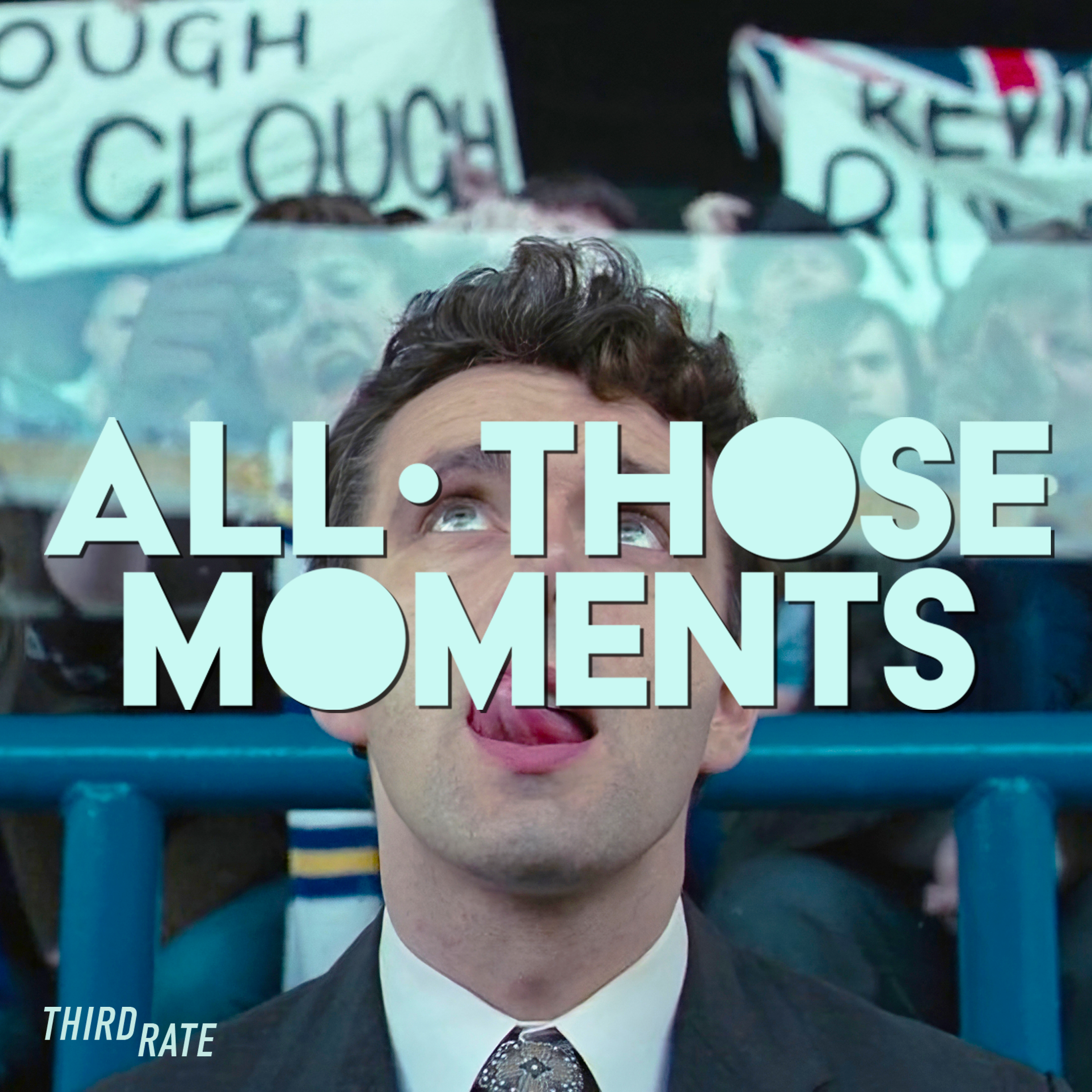
The Damned United (2009) | Eve Stewart Filmmaker Interview
The movie is The Damned United (2009), an insanely entertaining portrait of legendary English manager Brian Clough. The story includes a wild decade of Clough’s career, including his time winning a championship with Derby County FC, a midsize working class city in the middle of England. Our guest is 4x Academy Award nominee and BAFTA winning production designer Eve Stewart.
—
Benji and Luke launch All Those Moments with a deep dive into Tom Hooper’s The Damned United (2009), starring Michael Sheen as legendary English football manager Brian Clough. Joined by four-time Academy Award-nominated production designer Eve Stewart, they explore the film’s distinctive visual style, its remarkable recreation of 1970s English football on a modest budget, and the creative decisions that bring Clough’s turbulent career to life.
The conversation also examines Clough’s extraordinary rise with Derby County, his disastrous 44 days at Leeds United, and the rivalry, ambition, and personal relationships at the heart of the story. With promotion and relegation on the horizon for American professional soccer, Benji and Luke consider what Clough’s story reveals about the drama of the English football pyramid, and what that might mean for clubs like Spokane Velocity.
-
The Damned United (2009) — All Those Moments Episode 001 Transcript
00:00
Michael Sheen is one of the best and hardest working actors of his generation, and quite possibly its most underrated athlete. Director Tom Hooper showed us what a sports biopic might look like if Stanley Kubrick had ever made one. And production designer Eve Stewart recreated 1970s football in England with a minuscule budget. The movie is called The Damned United. This podcast is called All Those Moments. I'm Benji Wade. And I'm Luke Baumgarten.
Great. All Those Moments is a podcast built around connecting a social, political, or cultural moment with the moments from our favorite movies and television shows. And Luke, so good to see you. I'm so glad we're doing this. Good to see you too. the first thing I want to know is why Kubrick was your pick for that, for the intro. man. Tom Hooper, I think, has been credibly accused of slash one of these many British filmmakers, including like Christopher Nolan. I mean, there's a long list of these guys who.
It feels like the Brits have been constantly, and probably to some extent just Hollywood writ large, been thinking like, how can we cast the next Kubrick? Yeah. And Hooper's on that list, but he has these aggressive techniques in terms of framing and composition and this sort of he really likes to isolate figures in these big large frames and use like Dutch angles and force perspectives and stuff like that. So it's it's very Kubrickian.
and he's got, I think, a sense of humor that's you know, he's he's a a slight antic predisposition toward the the subjects of his movies. So that's probably why I'm saying that. Yeah, the movie last night had some antic n energy to it. Yeah. And you just saw The Damned United for a first time because when we talked about doing this podcast together and we were gonna say, like, I have a podcast called The Spokane Soccer Show, where I talk about the soccer scene in our city of Spokane.
And it was like, how do we use that as an excuse to start a movie podcast? And The Damned United was something I had been considering for a long time. I didn't think we would do this, but then I was like, wait a minute, Luke hasn't seen it. So it makes a lot of sense to just have you come and watch this movie with all the talk about it. All the soccer nerds. Yeah. Exactly. I think we should also say for those of you who might know you from the soccer show, me from range or from whatever else, you're like an actual filmmaker, which is how you are able to just draw from things like Dutch angles. I am
A dork who grew up in the country and somehow was a movie and film and music reviewer for like ten years of my life, doing more on the criticism side of things. Quick correction. We're both dorks from the country. We were both trailer park kids, which is funny. no, no. I was middle class, which means my trailer was on land outside of a trailer park. We were renting ours for about 300 bucks a month. Yikes. but yeah, so that that's the other thing that I really like about
our dynamic is that like I've spent a lot of time thinking and writing about film mostly like over a decade ago now. But it was a really important part of my life and a really important part of my formation as a person. Well, and you wrote reviews of movies for our local a local publication called The Inlander. So Yeah. And I wrote about prestige TV too. I actually had a syndicated prestige T V column.
For a couple of years. my mother probably before you even moved to Spokane. Yeah. I was in this the the Inlander, the San Antonio Current, and whatever the alt weekly in Philadelphia was. What? I am today years old learning this. Yeah, it's so weird. Yeah. I was thinking about what a weird career I've had. well, and we have actually technically done this before. So we're not gonna go super deep on our backgrounds, but like I narrowly avoided a career in Hollywood. I grew up as a kid wanting to be a Hollywood filmmaker.
I got accepted into the American Film Institute and decided not to tilt at those windmills and instead went to grad school, which is just a different set of windmills. Right. And I thought I was going to do the academia thing, started a family instead. My wife is from central and eastern Washington, the 509, which is where we live, and we're going to be talking about movies. To be clear, you and I have done this before using this kind of
Construct of a social, political, or cultural moment. There was a moment in 2016 when a guy named J.D. Vance wrote a book called Hillbilly Elegy. Neither one of us would have known at the time that that was going to turn into a Ron Howard adaptation of that book for a movie on Netflix in 2020, middle of the pandemic. And well, and then who could have known that four years later that
the author of that book would become our vice president. Hey, I've given you a hard time about this many times. And so has our friend Brennan that like we should have made something out of that podcast that we did in 2020, because if there's this interesting thing about listening to us talk about the terrible movie based on the book that's filled with all kinds of like fabricated, lionizing bullshit things about JD Vance's life. And if if you just listen to that podcast going,
These guys have no idea. That was a great example of us taking the same concept that we're going to work from for this podcast, which is going to be exclusively focused on this idea of taking a moment of something that's happening in our world and finding a way to reflect on that moment through our favorite movies and television shows. And so to kick things off, we're going to do The Damned United. There was a moment back in March when the United Soccer League. So to contextualize, Spokane has two professional soccer teams, men's and women's.
The women's team is in the first division. There's this whole pyramid structure. There's this concept of what's called promotion and relegation. And the United Soccer League is going to implement its own version of that, which will mean that teams in the first, second, and third divisions of its leagues can move up and down based on their successes or failures. Yeah. Well, and just to explain for like the less soccer-skilled among us, what in a concrete level. So it's like, you the the Spokane Indians have been a single A baseball club. So like the fourth tier of professional baseball for my entire life.
Rel promotion relegations, like if you were one of the top two teams in the Indians League, you would move up to double A. And if you kept winning, you'd go to you could eventually be in the major in major league, you know, in in the top tier of but also imagining every one of those teams is independently owned. Right. It's not like a farm team of a yeah. So it's a little bit different. But the so the idea then, and especially it's really compelling for a a really sports crazy town like mid sized city like Spokane. It's like the soccer teams are
pretty good. And we invest, we've got an amazing fan base for sports, especially for a city our size. And we always show up. So it's like the coolest thing. Like I as as a guy, I'm I don't know how much we'll have time to talk about this, but like I've got a deep love of soccer that is 100% spawned from FIFA and not from actually watching real soccer in real life. So like I don't know what's going on like on year to year with
you know, national soccer whatever, but I'm really excited about the idea of our small little town building a team that could like eventually be in the equivalent of like the Premier League or something. Yes. Spokane Velocity are currently at the top of League One. So there is not promotion relegation right now, but we can all start to imagine we punch outside our weight class and suddenly we get promoted to the first division, which is going to be called the Premier Division. funny. They're copying the naming system that's used in England, which is really clever. Yeah.
Your your question about FIFA, we have to talk about it. I yeah. FIFA soccer in my connection to the movie The Damned United is like direct because when I watched this movie for the first time, I was already a big FIFA soccer. It's a video game j junkie. And this narrative that is a is like explored and depicted in the story of Brian Clough, the manager of first Derby County. He then goes on to manage Leeds United, which was the
A club that was managed by his nemesis. And that's basically the premise of the story is that he takes a job that he really shouldn't have. So he has this rise with Derby County, the fall when he takes the job at Leeds United. And then he is fired after 44 days on the job by Leeds United. but then that's where the story of the movie ends. But he wins back to back European Cups with Nottingham Forest. Derby County is like smaller.
population wise than Spokane County and probably doesn't have as like a central urbanized town. It's like a bunch of little hamlets in Derbyshire, England. So it'd be like the equivalent of like Pullman winning the and like a team from Pullman, Washington winning the NFL champion, you know, winning the Super Bowl. Or something's wild. Perfect way to describe it. And in fact, when Clough was appointed as the manager of Derby County, they were at the bottom of the second division in this tier system as pyramid that we're describing.
They won the second division and then went on to win the first division, which is now called the Premier League and it's a whole thing. But any other impressions you have of this movie? So we watched it yesterday at our local movie theater called the Magic Lantern. Yep. Let's talk about the Magic Lantern and its connection to this podcast that we're doing together and talk about the screening of the movie last night. Well, one of the things that you and I like we've been talking about as I've been thinking about do we need another thing in our life? Like, you know, I spent the first half of my career as a journalist almost exclusively writing about arts and culture.
09:20
Then I got back into journalism doing range, but much more on the hard news side of things, much more thinking about like what's happening in our city right now. And I I w and then, you know, COVID's in the middle there, which just kind of broke a lot of people's brains in different ways. And I think I've realized in the last year that I had just kind of stayed shut in. And not because I was super scared to go out. It wasn't that. It was just like I got in a rut that included me not like hanging out with people or whatever.
And I've been rediscovering how beautiful and magical it is to be in a theater, like a physical theater, you know, f not using my I'm like I'm watching a movie at home. I literally have my second screen up at all times. Yeah. And what it does to my brain when I'm in a theater and I'm watching a movie, even in a movie I'm totally locked in on, because I have horrendous ADHD, and my mind will just start like moving in galaxies and just going in off in these wild directions. And it just, I don't know, I think there's
My life feels very bifurcated and I want to kind of combine the two together. And you and I have been talking about just the specialness of of third spaces is kind of the technical term for it. But like any place people can gather in person as being a potential antidote to the toxicity of social media. And and the addiction of social media. And I I'm on the hook. I'm can't claim that I'm not constantly obsessed with whatever's happening on my smartphone.
Yeah. A TV show at home without having my screen right next to it. But when you go to a movie theater, do you put it down? yeah. Or when you go to a okay, what about a sporting event? Now it's a so I went to a an Indians game with my buddy last week and it's mostly well, it's baseball special because baseball is like the only sport that's like slow paced, maybe except golf. Like you can have a whole conversation but it's not about baseball and still completely track the whole thing. It it does feel like I will pick up my phone, but it's usually to like check stats or something like that. We could go
Deep down that rabbit hole. but I want to introduce the very first episode of this podcast and the the movie The Damned United. When I had this idea of of watching The Damned United, I reached out to a friend of mine who, his name's Lincoln. Shout out Lincoln, who worked in the Hollywood industry. He still does work in the industry. I just asked him randomly, hey, do you have anybody
you know, that you think you might be connected with that worked on this movie, Tom Hooper movie from 2009 called The Damned United. Yeah. And as he's looking at this list of the crew, he says to me, I've worked with the agent of the production designer many times. And I was like, I can't think of a better person to chat with. So I'm gonna take over here for just for a second because you're the film guy and the soccer guy. So what is a production designer and what do they do on the set?
So great. I thank you for asking because it'll help our listeners understand like who they're getting ready to hear from. You know, there's this kind of ladder that you climb when you end up becoming a production designer. A lot of people go to school for it, or they come from a theater background or something, but it's basically any single thing you see in a frame. What choices are made, the artistic vision of the director. So the kind of cars you use, the car the like it's down the costume design is downstream of production design. Yeah.
Working together a lot, but like there's props, there's the art you go from being like working in the props department to art department to becoming an art director, like a friend of mine who went to school at NYU for production design. Her name's gonna come up again in the future. Her name's Marcy. she's now got her first credit on a TV show that she's working on to become her first credit as a production designer. Okay. So this woman in particular, her name's Eve Stewart.
She's a legend. I mean, she's worked with so many incredible filmmakers, including Mike Leigh, one of the great British directors of all time. she's worked with Gore Verbinski, she's worked with Tom Hooper on many different projects, including The King's Speech, including Les Misérables where she was nominated for an Academy Award. She won a BAFTA for Les Misérables. And so, yeah, I mean these are big awards. These are big awards, and she's worked on some huge productions. Yeah. And
I got to spend it's it's like a forty-five minute conversation with her. So well, and this is just a secret that journalists eventually learn. It's like you might have a hard time getting Tom Hooper on the phone for a podcast from Spokane Washington, but kinda like anybody below that, or maybe like below a certain tier. It's like regardless of the artistry, like those folks aren't getting to a chance to talk about their craft very often, you know, with a general audience. And in my experience as a journalist, like people
often do want to talk like, wow, you take some interest in this weird niche of the film world that I get to inhabit or whatever. Yeah, I'd love to talk about that. One other thing I want to say before we get to this interview is that the intro you're going to hear to this podcast and the quote is I think the greatest death soliloquy in the history of movies. yeah. Why the heck is this why are we doing like the hallmark show title of movies? Yeah. There's a reason. Yeah. And it's not
As hallmarky as it sounds. If you've gotten this far, you've probably heard the intro, right? So it's the great moment from the end of the Ridley Scott's 1982 Blade Runner. And I think movies are going through their own kind of death soliloquy. They're movies are kind of issuing their own death soliloquy. So I felt like it's perfect. I love the phrase, All Those Moments. I even like that it's a little bit sentimental and saccharine. So I'm we're gonna lean into that, but it also has some meaning to it because it's how we're gonna structure the podcast.
That'll become way more evident as we do future episodes. Yeah. But even in this one, when I'm I can't help myself, I use that word all the time. I'll say there's that moment when there's the moment when, you know, Brian Clough played by, you know, Michael Sheen is doing something and I'll be like, moment, moment, moment, moment. So one more technical question. So I think so. This movie, I just watched it for the first time last night. It's awesome. Loved it every second of it. you don't need to know anything about soccer to enjoy the movie. I don't think that's one of the things that I think is really brilliant about.
The way the script and Tom Hooper's direction and and Michael Sheen's actually all the performances I thought were pretty great. But I found myself feeling like I might like I played basketball. I played baseball. I think I live in the United States of America. So I understand American football in a way that, well, you know, it feels like it's like part of my blood. I know what coaches of I know what basketball coaches do. I know what baseball coaches do. I know what football coaches do. Like I know they're calling plays. They're, you know, they're subbing people in and out, whatever.
Soccer, I've never understood what managers do. And in this movie, there's a really climactic game where, like, basically the first big game that Derby County wins on Michael Sheen's ascent to like eventually winning the Premier or the First Division with these guys, yeah. He's not even on the field. And I don't know if that was a filmmaking decision, but it actually that moment, let's talk about moments for a second, that encapsulated for me that like I have no idea what soccer managers do. So can you tell me what?
the hell soccer managers do, baby. it's such a great question. I mean it it was a that moment was fictionalized, to be clear. However, I think that what Tom Hooper and the screenwriter were trying to accomplish, the script is awesome. Script's great. Yeah. what they were trying to convey was that, you know, depending on the the manager's style, right? Pep Guardiola is accused of holding a joystick being a joystick manager. Meaning he's almost like playing FIFA. Yeah. He's he's
micromanaging every aspect of what's happening on the pitch. Antonio Conte is similar. He's just constantly barking and shouting what he wants in specific instructions where he wants players on the pitch at any given moment, in any given phase, whether they're transitioning from in possession to out of possession to attacking to losing possession offense to defense for all Americans. Yeah, all the phases of play there, there's like, okay, cool. I need you to do and they'll be yelling at the player.
Yeah, that that moment was fictionalized, but it's also the best moment in the movie. Yeah. It's it's and we talk about that specific moment moment with Eve Stewart. There's like basically he's in his office and it looks like his office is literally underneath the bleachers in Derby County. And so it you get a sense that they might be winning because through the sort of frosted glasses windows you're seeing the fans cheer twice. And that you're like, does that mean they scored two goals? See, Luke, the fact that you're pointing out that scene.
I love so much because it is 100% why I freaked out when I found out that the production designer is somebody that I might have a chance to chat with. It's because all those choices that she makes, down to the clock on the wall, comes up in this conversation. Really? Okay. So let's get to the conversation with Eve Stewart. In the meantime, we'll be planning our future episodes. You can follow All Those Moments on Instagram for now. I think it's probably the best place. It's All Those Moments pod on Instagram. And
I'm working on the website. That'll be coming soon. But for now, all the typical places Spotify, Apple, podcasts, wherever you get your podcasts, it'll be on all those platforms by the time this episode comes out. But let's get to the interview with four-time Academy Award nominated and BAFTA-winning production designer Eve Stewart.
18:22
Welcome to the show, Eve Stewart. I'm so glad that you were interested in chatting with me in the first place. When I reached out to you, were you curious, perplexed, confused, all of the above? Yeah. I was curious, yeah. But then I showed my husband the the lovely email you'd sent to the agent. And he's so into football and was such a right hand man on the damn genera that we just thought we should answer you.
that is so sweet. And I'm so grateful to your husband. And I'm gonna we're gonna chat a little bit because you and I did, we'll call it like a preliminary conversation to see if we could get technology to work out. It took us a minute to get everything worked out, but here we are. And you mentioned a bit about your family and their love of the sport of football. And I as I mentioned, I'm going to break my rule with saying soccer, and I'm gonna say football as many times as I want on this podcast. Hey.
And I'm gonna feel like I have a right to do so because I'm talking to someone who does not use the word soccer when talking about the sport that I love so much. No, we're in London. We've never said the word soccer in our lives. Unless it was probably as a pejorative to make fun of Americans. And hey, we we can handle that. so you have been nominated for four Academy Awards and I think three BAFTAs. How many BAFTAs have you been nominated? Probably, but I never win anything. It's like really not. This is not true.
You won a BAFTA for your work on the movie Les Misérables, which I think personally is the best adaptation of a musical that I've ever seen. You have worked with Mike Leigh, Guy Ritchie, Gore Verbinski, and perhaps most notably and successfully with Tom Hooper on movies like The King's Speech and the movie we're going to talk about today, The Damned United. I host a podcast in Spokane, Washington. And although I could spend hours asking you about your incredible filmography,
Instead, let's talk about the role that football has played in your life. Well, it's massive. I grew up like I grew up in Camden Town, in a which is a little bit in London, in the sixties, incredibly rough. And you either supported Tottenham or Arsenal. And then if you did either one, you'd be smashed up in the face if on a match day, if you'd got the wrong team. And then you know, my husband has been an Arsenal supporter his h entire life.
He was there in the Arsenal stadium probably aged eight. and yeah. And that's a kind of that's the world it is. You is from father to son. So amazing. So when it comes to the North London derby, we talked a little bit about that when we first chatted. Did you mention that one of your parents is Jewish and that you had a kind of split in the family? Like your brother supports Tottenham, you support Arsenal? yeah, completely. So the legend, well.
It it is true that the North London area of Lond it it supports Tottenham because that's where all the Jewish people tend to live, that area of London. You either support them or you support Arsenal. And I was a rebel, so I went to Arsenal. I like the shirt better. So I did some research and I read an interview with you where you described growing up in London's East End single parent home and you enlisted the help of your brothers and sisters to grab cardboard boxes and create environments
How you thought life should be. So I want to ask you a follow-up about that experience. Like how did your the earliest memories of football influence your life when it came to how you wanted life to be? I suppose football was an escape, especially for people around me. But I had really terrible asthma when I was small. So I would spend weeks and weeks and weeks in hospital. And that's when I learned to make these models of what life could be outside where you could run around.
And I, you know, when I was well and could breathe, I was really good at sports. So and my brother is good at sports. So it was really interesting to kind of be excluded yet wanting to be included. Did you play football growing up? No. I'm a girl. In the sixties, no, in the sixties and seventies. You had to like slow stuff. What sports did you play? I was really, really, really good at rounders and I was really good at netball, which you probably don't know.
in the US, but it's a game with a it's a game with a ball where girls just punch each other really and try and get it in the net. Which sport is that one called? Netball. Netball. Okay. I have never heard of netball. I rounders is It's a bit like basketball, but with small girls just hitting each other in the faces and trying to trying to get in the net past the other girls. I think of rounders as the British equivalent of baseball. Is that true?
That's also true. It was a very small equivalent of baseball. and you had to hit, you know, it was exactly the same rules, I think, just lesser and smaller. Yeah, and simpler, I think, is how I've always understood it. yeah, simpler. So you did grow up though, near Highbury, is that true? Yes. So I grew up on the Holloway Road, which is like on the way to Highbury. So there's pubs.
on the Holloway Road and everyone, even now the all the tea you know, the fans and whatever have to go to that tube station to congregate in the pubs of s and just get to the grounds from there. How did the that club, its stadium and its supporters like influence you when you were growing up? I suppose you're like just if you grow up in the North London, even as a girl, you're so aware of football. It just
It it's everything, just every Saturday in the season, all the pubs will be full, everyone's got scars, everyone's got colours. It is just like what your world is about. And I think because you come from a kind of working class family, that is the event of the week. Isn't kind of it's the big event everyone looks forward to. Did you read Nick Hornby's fever pitch growing up?
No, well, not growing up. I read it latterly, but yeah, I think that's really influential. It's so good. And obviously I ran read The Damned United a hundred times. I can't wait to get into that. So did you watch the movie too? The Nick Hornby fever pitch, the Colin Firth movie? Yeah, yeah, yeah, yeah. Amazing. Amazing. Rest in peace, David Rocastle. Exactly. And your husband and kids are huge Arsenal supporters. Yeah, they're massive Arsenal supporters and
Even the other day when it was the then when they were playing for the Champions League semi-final, it's amazing. We had this trophy shop at the top of the road that has a massive replica of the Champions League Cup. And so Leo Leo and my husband had went in there to borrow it because we had loads of people coming round to watch the match and he just wanted to lift it and throw ribbons about, but of course they lost and then
25:29
I had to like shamefully it was really heavy as well. I had to shamefully walk it on the road in the morning and hide it because he couldn't bear to look at it anymore. I have so many friends that are Arsenal supporters in my life when it comes to I do. When it comes to the the quote unquote big six, and I'm a Newcastle supporter. nice. I tend to, of all the teams that have had so much success in England, I've tended I I like Arsenal the best of all the big clubs. But you told you told me that.
Your family, your son, I think, and husband had still had not recovered from the Champions League loss. No, honestly, they were ill. It was very good. But I think one of those great moments was I think one of my proudest moments is I did this really huge football commercial for Nike and it had Thierry Henry in it when he was currently the the god of Arsenal. So I was very popular at that stage.
Wait, what did you do? You did a commercial? Yeah, I did a huge commercial for Nike with Terry Gilliam, who'd never actually seen a football match before. And I used to take him to the football. And yeah, it had it had everyone, Totti. We made it in Rome in the Chinese tar. It took us I think it was six weeks. We had every famous footballer flying in on helicopters.
And it had the big Elvis tune and Eric Cantona was on the roof of a cage I made. Hidden from the world. Twenty-four elite players hold a secret tournament with eight teams.
Oscor wins.
Okay. I have to have seen this. That is so cool you did that. Do you still go to games? I do, but not as much as I used to. So I probably go like four times a season. But it's very difficult now to get tickets for big teams at Arsenal because it's like on a lottery. Yeah. And then if Leon gets a couple, I mean he's got friends who get them, they swap about. So if he gets them of obviously on like
rent you know, say take your son, you take the sons. If you don't mind me asking, how much are the tickets? like anything from hundred they're hundred the from hundred up. It's a lot. It's a lot. And I just think that's a shame because there's lots of kind of it used to be a really working class kind of system and everyone could go and kids could go. But now it's not. It's the elite. And you go to Arsenal
And I'm really sorry to say it is like media city, it's all film producers and politicians and it's very moneyed up. Yeah, it's it's a huge bummer. I was telling you about the experience of going over there and watching my first ever Premier League game and it was Fulham hosting Crystal Palace. I'm wearing my Crystal Palace shirt today because You are I'm a bandwagon supporter of Crystal Palace as another And well done. My son in law is still drunk, I think.
that's right. You mentioned that that your son in law is a palace supporter. well, it cost you can't get any of the tickets except for what are called hospitality tickets, and they're several hundred pound per ticket typically. Sometimes those are not even available. So if you go buy off the secondary market, which is illegal in the United Kingdom, there we spent seven hundred seven hundred and fifty pounds. It's not I'll have to send you my son in law's video because he was like,
I guess four meter four yards away from when they were lifting the cop. that's so cool. I mean, I I did love my experience, but I thought this is not affordable. And I was sitting in front of a couple Canadians that were there for the North London derby. They were Tottenham supporters and they said they were getting quotes of like fifteen hundred dollars for a single ticket. Matt, Matt. And it's non criminal because then everyone they learn to buy the tickets and sell on. It's raw, it's wrong.
Well, part of the reason that I wanted to chat about this incredible film, The Damned United, is because it is a great story about promotion and relegation. And it's it's like the hot topic in soccer in football in the United States. So do you recall examples of clubs either being promoted or relegated and how that drama impacted English life when you were, you know? Yeah, I remember even like a couple of years ago when Arsenal were dropped out of the Champions League. It was devastating.
Everyone around us was like silent. And it was yeah, it was really, really depressing because you didn't have there with there's this amazing operatic tune where they're like you go into the European League and it's the job yes and they didn't have it at all. So yeah, there's loads of depressive stuff, and it's really it's uncomfortable. And I've got loads of friends who still go to Leeds all the time. The one thing I will say about the Leeds supporters.
That I really admire. Even when they're on their back foot, on their uppers, they cheer and scream and they're amazing. Whereas Arsenal just leave the stadium. But yeah, damned United, I think Eve is the best biopic version of the concept of promotion relegation in a feature film that I can recall. I watched it for the first time when I was in grad school pursuing an MFA and documentaries and experimental filmmaking.
So I want to dive into talking about this movie with you. Thank you. Let's take you back in time. The years 2008. You had worked with Tom Hooper on the incredible HBO series, Elizabeth the First with the great Helen Mirren. Is Helen Mirren now? Is she is she Dame Helen Mirren? Is she something? She's gotten some kind of title, hasn't she? Yeah, she's Dame Helen Mirren. I always think she's kind of well, I know she has some Russian heritage. And then she plays
Catherine of Ali, you know, the Russian Queen. I think, yeah, she must be amazingly connected, but she is now a dame. Talk to me about the first conversation you recall having with Tom or whomever about working on The Damned United. well, it was really amazing. I think Stephen Frears was gonna do it, and then suddenly it was went really, really fast that Tom was offered it by Andy Harries, who's a really lovely producer, and then suddenly.
Tom just rang up and go, can you be in Lee, you know, Leeds or wherever on Monday? You know, it was virtually really, really quick. So I had to jump. I think it was a week. Wow. But just really fast. And I was like, yeah, because he's he's such a he's such a kind of we had a great time on Elizabeth first. So I was very keen to do it. What was your origin initial reaction to the story? Like, were you familiar with Brian Clough or the book at that point? Yeah.
Of course I'd seen Brian Clough everywhere on the news from when we were kids and I really didn't like him because he seemed such a weasel. He was just like so self-assured and a bit annoying. So yeah, do you saw him everywhere and the Muhammad Ali stuff was amazing, just mentioning him. But he was he was really in our headlights. If you were familiar with the story of Brian Clough, had you read the book yet? The Damned United. Did you No.
hadn't read the book yet, but as soon as spoke to Tom, I read the book and did endless research because I'm I'm, you know, having done other period stuff and theater staff and work with Mike, I'm an avid researcher, so I had to know the truth, whether you use it or not. Talk to me about the research you did because I was listening to an interview with you where you said, you know, back in the day it'd be going to the libraries, but and the year two thousand eight, I'm assuming it was a lot of internet research, like
Where did you go to read about this history? No, still it was still libraries where you did a bit of internet, but just definitely going speaking to people, went to the clubs and just got into the i c archives and really got to know the people there and got the truth. Did you know from the start of the project that the budget was going to be super, super limited? Yeah. I think that was what was really, really
I think having come from theatre and then worked with Mike Leigh so much, who had the worst budgets known to man. I just well I I guess and I'd done a lot of short films. I was really good at stretching a pound note. So I was very keen, I don't know, well just to create a new world. I'm always very excited to create a new world. Yeah, I saw that the budget was six point four million dollars, and that is
34:31
really, really insignificant for a feature length movie. That is so insignificant. And especially if you're a designer or we a production designer, you never get more than 10% of the overall budget. And that has to include everyone's wages. Yeah. So it was really low. We had a tiny team because you couldn't afford to pay all the wages. So when we paint when we had to repaint the stadium in Chesterfield, it was like we had just two old men.
It was like amazing. But they were great. And where Chesterfield was where that was the stadium that was used in Saltergate. Yeah, yeah. Where we had to use it as Derby Stadium. Yeah. As Derby. Because we had to recreate Derby's football grounds and it which was legendarily this awful green, which I hated, but we had to use. And but when we got to the ground that we were meant to use, it was like bright blue, like your sleeve on the left. So we had
repaint everything. they didn't try to do that digitally? There was no digital. It was all practical. Everything was practical. There was no digital. That's how they would do it now though. In fact, I'll bet you it with the modern 2025 tools, they could probably key all that out and change the 'cause now I do like I do Marvel films and all sorts of stuff. So now you you barely look at what you're looking at. But I
actually prefer doing it for real. So you had an early career in theater where there was even less money than independent film production. And I I love this quote from you where you said that, you know, basically you can distill story with a single choice of a prop, which you're kind of alluding to, this efficiency of storytelling when you don't have much budget. Talk about your theater background and how that influences your ability to make choices that are very economic but are also really effective.
I think a couple of the biggest moments in The Damned United to make that clear were when, you know, Brian Clough's obsession with welcoming Revie and making him feel all the team feels like they were so important, was when he was personally laying out towels. And the oranges. Oranges. And but all the towels were different because they couldn't afford to get new towels. I read that.
And then he put ashtrays out because everyone's smoking, even though they're footballers. And then and then the little orange on the top. I thought that was incredibly important. such a great detail. and then moments later or bef before after this, you see Johnny Giles, the historic figure and really important player on Leeds United smoking a cigarette in the training ground, which is like that is just how it was done. Yeah. And beer everywhere. So, you know, you had to make that clear. And I think
Probably loads of people said that Brian Clough didn't even drink that much or smoke that much and he was much more sporty. But I think it mu I think it really added to the kind of story. And the film is a story, really. And the story of him being so anxious and so driven and so upset by what Revie had done to him that I think those moments were really captured well. Can you talk to me about being
Such a resourceful problem solver, which the way that you're talking about your relationship with Tom Hooper, it's like he won't let you out of his sight. Like you're gonna be on set because he's gonna need your help. How much of that do you think came from the resilience of growing up as a scrappy kid and East the East End? I think I'm very good at charming people into helping me, which maybe Tom isn't. So, you know, it's just like I think and also I can see
An image within a vacuum. And I think most production designers who work with directors that are successful with the cohorts and they're the directors that they work with most, that's what's registered and looked after. Because even with Mike Leigh, if you went into an empty room, you know, I can see it and present it to him, but also I'm very empathetic empathetic.
understand what they want, but I'm very practical in providing that. Did you eventually read the book and were you familiar with the controversy surrounding it? Yeah, of course. Yeah. Everyone said it was historically annoying. Yeah. What were your thoughts on all that? I don't I don't mind that. I think I think if you're I think yeah, if it was being presented as a kind of authentic documentary, then yeah, you'd be taken to task. If you're telling
A kind of imaginative story about how something came up with with drama and with emotion, then you can't just be documentary makers. When I watched the film for the first time, uninitiated, wasn't even familiar with the history of Brian Clough, honestly. I thought it was a celebration of
The sport of, you know, his history with not just Derby County and what happened with Leeds, but also he went on to be very successful with Nottingham Forest. So I didn't think of it as being this thing that trashed the the legacy of Brian Clough. I thought quite the opposite. Was that a conversation that you remember having with your creative collaborators, including Tom Hooper, on the project of it had this reputation of a book? Johnny Giles sued the publisher and won. He was paid a handsome sum of money.
The publisher and the author David Peace had to issue an apology to the Giles family. And yeah, it was pretty crazy. Not so much for me, but I was aware of it. It was very much in the background that, you know, I understood I read the book and I understood that it was a dark portrayal of Clough and some of the players, obviously, and the kind of, you know, this sabotage or traitorism or whatever you want to call it. But it was just I think.
The film we made actually registered the humor and the wit and the and the passion for football rather than constantly acknowledging the the sabotage. We talked about the the some of the challenges and recreating the look and feel of the nineteen seventies football stadiums and environments. So between eighteen ninety-eight and nineteen ninety-seven, almost a hundred years, Derby County played their football at what was called the baseball ground.
odd fact, it was only used for eight years in the late 19th century for baseball before becoming the permanent home of Derby County Football Club, yet the name remained. how many times during the production do you remember? Not not a specific number, but was there a lot of like recycling and remix remixing these training ground rooms and facilities that were supposed to be the baseball ground? We were really lucky when we got the Chesterfield football club.
41:34
Was pretty similar and they were so distressed. You know, the walls were really kind of beaten up and there's scaffolding, it was rust everywhere. We were really lucky. But we were successful and they had those lovely rooms that looked like they were slightly underground where you saw the windows looking up to the pitch. And we put the the pits in and
I think one of the biggest things was of course, they're still playing there and it's really important to them, the pitch. So when Tom, you know, and us wanted it really muddy and filthy and dangerous, that was huge. That was so difficult. That was probably one of our biggest problems, and that you couldn't muddy up their pitch. Or even when we were asking to lay different soil down, it was very specific. We had to have these.
very kind of chemically approved soils matched so we could get them mixed and then put the on top of the grass to look like Mars. So it was a lot of Is it because Chesterfield were still playing there? They were still playing there. So we didn't want to mess up. I remember the scenes you're talking about and they're so over the top. Just massive massive amounts of water.
Yeah, he won this he won the battle of the Somme, you know, the you know, the World War Two battle. So World War One, sorry. Yeah. And it was like really difficult to create that much mud. So we had to very use specialized soil that we had to bring in and then water it down. no, I'm assuming it was also a fairly narrow section of the pitch that you were shooting these these scenes in because it was it was pretty tight, long lenses and Well, it was at fast, but of course we spread.
They were playing against Leeds. They had qualified for Europe and there was He put his best team out like an idiot. He put his best team out like an idiot and then got trounced by Juventus in midweek. Were there any significant set pieces locations that presented unique challenges? You've brought up a couple so far, but on our call, you wanted to talk about Magaluf. That was joyful. I think because we'd spent so much in the mud and the rain.
I mean, I love the beginning where, you know, we had I think that was hard because we were just the very beginning scenes where Clough's meant to be arriving to the Leeds boardroom. And then we decided that the kind of tension would be kind of increased by having all rain down the windows. But the windows that we were trying to use weren't big enough. So we then built a couple more inside that we could shine the rain through.
So we had like water pouring down tanks everywhere to collect it in case we flooded this poor police station. But I think Magaluf was joyful in that we'd been in the rain and the cold for months in the UK and then suddenly got on planes to go to Mallorca. But it was very fun because Tom Hooper and I got on a I think we had to come from the north to go to the Mallorca.
And we were on this plane. I swear there must have been three, it was four, five, it was really early in the morning, six a.m. And I swear there were must have been two hen parties. You know a hen party? No. a hen party is very famous for the English where the wife's the fiance girl is gonna get married. Okay. So she goes on a party with all her female friends, and they just get drunk. So
They go on the plane. There's all girls in short tack tutus and little bras and whatever. And then there were another two stag parties, which is an English thing where all the men celebrate they're about to get married and they go and have fun for the last time for the two weeks. The plane was incredible. It was just honestly, I thought they were going to stop the flight. There were so many drunk people. That is what English trips to Spain is about. Isn't Mallorca? It's like known for that.
that is so and this part of Spain that we were going to was so known for that. So we got there and we're trying to do a lot of scenes on the beaches, but yeah, there were many, many party goers of ill repute. you can actually detect the joy that you're talking about, even from the performances. It almost feels like Michael Sheen and Timothy Spall are just like, my god. We were laughing our heads off. It was so bad. They were
Like girls with their tits out, men in like tiny troughs, all all pissed up. So it was it was a very I think it was very good atmosphere to present something of the seventies. it's it's so beautiful looking too. So I'm gonna shout out so much of your work on this podcast because it's so it's so stunning throughout this film. well I was very careful to look at photographers like Michael Parr and
Lots of kinda you look at the seventies and there's always that beautiful orange and the lovely green. So we were very, very determined to keep that palette in the seventies palette. Magaluf also gave Michael Sheen an opportunity to show off his football skills once more. I I noticed that Tim Timothy Spall never kicked a ball in this in the in the mil film, did he was a bit hot.
I'll bet. was okay, number of locations. I did some research in this, and it does it felt to me like that was an unusually high number of locations for a film with such a small budget. Is that true? There were quite a lot, but mainly because we couldn't afford to build anything. Okay. And what was really, really lucky is that they were all within a certain mileage from where we were staying in Leeds. So there were lots of deserted buildings that were brilliant to dress.
I'm guessing that this has importance to the way you have described in an interview that the location scout is so critical for what you're describing. You don't have the money to build things, you're not gonna be on a sound stage. So better find some cool things. Yeah, absolutely. It's like symbiotic relationship, so you have to really work together. So certain scouts are really good at some stuff and
Other ones were good at other stuff, but the one on The Damned United was brilliant. And finding, you know, the empty buildings in Bradford, the hospitals, the police station, where we could just honestly, we were trying to make some of Elland Road's boardrooms and everything. And then Tom would go, but I thought the door would be there. And then like the locating manager so brilliant, he'd arrange it with the people who own the building. I could just get a chainsaw and like saw a door in.
48:37
Tom Hooper is known. I'm gonna talk about the visual style of the film, which will incorporate what you were just describing about these locations that you found. He's known for Dutch angles. He used a on this particular film, he used a 10 millimeter lens, which is very wide. He was operating the camera for one of these scenes using this 10 millimeter lens, and he is pushing right up on Michael Sheen.
To the point where I would imagine that Michael Sheen as a performer must have felt quite intimidated by this camera being right up on him. And can you talk about the sort of aggressive, for lack of a better description, style of Tom Hooper and and what that allowed you to do visually? I think I think well I don't think anyone could intimidate Michael Sheen, but it was just like I I thought those angles were brilliant and and that it was intense. And I think the kind of intensity of that character had to be
resolved in a photographic way. Your history with theater and the ability to convey so much storytelling in a single frame on set. Can you talk about this style where Hooper will have a performer like Michael Sheen or Colin Firth in The King's Speech? It it the extreme edge of the frame, which leaves so much visual information for you in your role. Talk about that a little bit. And specifically there's a couple scenes in that
basement office where Michael Sheen is isolated in a corner of the frame and there's a lot of opportunity for you. I think that scene was incredibly important and that his anxiety was revealed, his nervousness. And I don't think it would ever be true that he'd actually not watched the match. But just I think within the narrative of the film it was incredibly important to put him in there.
With the kind of the extreme light coming down from the top windows. And then just as the clock, I actually found in a boot sale. So it was like which I don't know if you have in the US. Anyway, I used to go to these markets every Sunday where people just like reveal their stuff in their back of their cars to sell you. And just saw this perfect, perfect clock that was suit the room with the knot, you know, kick off at three.
Three was really important. And then just to make sure, as a production designer, everyone thinks you just do huge amounts of scenery or landscape or choose a location. You're actually responsible for everything, down to the oranges, down to what food is being served in Brian Clough's house to make that important. That it's kind of brown potatoes. And so anything in front of the camera, you are eventually.
responsible for. So it was a it was a labor of love to make sure that that room, you know, when he unwraps the glasses in the cloth, he's brought them from home. It's so important to him to have a drink with Revie, I thought that was a great moment. It's a fantastic moment. The moment you're describing with the clock is the one scene. You just we just stumbled upon it, Eve, where it doesn't matter how long it's been since I've seen this movie, I still think about that scene.
It's a story that the story that's being depicted, this moment in this film is fictional, but it's fucking fantastic storytelling. You have the clock on the wall. It's very claustrophobic in that moment. Brian Clough can't watch the game because he's so stressed out. He's chain smoking. He's watching this clock. it's such a fantastic choice that you found that clock. Listening to the roar of the crowd gives some indication of the outcome of what was happening in this game that he can't bear to watch.
And you see the silhouette of the supporters' feet. How did you achieve that effect? well, the window, like we did actually, the window was actually there. So we we just put an extra deck so you could get the get the feet coming in. But I think it's really important to take our hats off to Peter Morgan and the writing, because that was in the script that this moment was there. And he's an incredible writer. So I just think that was worthy. And we wanted to represent what he wrote.
It's just such a great storytelling moment in in is The Damned United, which is a story about ego and ambition, leadership and isolation and lust and envy and jealousy. How did you use your design skills? If if you if there's something that sticks out to you to impact
The drama, the personalities, the tension of the story. I think one of the nicest moments we represented was when he had to ask for redemption from Peter and went to the house and we just wanted him gardening and I've worked with Timothy Spall a few times and it it was so he always comes up with such brilliant ideas and I think the fact that he was just like tending to his bushes was sweet. It was so funny that scene. I mean on his knees, yeah.
what would you say was the most rewarding thing about working on The Damned United? I think probably one of the best bits was that Tom, I don't think he'd been to that many football matches. And my my Leon, my husband, is so good at going. So he arranged that we went to an actual, I think it's Lee's Derby. So it was pretty rough. And I know that they they used to just throw bricks and stones at the buses if you're coming in on different.
Teams and size. So it was yeah, it was pretty exciting. Interesting fact. I share a birthday with Tom Hooper, which I thought was really interesting. We're both born. I'll tell him. We're both born on October 5th, along with Kate Winslet. Thank you so much for coming on the podcast, Eve. Do you have any do you have any projects you're working on right now that you'd like to share? You're working on this film called Nuremberg. I don't like to jinx it. Well, I'll tell you in a week or so. Okay, that sounds good. no, you went to camp, so I can't jinx it. It was photograph 51. So it's about
the amazing discovery of DNA by woman, Jewish woman. Photograph 51. Yeah. We're we're dropping news here. Yeah. So it's amazing, an amazing story. And it was a play in London. Well it's a book. Then it was a play in London for ages starring Nicole Kidman and it's extraordinary. So this incredibly brilliant woman called Rosalind Franklin in the 50s was
X-raying kind of coal and all sorts of stuff and discover discovered DNA. But ultimately, of course, it was wrestled off up by some men. that's a tale as old as time. And it's gonna be with Natalie Portman. Natalie Portman. how cool. Do you want to say anything about Nuremberg, a project that you just finished? Yeah, I I can't wait for it to come out.
It's gonna be Russell Crowe as Hermann Göring. Rami Malek. Russell Crowe. It's all based on the book the Psych The Nazi and the Psychiatrist. There's a genius book, and it's Russell Crowe and Rami Malek in the leads. Eve Stewart, thank you so much for coming on my podcast. I so appreciate your time. And this has been a tremendous pleasure. And what's in the Rainbow Books? that is my kids' old supply IKEA shelf from when they were in like their much younger years. Like what's in it?
Currently I think my God, Eve, this is such a funny question. I think that is my freaking diploma from college in a roll. I knew it'd be something important. It is kind of important and it's just stuffed in the bottom of that box. That is what that is. It has a rainbow on it. All the rest are just boring. That is my Montana State University film and photography diploma that I've never on the wall. Get it on the wall. As a production designer, of course you would say that. I can't think of a a more amusing note to end on.
56:42
Thank you once again, Eve Stewart, for coming to my part. I appreciate you. Good luck, good luck, thank you for football football, not soccer.
All those.
In time I'm
Yeah.