
No Other Choice (2025)
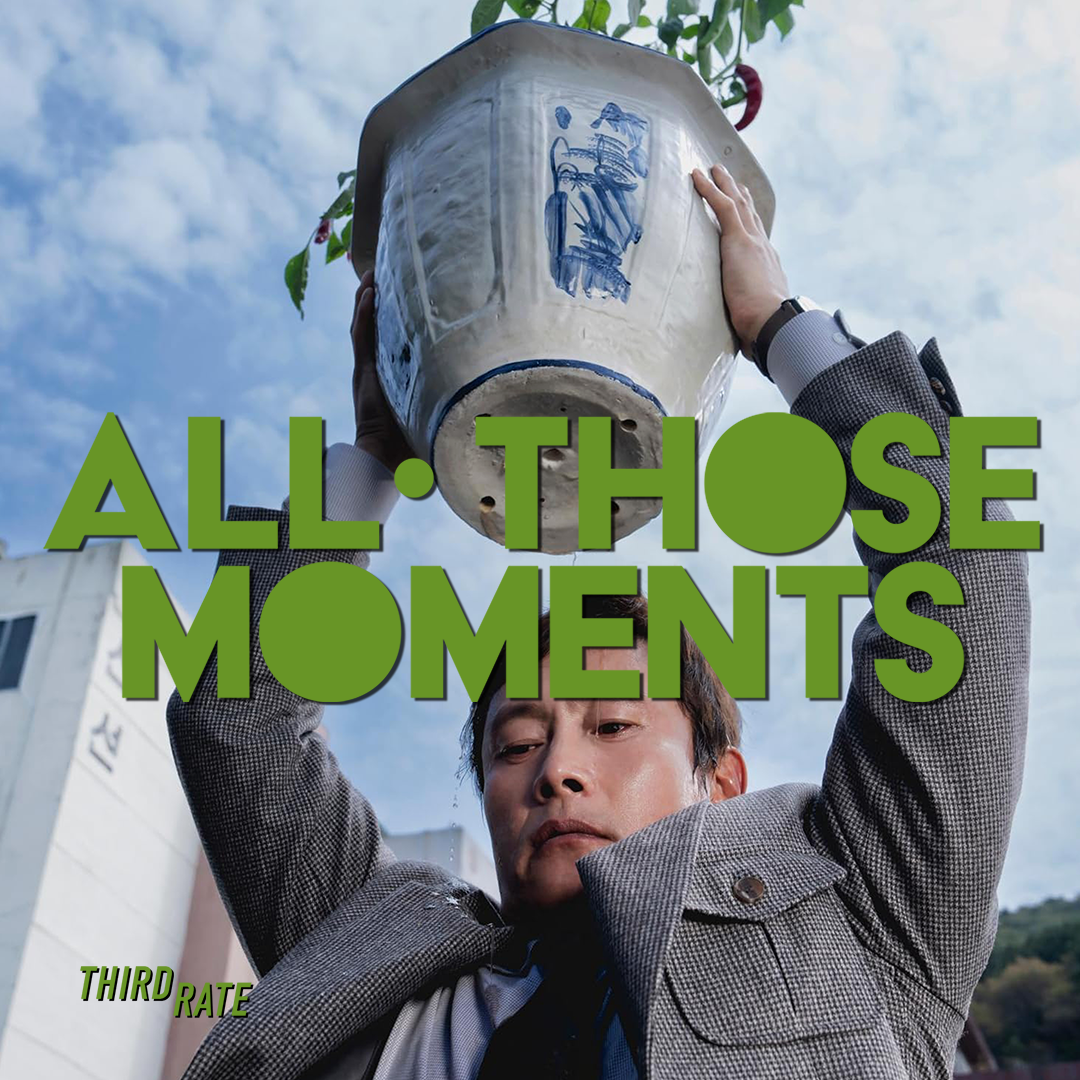
No Other Choice: No Better Movie From 2025
Benji and Luke start the show with describing their expectations for the movie No Other Choice based on their familiarity with Park Chan-wook's previous work. They then begin the spoiler-filled section of their conversation with audience responses to the movie and an introduction of the themes of No Other Choice, including its critique of neoliberalism, large language models, and the role of the Moloch theory as a way of understanding the phrase 'no other choice.'
They also give breakdowns of key scenes, the incredible performances from Son Ye-jin and Lee Byung-hun, and exchange personal anecdotes that relate to the storytelling.
-
No Other Choice (2025) — Full Episode Transcript
All Those Moments Podcast · Benji and Luke · Automatically transcribed; errors may remain.
[00:00]
A proud executive of a skilled but dying trade confronts not just the loss of his job, but the end of his very humanity. As he searches for work, literally picking off his competitors one by one, director Park Chan Wuk wants us to ask: Is losing your livelihood what dehumanizes people? Or does a system that only evaluates people by their productivity have no room for humanity in the first place? The movie is called No Other Choice. This podcast is called All Those Moments. We're back. My name is Benji. I'm Luke.
All those moments will be lost in time.
All those moments is still a podcast where we connect social, political, or cultural moments with moments from our favorite movies. Luke, is this one of our favorite movies? It's one of my favorite recent movies. Yeah. I came away from no other choice. And I think within probably the first 30 minutes after seeing it, thought this is basically as good as movies can be. I think it represents like the the kind of like peak of the art form.
And I don't think that that necessarily means, and this will sound kind of contradictory, doesn't even mean that it has to be like the most enjoyable experience. no, yeah. Because I kind of found this, and we're gonna talk a lot about comparisons probably to Eddington, but it was punishing. I I mean halfway through this I was like thirty minutes after the film, the text you sent me was not this is one of the greatest movies I've ever seen. It was something more personal where you were like, That fucked me up real good. Dude, it did.
It fucked me up real good. And I remember talking to you recently about how sentimental value also fucked me up. Yeah. In a way that was like too much synchronicity. Yeah. The story, the structure of the story, the characters involved, their roles to each other, et cetera. Just like way too much felt kind of on the nose to your life. To my life. And then of course this movie is about
A dad who loses his job, he has two kids, he has two dogs, he has a wife who's trying to support him through being laid off from his job. Yeah. I'm like also relatable. I've gone through that a few times in my life. So I think it just artistically speaking, yeah. Park Chan woke, man. Yeah. Holy shit. And again, I'm not I'm not a student of his work, but I feel like this this later part of his career feels a lot more broad and nuanced than the earlier stuff like the Vednes trilogy, which he's maybe better known for.
which was just very punishing, ultraviolet, nihilistic in some ways. Yeah. I think it's a these are much more human portraits, I think. This is Park Chan Wuk's tenth feature film. For comparison, Bong Jun Ho is working on his ninth feature right now, which is called The Valley. It's gonna be a stop motion animation with Werner Herzog attached to it. Did you this? I was like, my god, Bong Jun Ho, let's go. So Park Chan Wuk's last movie was Decision to Leave, which came out in twenty twenty two. Very well regarded. I have not seen that, but
Here's the log line for No Other Choice. No Other Choice is a 2025 South Korean black comedy thriller, co-written, produced, and directed by Park Chen Wuk. It is based on the 1997 novel called The Axe, which was written by an American writer named Donald Westlake. The film stars Lee Byeong hun as Mon Su and Songy jin as his wife Miri. It is the second film adaptation of that novel after the 2005 French language feature, The Axe, which was directed by the great.
Greek filmmaker Costa Gavras, to whom No Other Choice is dedicated in the closing credits. The film follows a desperate paper industry expert who decides to kill off his competition to be assured of the job he seeks to maintain his way of life. So, Luke, let's dive into the many details about this movie and its themes that will include so many spoilers. I kind of want to say at the outset of every podcast we do, you were gonna get so much out of this.
listening to all those moments or watching it on YouTube by actually watching the movie first. I just think it's really hard to talk about it in a way that's like it's not a review. We're not the outcome of this isn't should you go watch this movie after listening to these people talk about this movie? No, we're gonna talk about the details of it. So it's gonna be super spoiler rich after this.
Let's cue up the responses from our audience. Sorry, this is the second time that I've seen it. And so I got to really like dive in and appreciate certain things. this is a fucking masterpiece in my mind. Like I love this movie. We did a lot of whispering to each other through this movie, having seen it before. This is a really fun movie. This is my favorite park chairbook. Yep. Nope. This is good. That was our friend Joe and his wife Jane. I think the thing I was most surprised by is how.
American, it felt like I could easily see a pretty much shot for shot, like cast possibly Ryan Reynolds in the main role. And you could do a pretty much shot for shot like in LA. And I think it would still make 90% of sense. And that's not generally the case for a lot of his movies. And I was like, this feels so American. And I think I was kind of surprised and a little like at first I was very put off by it. But then it
Actively grew on me. I do not think Ryan Reynolds has a gravitas to pull this off. Acceptable. Which is funny. And then this guy's name is Samuel. Then he says this. I would maybe argue Ben Affleck. I don't know about that. What? Not Ryan Reynolds, but Ben Affleck. Casey Affleck? Yeah, maybe Casey Affleck. And I feel like the easy thing to say is it's like an indictment of capitalism. But I think the more interesting thing is that.
Like people feel powerless in different ways. And the powerlessness, trying to get some sort of semblance of control back, people are willing to do really terrible things. And that can happen under lots of different types of systems. This is to me the key. It's not just this critique of capitalism. It's society's participation in it. And I could not help but immediately in real time while watching this movie, think of this thing called, have you heard about this? It
I think a couple years ago there were a couple there were some people talking about this idea called the Moloch Theory or Moloch Principle. Are you familiar with this? No, I mean I've I think I've heard of it. I don't yeah, hit me. There was a podcast that's hosted by a woman named Liv Boiry, and her guest was this guy named Daniel Schmachtenberger. the Moloch principal, also called the Moloch Trap, M-O-L-O-C-H, describes a game theoretical scenario.
[06:49]
Where individual rational actions lead to collectively disastrous outcomes, often termed a race to the bottom or a negative sum game. And the examples that come up constantly are arms races, like nuclear nuclear arms races, environmental damage, or social media, where individual incentives compel actions that make everyone worse off. So in the podcast I listen to with Bory and Schmachtenberger, they talk a lot about.
The LLM arms race and how all these companies, whether it's Google or OpenAI or Apple doesn't have shit. but actively terrible AI, actually. Totally. And what they've done though is they've released all of these models onto the public. and of course, Eddington comes to mind immediately with its representation of data centers. And they have no
Like zero concern for public health or safety because the truth is they just cannot afford to not compete right in this. It is an arms race. The whole LLM world is an arms race, right? Yeah. And I just couldn't help but think about that because what this movie feels like to me is the desperation of this character when he's laid off, right? Having gone through this, especially in our economy and culture.
It does trigger this response of I will do absolutely whatever's necessary to like provide for my family. Absolutely. That's kind of what it does to people. Well, and that's why like I think this the guy's comment where it's like it's capitalism is too easy. Like I can see why he would say that, but it's also like capitalism is so all-encompassing that everything fits underneath it. And that's kind of the piece I was gonna talk about this later, and maybe I'll do it in more greater detail later. But like the reason I was thinking about Margaret Thatcher.
Was like when she got elected in the eighties and was, you know, her the idea was to basically create what we now call neoliberalism. She started by saying there is no other choice. Yeah, there's no alternative or something like that. There's no alternative. She presented it as though it were a statement of fact, but it was actually a wish cast to be like, Okay, all of us, this whole machinery of both government, private industry, the desire for globalization, which then really, I think, you know.
impacted places like Korea, but probably also even in a more intense way, impacted less developed places like Bangladesh and, you know, South Asian countries. They basically faked it until they made it, until neoliberalism was hegemonic, right? And so what it feels like we're in this moment, and that's one of the reasons when the audience was we'll hear this one in a second was like, that ending felt like it was made by AI. It's like all I really clocked was that the ending was CGI, computer graphics. Same. I did not see AI, but maybe that's
The self-fulfilling prophecy coming home. When we're so either worried or excited about AI, this new, you know, this new potential paradigm, this new potential hegemonic force in our economy and in our lives, we start faking it till we make it in a way that you're talking about. So maybe I have been thinking about the Moloch principle, even though I didn't know that's the name of it. To be like, this is sort of how culture that is a race to the bottom, right? Where we're already seeing AI everywhere, whether it's true or not. And even when we're wringing our hands about it.
There is no serious maybe there can be no serious fight back against it. Like, as much as I try to avoid AI, every time I Google, there's an AI thing right at the top. Right. And so this film's got me thinking about of like how do you even fight back against that? And to your point about neoliberalism, the phrase no other choice is issued many times in this movie and has many different purposes. Starts with when he's getting laid off his saying there's no other choice. Yes. How could it not be fired?
You got X. There's no other choice. Do you know why we say in Korea? The ultimate expression of neoliberalism, it's like this company is gonna downsize. Yeah. Because they realize. And while this is the other thing I just really want to get into with you, is while we're watching this movie, there's this dude named Matt Schumer.
Have you heard about this? You've seen this? It's going crazy on Twitter right now. I don't know. He wrote this essay. The guy is the CEO of a company that he's his own company called Hyper Write AI. Okay. And it's R-I-G-H-T. Nope. R-I-T-D. That'd be even funnier. W-R-I-T. W-R-I-T-D. The kind of T L D R of this piece is that everybody should just buckle up because with a wave of a pen.
There are thousands and thousands and thousands and thousands of sort of white collar professional task based jobs that are getting ready to disappear. They're they're minutes away from disappearing. I don't even know what the timeline that was talked about in this piece. I couldn't read it. Something about it, even if he's right, I just don't I I can't go there. Yeah. And it's also tied to a pitch of like if you want to company, yeah. If you want to get out in front of this, go get a $23.99 a month.
Chat GPT Prime or whatever the fuck it's called. You know, of course there had to be a pitch in there. And that got a lot of people, I think, rightfully suspicious of the piece. Totally. But in general, it's hard to argue with the premise that what happens in the events in no other choice. Park Shanwook does. I I pulled a quote that park from Park Shanwook that I we could talk about right now, where he does say, let me find this real quick. Yeah, he says, I wanted to convey the this is in the the Hollywood reporter, just a QA with him. I wanted to convey the message that getting fired is a
A very violent act that destroys one's humanity, which I actually love because that's not a framing that I had really considered. Like the idea is like you got fired, and which is just a thing that happens, right? Like that's a force of nature. It's how you respond to it that makes you human or inhuman. To counter that got me thinking that not only is the the act of firing what dehumanizes people, an individual's entire worth is based on their productive capacity or their efficiency, is part of what's stripping that allows.
humanity to be destroyed in the way like through a layoff, it actually starts even earlier, right? Like just we're so focused on efficiency, productivity, you know, getting the maximum amount of value out of every hour of the workday. We've and that it's been so central that we there's no room for humanity in that. It's like we're all, you know, oxen lashed to a cart or something. And we're all minimally we're all tacit participants.
And I think that's what I really like about no other choice is and we don't really have a choice. We're we're participants whether we want to be or not.
[13:35]
Talk about the opening of the movie and we'll come back to the audience response stuff because there's some more to come. Totally. But the opening of the movie, he is already a participant in this system. Without he's successful. Totally. But he's been successful for decades and has kind of not even thought about it. He was the 2019, what is it, pulp man of the year? Pulp man of the year, yeah. Yeah. And what I wonder if the word pulp is as funny in Korean as it is in English. Because pulp's just a funny one. It is a funny one.
So Pulp Man of the Year really works in English. I hope it works just as well in Korean for a Korean audience. I suppose you're thinking about paper. And I I want to talk about the opening of the movie, this barbecue. Totally. Because instantaneously, you're looking at the skill of Park Chan-wook writ large over everything that's happening. So this guy's celebrating decades of service to this company. He's been
His employers have gifted some eel, yes, which is a delicacy. It's expensive. But it's also a very Korean or Japanese del you know, it's like it's a more of an East Asian delicacy than an American delicacy, right? Like we don't really eat eel in this country. And there's all this play on it being like an aphrodisiac or some sort of leading to some virility. And for him and his his wife, they're flirting early on. But you can kind of tell something's off, obviously, because he doesn't get it.
Even it's like there's a there's a sense of dread. It's almost like a dramatic irony, even though we don't know anything special yet. It's almost just the way he's shooting it is like, God, this isn't gonna go well. It's unsettling. Yeah. It reminded me of the Soundgarden music video for Black Hole Sun. It had something about it that was just like really off. It's like everybody's a little too tan and their mouths open a little too wide, and all of a sudden it's just a horror show. It's it's way it's it feels way too happy.
and then of course it features the music of Mozart in piano concerto number twenty three, a song described on Wikipedia as infinitely sorrowful because of its second movement.
And I'd say it's called infinitely sorrowful on Wikipedia because it's fucking infinitely sorrowful. There's no mistaking that something deeply upsetting is sitting right beneath what's happening in the movie. It's got this like
Visual depiction of like pleasant suburban life that you know two kids, two dogs, all the things. Symmetry. Yeah. There's a real symmetry to it. But you know it's about to get ruptured by something perverted and and grotesque. It also felt like, and this is again, like you're the filmmaker here, but the color balance was weird. That's maybe part of what made some of these scenes feel like AI. Like there's like a hypersaturation in parts of this screen. Totally. Right. So it's like a technicolor vision of an Americanized Korean ideal of like.
The fam family unit. And well, that's why I'm saying I thought it had the aesthetics of a music video. Cause it's super punchy, it's super saturated. It's also just there's something super off about it. The visual depiction does not make any sense with that music unless you know something's wrong. Yeah. And like suburban life at its most bucolic and wholesome. And of course it ends, and this is why it's like telegraphed. He says, I think like while looking up at the sky, I'd have to go watch it again. But you know what I'm feeling now?
I have it all. It's like the last thing he says before the next day when this American executive is getting ready to like with a stroke of a pen fire tens of thousands of people. Yeah. let's do a couple more responses from our our audience here. His eyebrows. I think that what he does with his brow and eyebrows are is some incredible acting. he's really pained by what he has to do, and somehow it all works out for him.
For better or worse, he is an incredible actor. Let's pause before we listen to Ann for just a second talk about the performances because I totally agree with Jane. Yeah. I thought that the two leads were just astonishing and also really fucking hot. These are two really, really good looking. Very handsome people. Yeah. And they their chemistry is insane. They're they have moments of like r being really sexy and like got it's got a little bit of
Mr. and Mrs. Smith vibe when they go to the they're dancing together and stuff. Yeah. And also I thought the this is one of the things that like I've I've got a note in here where it's like this is not over it's not hyper realist. The acting at times is almost feels like theatrical, like they're performing for the back of the house, you know. Speaking of the performances and the the Miri character is that That's the wife. That's the wife character. Yeah. That these these consumer economies.
And these structures that are being critiqued in this movie. And these structures, they create horrible men. And so we're looking at the response of this guy in his fifties. And it feels like his fifties are just going to be a hellscape. And yes, I just turned 50 recently. And I couldn't help but think about the enormous invisible pressure that's put on the women that are totally in these relationships and in these families. The character Miri returns to work and she basically keeps the family afloat. Yeah.
while he's wallowing in self-pity for the most part and plotting to kill people in competition for his next job. To me, it's like when when people read this sort of a dynamic, it's like, the women are the smart ones, you know, and the men are idiots. And that's like one way to read it. For me, it's like because we this is one of the ways that I think the patriarchy hurts men too, if you're at anywhere near the bottom or even in the middle. Totally. Where you're told all you have to do is get a good job, make a good living. And and honestly
[19:46]
Even, you know, in our contingent time where no like fewer and fewer people have like actual, you know, W-2 income anymore, are we're still told that like if you just like work your butt off, that's your job for the family. The wife's job, depending on where you're at in the social hierarchy, is sort of all other tasks as assigned, right? So it's almost like one of the ways that that's not great for women in a patriarchal society, but it also you can see that.
She's a more nimble thinker than he is in this film, right? She's like, okay, cool. Well, I guess I'll just stop playing tennis because she doesn't work at the beginning of the film. When he gets laid off, she has to go take a part-time job. she's like, I'll take a job. And then when she starts to th realize that he's killing people, this is I really love this aspect of me too. I know you're going. She's like, he's like, Well, come on. If you're gonna like at least let me help you kill people, I'm here with you. I'll be your partner. We can be buddies in crime. And he can't even, he can't even consider that.
I think probably because he doesn't want to do it to her, but he because he's so thoroughly dehumanized at this point. He maybe he doesn't see her as an equal, which is one read on this that I think is valid. Yeah. Maybe he also doesn't want her to lose her humanity the way he's lost his humanity. And so she he keeps her out. But like the whole time she's looking for a much more nimble approach to problem solving than he ever has. It feels different to me. It feels like he has conflated his job that he lost.
with the murder spree that he's going that he's going on. As if they're one and the same. I go do these things public. I'm the I'm the guy who's got the pub the very public life, which is breadwinning. Interesting. You have the all the private stuff. Yeah. Let me go deal with the muck of public life to earn a check, including murdering people who are competing for my next job. Yep. So it felt a little bit like that. And I think it also sort of brings it introduces the idea that
The Miri character is so much more pragmatic. She's so much more of a problem solver. And she's able to navigate between the public life aspects. She goes and gets a job. It's not quite clear. And I like how they leave it ambiguous as to whether or not she goes and works as a dental hygienist or a dental assistant. And it's not quite clear if the dentist that she works for is actually trying to have sex with her or sleep with her. I it feels like he probably is, but it's left, he could just be a good guy.
He kinda like it it's it definitely felt that way to begin with. I actually Did you think he was just a good guy? By the end, yeah. Because like by the there's a dance scene, and then he just sort of disappears. So he he's it it's more to make the husband feel insecure. Totally. Right, than it is anything, any agency that guy has. Because ultimately the family is what's important in this movie. All the other characters are sort of their DM. It's this isn't an ensemble.
So the whole premise is that he's gonna kill these people. He creates a fake company to even get them to apply so that he he can get information on them so he can go kill them so that they don't apply for the job that he's starts off trying to apply for other jobs in his milieu and just is not good at it. He has a couple of disastrous interviews that are really funny. Yeah. And then he's like, Okay, I'm I'm take takes a shitty job at like a office depot or something. Yeah. So he's like he's working at almost felt like a Costco or something. Yeah.
but then he's still trying to get back into his industry. And it you get a sense that like this this final paper company that he's gonna go for is maybe the last one that he hasn't tried to get a job at. There's this really funny scene where again he uses paper. He prints out all the people who kind of respond to his fake ad for a job in, you know, exec paper executive sales. And evaluates them based on A, B, C, D, E. Where are they at on the and then he's like honest with himself? I'm probably behind that guy too. Yeah. So it ends up being like a list of
So basically, candidates that he thinks would be hired above him.
Two candidates actually. Two. Okay. Yeah. Yeah. Cause he's he would be like two candidates and he kills the guy who's got the job. Yeah. So he has to I didn't even catch on to that. The plot's a little confusing. It's yeah, it is a little tough. but yeah, so he has to kill he has to kill the potential candidates who have both been downsized from paper jobs. Yeah. One of them works as a a shoe salesman and the other one, I think, might just be unemployed. And he's just sad. And he's also got a bunch of insecurity because his he's literally being cooked. Right.
Where the main character, Monsieur, is fearful about being cooked. Yeah. And that's honest. And then then he at the end, his final murder is the guy who still has a job similar to the one he lost. And we might not want to get into this now because maybe we aren't far enough along. But as I was thinking about all three of those men, I don't really remember what was going on in the life of the shoe salesman because that was the very first murder and I wasn't thinking about this stuff. But by the time we get to the second, his wife is just cheating on him in like
a ton, we get a sense that the main character had previously had a problem with alcohol. Yeah. but this character is just fully alcoholic. So everybody the main character is trying to get ahead of in life is actually has a has an objectively worse home life than he does. And so it's like he completely misses in one way, there's one way in which that domestic bliss in the beginning was totally real. Like his wife really loves him. Totally. Throughout the movie she does. Yeah, his his son's a teenager and so like doesn't love the eel and wants to eat beef. But like his son
kind of respects him a little bit and is worried about him when he sees stuff happen later in the movie. he has a better life and all of these men he's going after, but he can't see any of that because all he can see is his, you know, failure in the marketplace. It has a fairly intricate plot, a lot of moving pieces, almost like a literal game of telephone. And I wanted to bring that up to say I find it really interesting that we've had these conversations about how do you critique modern culture.
While not making a movie that just has too much modern technology, which modern technology is not very interesting to look at. And Eddington did a good job of And we talked about with the context of like you make period pieces like Ephis. Yeah. Or you make movies about or The Mastermind, or you make movies that are about modern times and you have to feature phones and the ends ends up being shitty. I think Park Chan-wook and Ar Ari Aster have done a great job of saying, Nope, you can actually put movie phones in movies in a way that
[26:10]
Can be provocative, it can be thrilling, it can be, it can actually create interesting plot characteristics because the phones are everywhere. I agree, but I think where Ariaster put the phones right in your face, like there's a moment where you're actually watching YouTube, like a YouTube screen, and then you turn over and you're Joe Cross laying in bed. Yeah. The year 2025 was the year of dads in movies, which is totally true. And the influence of dads and dad characters. But also, if I look at this list.
Of these characters from movies that came out in twenty twenty five, some of which we talked a lot about. Joe Cross, the walking phoenix character in Eddington, Marty Supreme, JB Mooney, the main character from the Mastermind. I think it was JB. Was that his name? Yeah, JB. Yeah. Pathological, diabolical, psychopath dudes, or just desperate dudes. Desperate, yeah. A little bit of both. You know, if you think of the role of the mastermind character, JB Mooney in his relationship to his wife and two kids. Yeah. Yeah.
You could say he's acting out of some desperation, but also just given back to this idea of like the public life that is presented to men. And I'm gonna be totally honest and candid here. I speak from direct personal experience when it comes to this dynamic. Having gone through three times in my career in life where I've been laid off. Yeah. I would say only one of those times was I caught completely by surprise to where it was like, this is actually not great. Yeah. But through
All three of them, I was with my wife, Ray. Yeah. She experienced all three of those with me and had to help me go through all the different challenges of trying to find a job and provide and blah, blah, blah. But again, because that's just the role that is expected of men. And I feel like that's a lot about a while and I'm just kidding. Yeah. And on top of that, Ray also works. Yeah.
And she is 50 times more competent. I'm just being honest when it comes to like the relationships inside of our family. Juggling all that. Yeah. I feel like no other choice. Again, back to this idea of it being used as an expression to say many things within this brilliant movie. The most powerful for me is in my favorite scene of the movie. Can we just talk about it? Yeah. Which one is it? It's the fucking boilermaker. Yeah. I'm calling it the boilermaker. They called them bomb shots.
So let me just let me just get into this this moment from the But it's a it's a shot of whiskey dropped into a beer. We've all had a boilermaker in our life. Or I don't know many of us have. Luke, I don't think I have. my God. Okay. I find it so repellent just conceptually. I don't think I've ever had a boilermaker. Yeah. Drop a shot of whiskey or bourbon or whatever into a mug of beer. There's a version of this called the Johnny Jump Up that is a Irish whiskey dropped into a Guinness. It's actually pretty tasty. So it's his final target. I'm gonna get some clarity from you because I think there's so many things about this plot.
Very intricate plot that I didn't understand. His final the final target of the the people that he ends up murdering in this movie. Yeah. Actually he doesn't murder the first guy. The first guy is his wife killed him, whatever. But the third guy, Sun Chul, is he's killing him because he thinks he would also apply for the job or he has the job he wants. That's why he's like he's got the big truck he's living out on this estate.
So it's he's got what he wants. It's that guy. And by the way, they look a lot alike too, which is really fascinating. And it's also making fun of content creators. And this main character, Monsu, is watching him on YouTube, and you can kind of tell his wheels are turning. Like, I can't fucking do this job. Yeah, yeah. I can't be this. This guy's got so much personality. So the guy's doing content creation for the paper company. Correct. Yeah. Yeah. So his idea, and I'm a little confused about that what he plans to do. His idea is to get this guy really.
Fucking drunk. The Sunchuel character. Man Su, the main character, has been on the wagon for quite a while. I think like a decade or something. He hasn't had a drink. So he's obviously had a alcohol problem in the past.
And doesn't drink anymore. So his idea is to kind of entrap this Sun Chul character, get him really drunk. And then he pulls out a this this literal Chekhov's gun, which is a whole thing. He pulls out this gun to shoot him. And I'm like, why did he get him drunk to shoot him? And he ends up not shooting him. He ends up not shooting him. But I just want to describe, because this is like cinematic bravura, the def definition of the idea, what Park Chan Wok does in this scene. So they're getting drunk.
He's not drinking. He's pretending to drink. He's like dumping it out into a bucket or like a bowl on He's kind of doing that. He's pretending to get drunk because he doesn't want this guy to catch on that something's weird. Yeah. but the other guy's drinking like crazy. Yeah. And finally he thinks I've got him right where I want him. He pulls out this gun to shoot him. Soon Chul has grand has run to the fridge to grab a couple of beers and a couple of mugs. And he's like, We're gonna do bomb shots. That's what they call boilermakers in the movie.
So he puts the gun away because he's he doesn't have time to to shoot him. He's he's hesitates for a moment. But then what happens in this scene as far as like the technique and the style or whatever is just unbelievable. You hear the audio when he comes back and and snaps the bottle caps off the top of these beer bottles and they careen off the table under the wood floor. You hear the fizz of the beer, you hear the clink of the bottles, his knee is shaking. The camera gets physically really close to the the steins, basically.
[32:11]
It gets close to everything to where it's it's almost macro. You can see Monsu's knee is shaking because he's getting really nervous. He pushes down his knee to get it to stop. And that's a that's a little that's a little tick that he has throughout the movie. Totally. When he's doing porn as interview, when he's basically whenever he's nervous, his knee just starts going. Another moment of self-reflection. I will confess, about three weeks ago, I was in our one of our local pubs called Manitou Tap House. My knee was shaking like crazy, and Ray was like, Are you okay? And I'm like
Just having an anxious day, babe. I'm just having a day in 2026. And even his clothing is rustling like pretty intensely as he stands up to accept the the boilermaker. He knows this is a terrible idea because his character's sober. And this is the most painful and I think poignant utterance of the phrase no other choice. They cross cut to Miri, his wife, and she's on a porch swing. It's like dusk at their house. Yeah. And she's l doesn't know where he is. Right. Cross cuts to her.
Then it's back to him and he's saying to himself and he's tapping his head and he's going, No other choice, no other choice, no other choice. And what he's considering doing is I'm gonna break my own sobriety. Yeah.
A boy And I'm gonna drink this Boilermaker. Yep. he downs it. The camera tilts to like a POV with the beer mug. It then goes like POV at the bottom of the glass. Yeah, up at Monsu.
Yeah.
And then it cuts back to the empty porch swing, but it's still swinging and the wife is gone. He's got this abscess tooth that he's had throughout the whole movie. Yeah. And then this is like one of those kind of startling gross out moments. He takes a pair of pliers after having a drink. Yeah. And there's this kind of unsettling commentary about what having the drinks does to the character of Monsu. Yeah. He's just, you could see his body just the tension just drops.
He's relaxed. And then he's brave. He grabs inhibitions of are gone. Yeah. Yeah. And he grabs these pliers and pulls out this abscess tooth that he was like refusing to get sorted out. And then he's like, I'm so relieved. And and then Soon Chul watches him do this, just totally horrified. He lets out this like guttural gasp, and it's like the funniest line of the fucking movie. He's like, You are freaking awesome. And he calls him man superman. and I
I thought about the movie. Have you seen Another Round? Mads Mickelson Tomas Vinterberg movie. Yeah, Mads Mick yeah, Mads Mickelson is great in that movie. So great. It reminded me of that.
guys that attempt to create like a science around getting just a little buzzed. Yeah. Because if you're just a little buzzed, it makes life so much easier to endure. Totally is. And it ends with a fairly cynical, odd mixture of like, he has a couple drinks and starts dancing. anyways, watch a another round. It's an incredible movie, but it reminded me of that because it feels like he just caught this little buzz and suddenly he's man superman. Yeah.
anyway, I just wanted to point that scene out. I think it's it's my favorite moment of the movie. And I think it's where the phrase no other choice just I think hits the hardest. And it's his own personal demons of Yeah, I have no choice but to drink this boilermaker. Well, and that's where his like everything he's worked for in his life, right? Is because all these other dudes. So the guy in this shoe store, it's not clear that he has a drinking problem, but the other two guys clearly have drinking problems.
One of them is unemployed guy, has a drinking problem. The content creator who still has a job is kind of drunk every time we see him, I think, maybe even at work. Like the f like earlier in the film, we see him and he's just he's like three sheets to the wind the whole time. Mansu has had to has made this choice to be sober for his family and is doing a good job of it. And there's one point where he's depressed, he goes to a bar and his wife's like, my god, are did you break your sobriety? And he like holds up an apple juice. He's like in the bar to sort of like
was he actually drinking apple juice? I think so, yeah. Okay. That's that wasn't clear to me. I would need to rewatch it to be hundred percent sure. But like I think he was. I think he was in the bar to sort of drown his song. Kind of drowned but don't think he was drinking. He was dry drunking as exactly A people would call it. Yeah. that's really fucking interesting. Yeah. Yeah, I it's so in dude. Another thing I related to about this is I'm not gonna name names, but you'll probably know some of the people I'm talking about here. But one of the times I was laid off from a job,
I was d didn't create a hit list and think of killing anybody, to be clear, if you're listening, FBI. but I did fear some of the people that were also laid off going for the same jobs that I knew I'd have to get. Yeah, totally and feeling all this enmity, right? It's like this is the ultimate like version, the most awful version of like alienation. And you think about like what what a world might be like where everybody comes together and helps each other. That's sort of the world that is that that world's just not possible in the context of
[37:59]
You know, this movie would I think would say capitalism. I think I would agree with that. But like, you know, you could imagine a world where people get laid off from, you know, like an agency or something, they just start their own agency, right? Like if they want like that, Luke's talking about one of the times I was laid off. Yeah. Like the c a culture of cooperation could be a potential like salvation for folks in that sort of situation. I don't know if like the th the three or four dudes in this movie that are
laid off would be able to start their own paper company. But the idea that like if we work together, we could maybe think of a better way isn't even an option here. Like all you have to it's it's man against man, no matter what in any scenario. And that's really sad to me. It's really interesting. My mind's going to a thousand different places right now. I was so confused about the plot characteristics of him starting the fake company to identify targets for what totally.
I because of my own personal history, you're talking about one of the times that I got laid off from a local production company and then went, fuck it, I'll go start my own ad agency. Yeah. Of which you and I became principals of for almost 10 years. So yeah, I I didn't even realize because I was thinking of my own personal stories so much that he's starting this fake company to like solicit these guys into like a honey trap so we can fucking murder them. Yeah.
and yeah, and he literally all he wants is those guys' resumes so he can figure out which who's the threat. Yeah. That's all he wants this for. Yep.
Listen to more feedback. Very much a middle management approach to assassination. Like it is clean, it is efficient, it is awkward. And if I need one glove to protect my hand, I am gonna use three. That's a and I can't actually look at you when I'm gonna fire you or kill you. But I'm still gonna do it anyway. And I really loved all of the details. He is truly.
A middle manager. He is not meant to be the boss. He's not meant to be an underling. He's just in the middle and he's trying. And it's all just kind of uncomfy. I love that because so the second time, this is the second time he kills somebody, he goes into the guy's house who's and he finds out he's being his this guy who's unemployed, but is maybe his main competition, his wife is cheating on him. There's just like this whole thing. He's he's seeing things that the the character he's about to kill.
Doesn't even see like the younger lover his wife has. He knows all these things about this guy. And again, like at no point does he say, like, man, my life's actually better than his. He's still like, I need the job that we're both gonna be going after. He's like planning this for a couple different scenes. And there are even scenes prior to the ultimate killing where he's wearing like it looks like an oven mitt. I almost leaned over you. I'm like, is he wearing an oven mitt?
He was wearing an oven mitt. And what was the oven mitt like concealing like a gardener's glove, concealing another glove, concealing the gun, which he had wrapped in cellophane for some I'm guessing maybe the cellophane was to stop the gunpowder residue from flying off. Yeah. So he had like some triple redundancy for quadruple redundancy, yeah. And maybe the like yeah, like that's it's gonna the gloves are gonna be like a silencer and that whatever.
But then he has to take all those things off because the gun's not actually working. It's a really slapstick goofy scene. But that's him again, like the middle management approach to assassination. It's like, how do people kill people in this world? they they they have a gun and they whatever. But you have to admit, his third kill, or sorry, his I guess it's his second, because he doesn't kill the first guy. His wife, the guy's wife kills him. Yeah. But his second kill, the guy, the Sunchule character when they get super, super drunk, he kills with some.
Pretty clinical expertise when you think about it. He's got this whole plot figured out about get him he gets him super drunk and then he in the middle of this scene where they're drinking the Boilermakers, maybe it's b the superjuice from getting a little buzzed. He comes up with a perfect idea. He does the second murder conventionally, but he kind of figures out how to dispose of the body in an interesting way. Cause he goes, he's got a greenhouse because he's a gardener. Yeah. And he basically
Pulls a Dexter Morgan. I don't know if you guys have ever watched Dexter. He like basically creates a kill room for himself because he's gonna cut this body up and dispose of it. And he just can't bring himself to cut up the body. Yeah. So he uses he basically one of the things he does is do the Korean version of bonsai, where you basically use this really thick metal wire to shape these trees and get them to grow in specific ways. He more or less when he when he realizes I can't, you know, I can't dispose of this body the way Dexter Morgan would, I'm gonna do it like a bonsai practitioner would. And he basically uses this.
Not basically he uses this really strong wire to basically break this guy's body into this size of a suitcase. It's a really intense scene. That's when they become that's when the wife becomes when the son sees and then she be she covers for him. Yeah. Because she can kind of tell, yeah, he's fucking killing people. And she's like, I want in on it. But I did think that was the moment where he sort of went aw that was a bit of that was the beginning of his like creativity in like, okay, I guess I'll
Use my own skills because like I can't do this the way assassins do on TV. so I'm gonna basically bend this guy like a bonsai. Yeah and dispose of him. And then he gets even more creative in the third kill, which you're talking about, where he's actually able to bring that creativity. He buries the guy up to his neck, which is like a gardener thing. There's probably a way to get this guy and then he wraps his mouth in cellophane so that when the guy pukes, he basically chokes on his own vomit. By far the hardest part of the movie to watch.
[43:46]
The two most interesting mov moments of the movie were one when she's calling him and saying, If you're gonna do something bad, let me do it with you. And he won't do it. and that's like really where like the loneliness and separation comes in. And then when he comes back and he hugs her like a and like has a rule they have for their child who can't communicate. So imposes on her for the hug, the same rule they have for their child, who up until that point.
hasn't been able to communicate at all except for echoing things. And even when it seems like they have a real moment, she's still counting in her head and pulls away at 60. And those two moments really drove home the way that they're performing for each other, even at that point. And there really has been this distance built up between them. Even before we listen to the rest of what Samuel's saying, I I love the way he's describing the relationship of Mansu and his wife, Miri. Yeah. Because they do, they never
back down from supporting each other. Yeah. I find that really fascinating. This is, I mean, it ultimately is about the resilience of this relationship and protecting and self-preservation of their family. Yeah. Despite the horrible Moloch. It's a it's got this Moloch thing happening of we will do awful shit because we have no other choice. Right. Because the world has presented us with no options. Yeah. The wave of the pen happened. We're about to completely slip between the cracks.
You know, it's like sometimes the distance between somebody making just enough money to put a roof over their head and food in their stomachs. Yep. The distance between that and homelessness is fucking short. It's I mean, I I'm a I've been doing this for the last six years of how I've talked to so many people and and reporters I work with, I've talked to so many people who are, yeah, one broken down car away from the streets or one.
Deciding to they can't pay rent and car insurance. And so they make a decision. And this is why I think every time like Microsoft CEO just said, watch out, every white collar professional task-oriented job is going to disappear. As I just said that in the last 24 hours before coming in to record. Yeah. Says that kind of stuff without even thinking of the implications. And then it's like, what is what is everybody else supposed to do to prepare for that? Including possibly us, Luke. Yeah. What are we supposed to do to prepare for that?
twenty three ninety nine a month for chat GPT Prime. Yeah. You know? Learn to I'm saying that as a joke because I don't even know what their fucking paid model's called. Okay, 'cause I don't give a shit. But it's also then that's which is just like five years on from or ten years on from learn to code, right? Like that was exactly learn to code. Yeah. It's exactly learned. Hey, all you coworkers. Yeah. Just learn to code. Can I just maybe spend a second rapping a bow on the on the difference between him and the people he kills? Yeah. Okay.
The thing Mansu completely misses is how much richer his life is than these other guys that he's going after. the framing of these men's lives is so contorted to focus on their productive capacity, the ability to make money for other people first and then themselves second. the men, Mansu hunts are already husks of people in different ways. And Mansu himself can't even see that he's got more than any of them.
He's no longer rich with money, but he's still rich with love. His wife you get a sense, his wife loves him. She's n she's not just doing this out of a sense of familial propriety or like you have to stand by your man. This is an empowered woman.
It's an empowered woman who actually could have cheated on her husband with the hot dentist. Yeah. And there's a well, I don't know if we want to go into it, but there's a really brutal scene where Mansue thinks she is cheating on him and he's like, and she's like, No, you asshole. Like there's this the this dance, it's a costume dance. She goes as Pocahontas. He goes as and she gets him his costume. His costume looks more sort of roughly her entire office when she realizes she's going to this dancing. They've been taking a dancing class, and this is the end of the party. Yeah. Or the the the end of class party.
The entire office goes as other indigenous folks. and Mansu mistakes the hot dentist and his wife both being dressed as indigenous people, as like, my wife is like sleeping with this guy. And when she he confronts her on it, she's like, No, you asshole, I'm Pocahontas. You're John Smith. All my coworkers just wanted to hang out with us. So we all decided to be members of Pocahontas' tribe. This was me and you, and you didn't even see it.
That's why I love Park's decision to keep his family and especially his wife on his side throughout. It's isn't again not just familial propriety. She loves him. She wants to help him. She wants to keep this thing afloat. Not so that she can go back to tennis, so she can keep the family together and happy. When he does get a job back, and we'll talk about the ending in a second here. He's like, You can just go back to playing tennis. She's like, I'm definitely not doing that.
I'm gonna keep this job and I'm gonna save up money in case this happens to you again, my man. Yeah. And he's like, okay. And that's where she kind of asserts her agency in a really beautiful way. If you went to this movie and had any kind of criticism of it that you didn't think you identified with or cheered for, or whatever, whatever any of the characters, because of the reprehensible shit that Monsu does, you're not, you're kind of telling on yourself because
The Miri character is the center of the So human. Yeah. And she does a lot of it, not just the the actress, the actor, the performer, but also the character. Yeah. She does a lot of it kind of limnally. Yep. Sort of in the, you know, just outside the edges of the frame. Yeah. You know, even that cross cut during the Boilermaker scene where she's on the porch swing and she's not. It's just subtle. There are number of cross cuts where he's just committed to something, a dreadful act, and we cut back to her. And and oftentimes it's even
superimposed on the screen. You'll see both of their faces. So like Park Jan will will do a thing where he's just dumped a body into the into the ground at one point and the camera both and there's a some I can't remember what she's doing, but the way the camera sort of resolves both images, they end up both on screen at the same time but facing in opposite directions from each other. Like they're, you know, they're both sort of thinking about each other. Cause he is doing this for his family, even if it's just completely demented and missing the point.
And she's just worried about him the whole time. Like he's always on her mind, even when she's not on his. I can't help but think about the character, the first character, the one who's getting cucked. Yeah. Cause remember what his wife says about him that she's so upset about. It's not that he's lost his job. He thinks that. He feels emasculated because he lost his job. Yep. It's because he's wallowing in self-pity. He's drinking all fucking day. He's not doing anything. Sitting around in his underwear. Yep. Right.
[50:54]
And it feels kind of like the Monsieur character can see that. And if he could just pay a little more attention, he could see that, this is where this goes. If if I go that direction, yeah, then my wife will cheat on me. But he will but he can't quite see it. Yeah. Yeah. I really I find that super interesting. And if you think of the continuation between the handmaiden, a queer feminist revenge tragedy.
To now no other choice in this Miri character. Yeah. Yeah, he's really up to something with like foregrounding like these the the the diabolical men that have been created by our economic and cultural structures. Yeah. and the role that women play in keeping shit together. Yeah, the women who have to love them and or maybe love them despite themselves. Totally. And I I so fucking relate to it, man. And not to make this super personal, but
My wife Ray had is introduced me to this book and a podcast that was talking about it. But just the idea of the the cognitive load imbalance in relationships with families and mothers versus fathers and the role they have with kids and stuff. And this movie is all about that. Yeah. Showing that ultimately patriarchy creates terrible men and women pay they doubly pay for the consequences for this shit. Yep. Yeah.
So should we talk about the actual ending where he does get a job, he gets a job back at a paper company, but the paper company is in the process of automating so intensely. And this is maybe where we go from like the this is again a like a heightened version of reality because I don't think we're there yet with manufacturing technology. Before real quick, I wanna can I just before we Yeah. I wanna circle back to how this was bookended in the movie.
He's interviewed for some paper jobs after losing his job in the beginning. Yep. There's this scene where he's being interviewed and the light is coming through and it's like it's almost like he's being interrogated. Yeah, totally. It's like the sun in this like giant tower, probably in the middle of soul. His knees shaking like fucking crazy. Yep. He's also trying to pick out the most yearbook answer to everything they're asking as like a
He even cites the fact that he was pulp man of the year in twenty nineteen. He's just like, I'm a paper guy. Kind of reminds me of high and low, like he's a shoe guy. He's like, I'm a paper guy. Well, and the guy that got cucked was pap was pulp man of the year twenty eighteen. So that guy's a little bit older. The guy the guy in the shoe store was like pulp man of the year twenty twenty three. So he's like the younger up and coming guy. Yeah. So this guy's sandwiched in the middle. Yeah.
But by the end of the movie, when he's killed his competition for the job and he's getting this interview, he's just saying whatever the fuck it takes to get the job. Yeah. It's almost kind of like he had taken some of the, you know, whether he had picked it up directly or indirectly, the wisdom of his wife. It's like, just fucking get the job. Stop trying to be right. Stop trying to be perfect. This virtuous, artisanal, you know, these the paper means something to me. Just say the right shit and get hired. Yeah. And he does it. Yeah.
He gets through the interview without saying anything stupid. They're even like, you know, we don't even technically need this job, but we're for now we do. He's like, You've got months before you are gonna be fired from this, but he gets the job. He gets the job and this job is so like literally the the factory is so automated. He's the only human we see. There's one scene where he's in this new job. He's the only human there. Yeah, it's like Wally.
It's like Wally. Yeah. And this is with the scene that some of the audience thought was made with AI. It's just to me it was just CGI and the but it is like this completely automated system. It seems like there was, you know, in a in a less technologically advanced form of paper making, you're it sounds like you're basically hitting this massive roll of paper with a stick to sort of judge by the sound if like all the paper got created properly or something, or if there's some, you know, quality problem with the paper.
Now there's like a giant robotic arm that's doing that, but he still walks o down the row with his stick, beating it even though he doesn't need to, which is something that I think Joe mentioned earlier. Mm-hmm. And then he does this thing. And it's all shot pretty distant, right? Yeah. Like there's no close up of him in that thing. You're getting him, it's a wide. It's all middle distance shit. Yeah, yeah. Middle distance. Yep. And then he just starts pumping his fists. So funny. Like he's back. Yeah. How did that how did that
Yes. Decision. Like how did you read that? Because I still don't know how I read that. I ha like he didn't really learn the lesson? Did yeah. Or maybe he did learn the lesson, but he still was screwed.
[55:59]
Read it as every one of us. This is back to what I was saying about the distance between having just a like a a wage-earning job that provides you enough to like earn to to stay alive. Yeah. Everything else is just white knuckle. Yeah. It's kind of like just enjoy it while you have it is sort of one of the messages of dude, all this shit is just on a knife's edge of going away. Yep. So just enjoy it while you have it.
'Cause it it's all ephemeral. Yeah. Yeah. You know, our existence is. So just experience the joy as you can. It's the Moloch thing, honestly. I I can't wait to spend more time with this movie. I kinda do too. God, it's so rich. There's so much shit happening. So, I mean, even this final scene of him alone and then fist pumping, again, maybe it's just he's experiencing this ephemeral joy. But it starts with a shot of his car and it's surrounded by
Semis. Yeah. And you can even kind of squint and go, maybe the semis are driverless. Totally. It's got this very wawali aspect of Or either way, it's like it is just the materials of production. There are no people in this factory. All they're doing is one dude, a bunch of robots, and paper pulp, basically. And that's all that is left. Like as the credits are rolling, we get these scenes of these incredible machines that just can clear cut entire forests.
Probably minutes with a fraction of the people that were required in something like Train Dreams. Train Dreams, dude. Yes. And like this is the far end of the train dreams technological logging pipeline. Yeah. Where it's like you could like a single person sitting in one of these tractors could probably take down like 10 trees an hour, maybe even more. Whereas like you would take an entire day to fell a tree in 1910. So and then so I guess it's like this is not a really a film with an environmental message until the credits. Yeah. And then the credits
Or then, like, and by the way, this hyper automization where we aren't even gonna need this one dude is eventually gonna also then allow us to use this other technology we have to just clear cut so much faster. We're gonna able to cre whether people need it or not, we're gonna be able to create so much more paper than we used to need. Yeah, the word to use the word husk, like we're gonna create a husk out of planet Earth. It's it's all coming. A clever person could take that moment and train dreams when the workers have been killed.
in a a tragic accident while logging. And the the kind of middle management foreman of this crew right is like, let's all take a moment to
You know, be sad, but we gotta get back to work and realize that this is about progress. Cause look what we're doing. Honestly, you could do that and cross cut that directly to what happens at the very last three minutes, which are so brilliant of no other choice. So that's basically a hundred years apart, right? Because Train Dream starts in nineteen nineteen. By the time short years. By the time we get to that, that scene in train dreams, we're yeah, we're maybe at nineteen twenty five. Yeah. And so a hundred years, yeah, exactly. And a hundred years later we have a fucking robot.
That can making paper and that can cut down these trees and doesn't even need maybe one person to clear cut a forest. Yeah. boy, incredible. You know, it's a movie where you have to do a lot of work as a member of the audience, but it's totally rewarding. So how do you so because I think if I had to say that there's a critique I would make of both Eddington and of No Other Choice, is it presents it's a polemic. It presents this really like surgical and kind of
mean spirited critique of our culture, our economy, government institutions, everything, right? And people's compliciteness in it. Yeah. Because that's the other thing that's really important. I think Samuel said that in the audience feedback of like everybody's kind of they're going along with it. We're all participating in this Moloch dynamic of fuck everyone around me. Yeah. Right. And both Eddington and No Other Choice present plenty of information for an audience
to play with if they're willing to just roll up their sleeves. Totally. And actually just have conversations like this one, you know? Even again, halfway through that movie, I was like, I just want out of here. I want to get back to head and sand. Just let me go watch reruns of the office. The most fucking toothless critique of capitalism about about paperworkers. Yeah. both to some degree. But you're right that the English, the British one has much more pathos in it. Yeah, totally. But
It's hard to confront what's happening. It really is difficult. Yeah. And so no other choice is difficult to watch because it's presenting us with like the kind of like darkest version of our timeline. Yeah. Yeah. Halfway through no other choice. I was not in a good headspace. Like this is really tough. Yeah. I get it. I totally get it, Park Chan Woke, but I just it's it's a lot. Yeah.
But then within a few minutes of chatting with people afterwards, and we're it's like almost like a call of this is what needs to happen. I need to communicate with people, the same people who are contemplating like, how do we think of one another as workers under the threat of extinction? Yeah. What are we gonna do about it? Go get your twenty three ninety nine chat GPT Prime. Right. Or are we gonna this movie has no prescription.
No, because it's like who could There's no hope in it. Yeah, yeah. No, we're gonna be honest. There's no hope in this. There's no hope in Eddington. Both are incredibly bleak and despairing about what's happening. But the truth is, what's happening is bleak and despairing. Yeah. This is similar to Eddington in that, like it just we think we have agency that we don't have. Right. And unl and individuals in this system, and this I'm gonna start talking about my own personal philosophy here, but like against
megalithic corporations and entire industries, like you're saying, it's the entire all of these tech dorks who are now all saying, like Margaret Thatcher did, there's no alternative to AI. Like that's and the all the money that that represents and the environmental degradation that's coming from those data centers, like that all feels like no one person can fight against that. Mansu could not really fight against the
The tidal wave that coming more than any of those other dudes who had been laid off from those jobs could fight against it. And there is no prescription in this movie. And that's where I'm like, well, then if individuals can't fight back, the only hope we have is to, you know, collectivize, you know, to organize and like fight this together. Or just refuse to believe that the only thing we the only choice we have, the only choice we have is to participate.
[1:02:51]
in a race to the bottom negative sum game. Right. We can all just refuse to participate. Yeah. Somehow. But but we have to refuse to participate together because individuals refusing to participate just end up on the bottle of bottom of other people's shoes. Well the thing that this guy from my memory of this podcast that I was referencing, Daniel Schmachtenberger, talks about that can really feel kind of bleak is where it's like
And I think Eddington does a great job of describing this without describing it, which is like it's not private equ it maybe it's private equity, but they're like forces that are really not even they're not even humanly controlled. Yeah. That these LLMs are becoming kind not to go all fucking skynet here, but there's no stewardship anymore. These these decisions that are being made about releasing these LLMs and letting them this
race to the bottom kind of arms race with them, there's not human there's not specific human control. No, it's there's a combined, collective, tacit, complicit, whatever you want call it. We're all participating in happening. You and I right now are participating in it and letting it happen. It's the invisible hand of the market. Yeah. Which is a is a agglomeration of the actions of a bunch of really wealthy people and corporations, but it feels invisible because Yeah. Yeah. I mean that would be a start.
You know, I mean, I'm not to turn this into a podcast about how to solve the problem of AI ruining everything. Right. But yeah, anyway. Luke, where else would we want to go for this? We're we've talked for a long time. I think we've just we've talked probably plenty of. Let me see if I've got any. Same. Yeah, yeah, yeah. Me too. Again, it's just there is a special peril of being in the middle. Like he's not an executive. He and he also does maybe he's an an engineer. So maybe he doesn't have the practical skills that somebody who is like physically
creating the paper might have, right? So he can't go be a laborer because he doesn't really have those skills. And he certainly can't he's he's not like a high enough he's not a C suite executive who would could just decide not to automate everything. He's in the middle. And that's there's a real peril there. And he's also in the middle of his life. yeah.
He's I think he's turning fifty two, fifty something. I don't know if I remember that, but yeah. Yeah, he's in his fifties. Yeah. I've definitely paid attention. Because your boy just hit fifty. And I'm gonna tell you, it hits different. I think I just wanna end my thoughts about this movie and this episode of all those moments by saying that just like Eddington, I'm so glad that this movie was made. Yeah. I'm so glad that Park Chan Wuk cares deeply.
Enough about what's happening in the world to make a movie like this. Yeah. Going into that movie in the last six months or so, I've been having a lot of these like very lucid dreams that are sometimes like I feel like the character in No Other Choice of the World is really bad and I'll dream about really scary, violent things happening sometimes. One in particular, I can't believe I'm going to describe a fucking dream, but it's such a weird dream that I had where these like drone.
Helicopter things that are almost like giant drones suddenly burrowed into the ground near my yard, and a bunch of dudes jumped out of them to like fix something that was wrong with our house. I know this sounds crazy. and I was like confronting them, like, stop, why are you trying to fix my house? I don't want whatever this is that you're doing, you know, whatever you're selling, I don't want it. I don't need anything fixed. Get out of my house. And they were like, No, no, I'm we're doing it. It's happening.
And I was powerless. You have no other choice. I had no other choice. And they had no other choice. Like I was powerless to stop them in my dream. I was like saying, Get out of my house. I don't want you in here. And then I was like attacking them. And they were it was really odd. And I can't help but feel like a lot of these things are being influenced by the the things that are being explored and no other choice. And I don't know. I think I the thing that I would say to wrap up about I can't imagine the dreams that Park Jan Wilk has. Yeah.
Or Bang Junho for that matter. Yeah, totally. Or Aria. I mean, actually, I don't even want to pretend to try to imagine the kind of dreams Aria asked. We get asked all the time, dude, have you seen Bo is Afraid Yet? Did you ever go back in, Luke? Well, I I should. I like I think I owe it to people to do it. But the thing that I want to say is like, like Eddington, this movie, like you're saying, if you go halfway through, you even get to the end of it, it's pretty if you're if you're just looking at the top level of what happens, the plot, the scene, the dialogue.
the the direct stuff that happens in the film, it's going to be bleak. It's going to be depressing. You might want to just turn it off halfway through. I think the only way to truly appreciate either of these films and to get to where there's even a specter of hope or like a light at the end of the tunnel is to watch them once, maybe even watch it twice and really think about what the directors are trying to say underneath the direct action, right? Like may like and even just ponder it in a way that they
The Park Shan Woke doesn't have any answer for us, but like for ourselves, like we can ponder what it would be like to have another choice. The title No No Other Choice is an overt suggestion that we have no agency in our lives. Right. Like that's the whole point of this movie. Like there is these are forces outside of anybody's control, even these executives of this American company who've just bought his original company before he gets laid off in the movie. That's not true. Yeah. I don't know how to create enough collective agency that.
You know, capitalism doesn't eat us all, but it's possible, right? Like anything that was created by humans can be dismantled by humans. I don't believe anything else for a second. I don't know how to get there yet. But the only way I keep from just melting into a puddle of despair is the idea that I'm I or somebody else might figure it out. I think kind of what you're getting at is we do have another choice. Everybody has another choice that they can make about their lives.
Just by their own free agency to make decisions every day when they wake up and go about their lives. We do have a another choice. And I think that the Moloch idea that I've brought up so many times in this podcast is that it you can't come up with a better phrase to simplify the Moloch principle than no other choice. Yeah. But the truth is we all do. You don't have to participate, you don't have to pay $23.99 for chat GPT Prime because you think it's your only way of subsisting moving forward.
I don't know, because I also don't buy it. I don't I'm I'm I'm gonna remain on the side of learning to code only lasted like five years. Totally. And now they're now ChatGPT is gonna take every develop like every mid-level developer's job in five years. And the other thing that's true is even if that does happen, you still don't have to do it. Yeah. You know? And that's a choice that will have consequences probably for a lot of people who can decide do I wanna just say fuck it and
[1:09:52]
Pay my twenty three ninety nine. Try to learn how to create apps. Like half of LinkedIn shit these days is people saying, I just had Claude create a fucking app while I was eating lunch. I won't name names, but solopreneurs. okay. I think you've seen the same post I've seen, Luke. God, that's a really funny sidebar. But real quick, I want to get back to the just a a note about the discourse and why the
Way that people watch movies now, the repeating the plot thing that we talked about that, you know, Matt Damon referenced about Netflix wanting a set piece in the first five minutes and in the first 90 seconds state the plot and then repeat it at least seven more times for people that are watching the movie on a second screen. it is not the job of a filmmaker or an artist to tell you the plot in the middle of their story or middle of their their text over and over again. It's not their job. It's not their job to
Explain the theme of their movie either in the movie or in interviews. Yeah. We're in this weird time period that I feel like I'm losing my fucking mind about where audiences just don't want to they want to have it all spoon-fed. Or there's like a perception that they do. You know, it's like this is where I think like the the race to the and you're right. It is a perception. Of like that's coming from a Netflix executive who probably was looking at randomized, anonymized.
data on viewership and maybe some focus grouping or something like that. It's like, yeah, dude, if we, if we want to have intellectually challenging media, we have to engage. We do have a like that's the choice we have to make is with by engaging with intellectually challenging material, you know, so that when some executive is looking at the data later, like you can see, no, these guys actually did a bunch of dorks sat in a bunch of theaters and watched this wild
semi-real, hyper real Korean movie about murder and paper. I'm going to choose to believe. I know I shared with you that article that was talking about data from twenty twenty five, twenty twenty four where they're Gen Z, Gen Alpha, both, they're they're rejecting technology. And they love movies and they're going to movie theaters and they're even going to independent cinemas. So I choose to believe that they're not doing it.
While watching, while being on their cell phones. They're not going to the magic lantern on their cell phone. No. They're going because it's novel and they're actually kind of like, this is a breath of fresh air. I get to escape. Yeah. I get to escape the algorithm. I choose to believe. Again, I'm gonna keep saying I choose to believe. I have a choice. I do have another choice. I choose, Luke, to believe. I choose to choose you. Even people like my 15-year-old daughter are gonna start rejecting the algorithmic hellscape of just constant fidgety distractions.
I choose to believe that they're gonna they're gonna be like, actually this kind of sucks. No, they already are, I think. The fact that fucking Larry Ellison and his son now control TikTok and are are sanitizing messaging on it. Like that was the one place where I feel like that generation these younger generations are like, we can escape the control of like corporate dickheads. And it's like, nope. Nope, not anymore. The most corporate y dickheads out there are now controlling the content on TikTok. Let's rap. Let's rap. We just talked a lot about no other choice. We both love the movie.
next episode of all those moments is probably gonna be the voice of Hind Rajab. I hope that's how you pronounce that. I have no idea. Yeah, Hind Rajab. Okay. That's right. We are gonna have an Oscars watch party for local people at the Magic Lantern. Yep. March 15th, 4 p.m. to 7 p.m. I didn't realize it's so early. Is it really that it's at four? Dude, it starts at four. And that's not the pre-show. That's not the red carpet. That's four to seven. That's the timeline for the event for the for the Oscars. Stay tuned.
Check out our Instagram, all those moments pod. I'm a li lifelong Conan O'Brien guy and he's hosting again. So he is pretty good. sick. Okay. that's gonna do it for this episode of All Those Moments, our first in 2026, where we actually talk about a movie. Please follow the show on YouTube or Spotify. Drop comments. We're getting a lot of comments lately on some of our episodes. Love that. Even ones that are dating back to like the Jeff Buckley episode the other day. Love seeing people give us feedback. YouTube and Spotify have video now. So
You can get lots of updates, clips from the podcast, or send us a DM on our Instagram page. That's probably the best place to reach out and communicate with us. Thank you to the Magic Lantern. Thank you for listening. Thank you, Luke. Thanks, Benji. All those
In time.
Mm-hmm.