
It’s Never Over, Jeff Buckley with Amy Berg
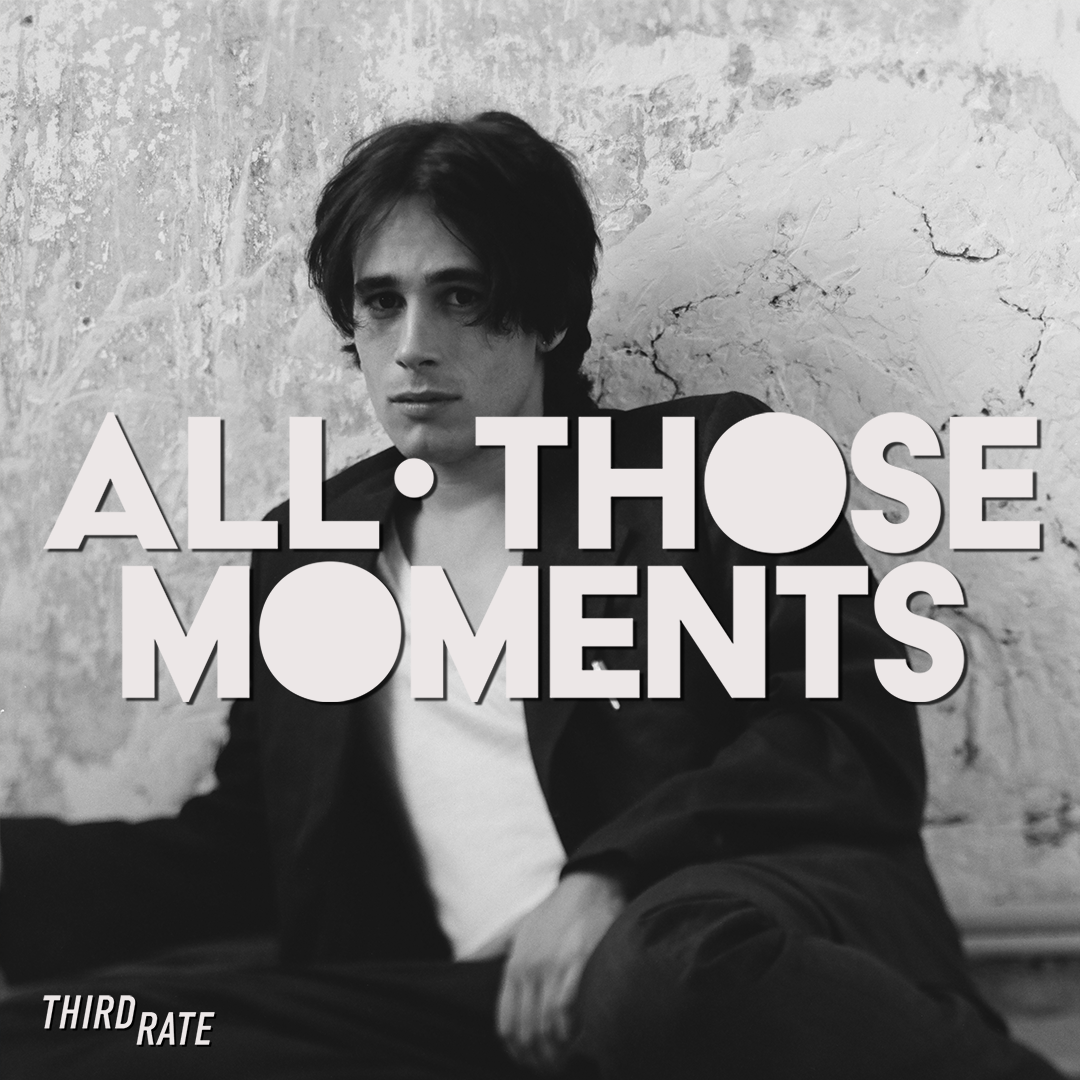
Several generations throughout the world have responded to Amy Berg’s movie by affirming the accuracy of its title: It’s Never Over, Jeff Buckley.
This is a stunningly beautiful portrait of Buckley as an artist and human being and that’s true whether you learned about Buckley through his cover of Leonard Cohen’s Hallelujah or, like David Bowie, think Grace is “the best album ever made.” In this episode of the podcast, Benji and Luke have a conversation with director Amy Berg, then discuss their thoughts and feelings about moments from the movie.
They also include audience responses from the evening of the movie’s theatrical release.
-
It's Never Over, Jeff Buckley (2025) — All Those Moments Podcast Transcript
00:00
An Oscar-nominated filmmaker, let's just say it, of our generation, Benji, spends 15 years making a documentary about an artist who died 30 years ago and way too young, who didn't just embody that generation and become a symbol of it, but who also lived searching for a kind of truth that is timeless. The movie is called It's Never Over, Jeff Buckley. This podcast is called All Those Moments. I'm Benji Wade. And I'm Luke Baumgarten.
Time.
All those moments is a podcast built around connecting social, political, or cultural moments with moments from our favorite movies and television shows. Luke, you were thirteen years young when Jeff Buckley's album Grace came out in August of nineteen ninety four. When do you first recall hearing his music? Like, were you a fan? Were you into this? We when you were thirteen?
Were you rocking out in Chattaroy listening to Jeff Buckley? We talk about this a couple times. I was definitely around for the MTV's hundred and twenty minutes thing. I don't think I remember I was a little too young for Buck to catch Buckley Fever when it happened. Our special guest mentioned Matt Pinfield and being in a conversation with him. I had not thought of Matt Pinfield, the host of 120 minutes, but I instantly remembered his face in my brain. When Amy Berg dropped that name, it w it I had just like huge rush because he wasn't in the documentary, but I was like, my god, Matt Pinfield, that's right.
I discovered Buckley in this sort of absolute deluge of music that came with the advent of Napster and that powerful, now completely dead artifact of technological history, a little thing called the unsecured university network connection. I discovered Jeff Buckley by pulling some of his music off of my dorm mate's computer directly because the college I went to did not have a secure internet connection. So you could just
Dig through people's files. In two th in nineteen ninety nine. Just being on the same network. And you remember taking Jeff Buckley. I pulled Jeff Buckley off of I think my friend Mike Hovind's computer. That is incredible. You're a couple years older than me though, and it his main album, Grace, sounds like it caught you right at the right time of your life. It did. I mean
Grace was for me an actual breakup soundtrack to my first ever serious relationship. Summer of 1995, Anchorage, Alaska, right around the time that I knew this relationship was on life support. The second major single from the record, Last Goodbye, was like all over MTV, like 24 hours a day. And I loved that song. Yeah. But by the middle of the summer, you know, it's like here I was listening to Last Goodbye and going through this breakup where I had been cheated on.
I'm like sobbing in my basement bedroom, smoking cigarettes that I stole from my dad, you know. And by what I remember really Who Amongst Us? Well, I my dad didn't smoke, but Who Amongst Us hasn't stolen stuff from our parents to try it out. But by the middle of that summer, what I remember about that album is that I had leaned fully into the bit. I stopped stealing my dad's cigarettes and I started buying my own. I started smoking filterless Pall Mall cigarettes because I had turned nineteen years old.
When this was all happening. Man. And I was working at a bookstore and in the break room, they would have these books that were there for the staff to just take home and read or whatever. This is gonna sound ridiculous, but it's a true story. There was War and Peace, and I listened to this record while reading War and Peace. And I know that sounds like two things that don't go together, but the other thing about the story, Luke, is that our house in our front yard, we had a lilac tree.
And I this is at the point of the summer where I was fully B sides from this record. And so lilac wine, I was like, I'm gonna find out how to make lilac wine and I'm gonna drink the shit out of it. All right. Yeah. So that was my relationship to this album. And I must have listened to it from the first minute to the last, hundreds of times in the first year that it came out. And it became just like indelible to me. It was a soundtrack of your summer. Totally.
So with all that background, Benji, I wanted you to do the honors and say what moment made this a film you wanted to talk about. After doing the Eddington podcast, I'm not gonna lie, I felt like I needed to, you know, hide in nostalgia and go running back to the 1990s in its sweet bosom as fast as I could. Eddington was a tough hang. I was like, I felt in a state of disrepair after doing that podcast because I'm still kind of haunted by the message in the story and the kind of the takeaway from that movie. So
And so for me, again, like I because I wasn't deeply connected, I was just sort of preparing to take this journey with you and sort of be like, all right, what's Buckley? Like and maybe even almost through a historical lens, like understand why Buckley was so important then. The first thing I see is we walk up just to sort of prepare people that we're gonna be offering to have a conversation at the end of the movie. Are these two young, two young people sitting in front? And when you mentioned, Benji, that there was gonna be a 20 minutes of unreleased
documentary like of concert footage of Buckley. Both of them did the sort of like U anime thing and were immediately like, God, I knew I was coming to see this amazing documentary. I didn't really realize that I was going to get to see an extra 20 minutes of this man unfiltered. Something that had never been seen before. And I th we didn't ask their ages. If they were 20, I would be surprised. Yeah. So like
same age you were when you were experiencing this album for the first time 30 years ago. Yeah. Yeah. Very quickly at that moment, I was like, okay, this is now no longer about me understanding the history of Jeff Buckley or the a better understanding of the history of music I care so much about. It was like, what is it about this guy that has now captivated three generations of people? Right. Like we had a whole cross section of people and different generations in this audience. Totally. Buckley's core Gen X, you're you're kind of on the young end of Gen X.
I'm the oldest millennial, and then here are these kids who were like kind of Zoomer, young Zoomers, actually, maybe. And everybody has found a way into Buckley. The beats in Buckley's life as an artist are both like totally tied to the place and time he was born, who his parents were, both his mom and his dad. But there's like such a universal arc to this story. He was not a massively commercially successful artist, but he's so handsome. He has a little bit of this background where his dad we'll talk about this more later. His dad was a
somewhat famous musician during the sort of the sixties. And so he was a cultural touchstone, maybe more than he was an album seller. And it made me think like, would Buckley, if he was alive today, would he still feel tortured by imitation? No. Or would he be like a hyper pop artist who's like, I'm pulling from R and B. I'm pulling from he said, you know, there's this line about how much he loves Zeppelin, which is I don't really s hear a lot of Zeppelin in his music, but he maybe the artist he and this is all also kind of Berg's choices she's making is she's
You know, coming through archival material, but he checks Led Zeppelin a couple different times. Totally. So like if if Jeff Buckley were the age he w you know, in nineteen in two thousand twenty-four instead of nineteen ninety-four, would he have been a hyper pop artist or something like that? Yeah, it's also interesting that like to be a kind of pastiche artist, and using the word pastiche is sometimes kind of it's like a naughty word. You've been saying that a lot on the podcast. I'm like, I that is not a that word at all does not have pono positive connotations to me, but it does feel like people like Astra re
07:24
reclaiming it kind of or people like me, you know. I I think in two thousand twenty five it's not just accepted, it's kind of encouraged to do that. I mean, TikTok culture is built around this entire premise. And you talked about it just a moment before we started recording that it does feel like his estimation has grown over time. Buckley that is yeah. And I do think there were the the arc of justice when it comes to Buckley is bending toward more and more super fans. It seems people who go, Hallelujah is so striking, so incredible
But you know, it's hard to get people to sit down and listen to a whole record. But if they do, I think because there's two camps right now. I think there's super fans like me who are of a certain age, right? Gen X or whatever. And then there's people who've heard Hallelujah. But the people who've heard Hallelujah and recognize its brilliance and then listen to the whole record, they then become it's the it's the top of the funnel, the piece of bait that will ultimately create superfans out of it. So it feels like he's just over time. He's just his appreciation is I don't think it's gonna slow down.
So I think that kind of establishes some context for why we're doing this movie. It's never over. Jeff Buckley, directed by filmmaker Amy Berg. Before we get into our interview with Amy, can you tell us a little bit about the story and what happens in this documentary film? Like so many great documentaries, and actually kind of a a sad thing about many of these kinds of documentaries, the plot's tragically simple because Jeff Buckley's life was cut tragically short. He was born with a real
Preternatural love of music, again, k kind of from an half of an entertainment family. Although it's weird to even call it an entertainment family because his father wasn't really in the picture. His father's Tim Buckley, a well-respected but not super famous, sort of member of the 60s sort of counterculture. But he doesn't Jeff doesn't know his dad, Tim, until he's a little older. He's raised by his mom. he and despite that, he's just drawn to music even as a child. Like I said, his dad's relatively famous, but he's not in his life. His mom raises him.
She nurtures his talent and it doesn't seem as though she did it in a toxic way. But like many single parents, you can tell she's got a lot of guilt about like what she was able to provide as a relatively poor single mom, immigrant. There's never any doubt of the love she has for him, but you can still see throughout the movie just really heartbreaking moments where she's thinking, you know.
forty, fifty years in the past to like maybe regrets she has and that she clearly blames herself for, but might not even have been in her control. Yeah, totally. Especially in the six, you fifties and sixties like that. And you know, I said it was half of a musician family. It's actually a whole musician family. Mary Guibert was a classically trained pianist, really, really talented, had her own dreams of stardom, I think, as a single mom, wasn't able to achieve them. So it seems like she put a little and this is a bit subtextual, but put a lot of her love for music into her son and really when it
seemed clear, and again, this is just the telling in hindsight. When it seemed clear that Jeff Buckley had an interest in music, she really pushed him toward that, despite bec maybe because of her own love of music and maybe despite what had happened with her relationship with this other famous musician. We're trying to figure out because we talked to the audience and we talked to Amy Berg. So we the structure's gonna be a little bit different than previous podcasts. We thought we'd throw some of the moments in just right now that are, you know, meaningful moments from the movie. So you had the first one. Yeah.
To me it was Mary Guibert, Jeff Buckley's mother, bookends the movie with two of the most kind of profound and tearjerker moments. Like I'm sitting next to my wife and Mary Guibert is reflecting on her raising Jeff Buckley. It's Mary says about her relationship to her son. She says, No one has ever loved me more or better than he did. And just the way she said it and the edit, it was a you know the
Shout out to the editor of this this documentary. It just it hit us immediately. We're like, okay, we're buckle up. This is going to be a devastating ride. Yep. So Buckley grows up with what felt to me like an insatiable desire, not just to listen to music, but a desire for connection with other creative people. He eventually ends up in the New York scene of the early to mid 90s. And it this was a fascinating moment for me because that might have been the only like when grunge was happening in Seattle might be the only time when
In at least certainly in my lifetime, but maybe in the history of the United States, where New York seemed like a second tier cultural city, at least in terms of like what was happening popularly in music. Like everything was West Coast. Everything was in Seattle. And actually, you know, let's talk about Wu Tang for a second. Wu Tang's huge. And and maybe it was just from my perspective on the West Coast. It felt like West Coast rap was bigger commercially. And that's what I got into more I got into Wu Tang later too. You better watch out, man. Death Row Records is gonna come after your ass.
You know, I've got love for both coasts. Yeah. And this is right around the time where they start showing some archival footage of Jeff Buckley. Keep in mind, I've seen none of this footage of Jeff Buckley before doing Roxanne, the Sting song. Yeah. And he sounds identical to Sting in that in that or it was right around that point where I was a guy like a choir director or something. I can't remember what his role was, but somebody was just talking about his the
Quality in the of his voice. The quality of his voice being four octaves, but it he made the observation that Buckley's power within his vocal range increased as he went up in octaves. And then you see people like Alanis Morissette will say things like man, woman, Buckley was my favorite singer or something like that to that effect, where it was like people and Buckley was one of these people sort of playing, not expensive.
Explicitly with like gender bending the way that that Bowie did, but he just had a voice that could kind of try transcend all octaves in a way that made him inspiring to both male singers and female singers. Yeah, totally. Aimee Mann, I think, has a moment early on too where she says he has the best voice of anyone ever. So it's a really incredible journey. It starts at a really modest place, but because of that like insatiable drive of expression and the need to connect, and also a little bit, I think, because people realize.
After Tim Buckley has died, that he's his father's son, he pretty quickly in this in this cultural milieu of New York gets a lot of buzz. He gets a record deal and it's kind of off to the races with he's on a major label and now what what's gonna happen next? At a time when grunge is happening and experimentation is kind of possible. It seems like he actually got kind of what a lot of artists, especially today, would hope for both a decent sized record deal, but and also creative freedom.
Yeah. And I Grace comes out, he goes on MTV a couple of times, and you start to see some of this relationship that he has to the media and an interview that he does on MTV where he's asked, What do you think you inherited from your father? And Jeff Buckley shoots back, People who remember my father. Next question. my God. It was he's so quick witted. We talk about this with Amy. It comes up a number of times. And it's something she tried she told us she tried to write in or work into her own edit. He was dazzlingly fast with both
14:17
sort of outward criticism and self criticism, but it also didn't feel like it was a canned answer. It was him just being like, Can we move on to something more meaningful than my the dad who was not in my life? And he had obviously heard it before too. I mean, was it Pinfield in the moment on a similar thing that happened in the documentary? There's an T V interview with him where it's not it's not an interview. Never mind. He's just hosting 120 minutes. Yeah. Every parasite needs its host and we are them. I'm Jeff Buckley.
And I'm Michael Tighe. We've been guest parasite hosting tonight. God. And then that that struggle more or less takes us to the end of the film where Grace does not go well. Or Grace is not commercially successful in America. It sounds like it's better worldwide. But you get a sense as he's starting to go into his second album, and he he literally dies as his band members are showing up in Memphis, where he's moved to sort of get away from the spotlight. He dies
Preparing to record his second album. But it seems like he died in a moment of joy, not yeah, agony. Yeah. So the quote from Mary Guibert at the beginning where she says that no one could have loved me better or more than Jeff. And then the last thing that happens in the film where you I kind of felt like this was the journey I was expecting to go on. yeah. I just didn't think that that the moment that would hit the hardest would be Jeff Buckley's mom playing a
voice recording that was left on an old answering machine from Jeff, and he's saying the nicest, sweetest things that you would want. It was just filled with love. Yeah. And she couldn't help, even when this moment appears in the documentary, she couldn't help but respond when she's on camera to Jeff's voice. And she enters into a dialogue with him. She starts talking to the recording. She starts talking to the recording. Yeah. And it just it if you had held on to your
Grief and your sadness and your tears through the first ninety minutes of the movie, you were gone once that scene happened. So I'm so that's basically the film. but since we got an opportunity to talk to Amy Berg, we also had this really live and dynamic multigenerational audience in the theater. We're gonna kind of structure things a little bit differently this episode. And I think we're just gonna start with the Amy Berg interview. So
Amy Berg's been making documentary films for over twenty years. I think she's best known or she earned an Academy Award nomination for Deliver Us From Evil, which was about abuses in the Catholic Church. Right. She made a movie about Janis Joplin called Janis: Little Girl Blue. Do you have anything to add before we listen to our conversation? Cool.
How are you doing? I saw the post from Deadline and I wanted to just start by saying there are a ton of people seeing this movie on just 120 screens. And how are you feeling about that? It's incredible. as you guys probably know, the independent film business has been suffering of late, and it's really nice that this film is getting people not only out of their seats to their local theater, but like driving.
Yeah, there are couple of people who drove four hours each way to that rode us. so it's just kind of beautiful that people are, you know, taking a trek to go and see and experience this film. It's so funny you mentioned that. We one of the conceits of our podcast is that we go watch a film actually in a public screening at our local art house. And we did that with this. Then we have a conversation afterwards with anybody who wants to stick around. Two of the people that showed up were teenage friends, Orion and Tristan. Tristan drove
Two hours to pick up Orion and then drove immediately back just for the screening and they then the whole kind of group of people hung around for about three hours of Buckley with your movie. You know, basically the the theater shut down and then people were on the sidewalk afterwards. So that's gotta feel pretty good. Yeah, it's pretty amazing. I I screened it in Seattle actually a few weeks ago. Yeah, it feels do you guys does he have a a big following up in Washington, do you think? Jeff?
I feel like he must worldwide. It's those by the way, Amy, it's those two kids. If you saw an Instagram story that I shared, that they had the matching tattoos, the Jeff Buckley tattoos, it was those two kids. Totally, totally, totally. I think what I'm learning is just that Jeff Buckley like a universal language. And it didn't it I don't think that would have occurred to me until your film came out, because just by evidence of what you're sharing through social media and
Magnolia is sharing and the official movie page. It's like it's unbelievable the number of people worldwide that are just like Jeff Buckley's the most important artist of my life. And thank you for making this film. And they're s and they're young too. It's I I mean, it's just so incredible. And I love what you just said. Jeff Buckley is a universal language. That's pretty we might have to steal that from you or it's yours.
I know that you have been asked many questions many times, and you could actually at any point steer us in a particular direction if there's something you'd rather talk about. But just to start by thinking about one of the most important themes of your film, which was the pressure that Jeff Buckley put on himself, not just the pressure he put on himself, but the pressure that he felt the ghost of his father, his peers and mentors, and of course Columbia Records, all those overlapping pressures. I feel like as his fame grew, the
Demands of success started to irritate him. The label was kind of breathing down his back for this second album. Well, you're never gonna get out of the hole. No one ever gets out of the owing of record label money, because that's how it's structured. That probably would have been very scary to Jeff. And maybe he thought that the type of deal that he had.
May have been a little bit of a deal with the devil sometimes. That's your bed. And you made it and you had to lie in it. There was this moment where Joan Wasser says that she she talked about how all those hard things fall away as you get older. Do you have any advice or do you have thoughts for young creative people? Actually, creative people, period, including yourself when it comes to those external pressures? Well, I mean
It's advice, but I think I think some of us are just wired to be critical. I was listening to this interview with Chris Cornell on Howard Stern recently, and he was talking about Andrew Wood actually. And he was talking about how envious he was of Andrew because he just went and just experimented with things, with songs and such. And I think Jeff and Chris were very alike in this way.
And I, you know, as many questions as I've been asked, what you just asked me, I haven't been asked in that specific way. And I think it's important because the pressure that Jeff was under from all of the external forces was was not as much, I think, as the internal pressure that he was putting himself under because he was a perfectionist and he was a music snob and he knew what was good and he knew what wasn't good. So I think that is
21:26
I don't know. I guess is if you're willing to fall, the I guess that's the advice for the audience is are you willing to fall? Because, you know, we you can get up and keep walking, but you know, I understand, you know, I spent five years on this film, so I I understand putting yourself under pressure to do it right. Mm-hmm. Well, especially when people have such passionate feelings about an artist like like him and and Joplin, the the previous one you did. So you were I was just fascinated by how you wove Buckley into the film.
You know, using his obviously pre- stuff that was recorded 30 years ago to sort of be in conversation with the stuff, you know, both the archival stuff and and the the new interviews you did. So like I just wanted to talk to you about like that approach of weaving it together. And sometimes it was just a moment like a w him expressing, you know, unhappiness with a take kind of juxtaposed against Bowie saying Grace is the greatest album ever made. And it just felt very
Kind of poetic, but also a little he's he had such a quick wit, which is something I got from your documentary and I didn't re like hear it elsewhere. So it was like you were almost sort of channeling his wit to sort of when somebody would give him a compliment, he almost undercut it in that moment. And so Yeah, I think that after looking at, you know, so many hours of footage and listening to his interviews, I think I understood his personality well in that way. I was hoping I did. Let's just say I was hoping now I did.
And I was validated by Michael Tighe on Thursday night when he said he felt Jeff's wit in the film. So it's another really good point you guys are bringing up. I don't know what you're drinking up there in Spokane, Washington, but you guys are coming up with some new ones. I I like them. Well, I didn't touch on that because I think like his ability to like switch in an instant was something that I was I really wanted to subtly weave into the film because of the
kind of impulsive behaviors that he had, you know, which obviously led to him climbing up twenty five speakers at the Led Zeppelin concert and unfortunately jumping into the Wolf River. But that I think there is a connection between that quick wit. And I hate to bring up Chris Cornell. You probably know I'm working on a film about him right now, but it is interesting. okay. Well I am. That's my next project. And I do think it's interesting
Because I'm starting to see those similar patterns with Chris. And I'm like, there's gotta be some kind of a chemical connection to impulse and creativity. At our screening, Amy, I will tell you that the line on hundred and twenty minutes, which of course the age I am, one hundred and twenty minutes meant everything to me when I was a teenager. And when he said every parasite needs a host, it killed at our movie theater. Yeah.
Yeah, I watched it with I mean, I did a QA with Matt Pinfield last night. He laughed about that too. It's funny. I mean, it's it was a quick, you know, Jeff is quick. Matt and Andrew Wood from Mother Love Bone, you're taking me back to my ages 17 to 20. Like there was somebody, I don't who was it, Amy, that said that Jeff had a mind like a radio tuned to all frequencies at once. That was Tammy Shouse, Dave Shouse's partner who
from the Grifters. It made me wonder along the lines to wrap up this section on pressure. How do you think an artist like Jeff Buckley would have experienced 2025, especially social media? Well, I'll say two things there. I'll say I'll give you guys a little inside. You know, people ask things ask me about scenes I had to cut or things that didn't make it into the film. And one of the great lines from Tammy.
was describing when she met Jeff. She felt like there was a circuit that kind of entered her body. And when he went into the river, she actually it was the first time in those months that she actually felt it disappear. He was so plugged in. I think about that a lot. And I think about where we're at with modern social media today as compared to
I'm assuming that you guys were about the same age because we're talking about the same music, but I'm remembering how it was in the 90s. It was similar because the music had such a it was testosterone-driven music and it had such a pulse and aggression. And there was something that Grace did for me in that period of time that changed the way I experienced music. Because it was like moshing, you know, it was like very
intense and then this album came out and you you couldn't move. You had to just like plug in and absorb every, you know, every bit of it. So I don't know that Jeff would have ever gone on social media. I can't imagine him, you know, posting. I I imagine Jeff in like upstate New York, living a quiet life and maybe going on tour once a year or something like that's how I could imagine him today if I
had to. Yeah. I I described him after the screening. I wondered if a future for him could have been he could have lived to be very old if he had been like a almost like a traveling bard who would just play at small venues and follow his nose wherever it took him, but just to play wherever he wanted and however he wanted instead of you know responding to the pressures of record labels.
You've made two films about generational talents, Buckley, Joplin, and now apparently you're doing Cornell, who kind of is in a similar category there. you've also interviewed musicians like Henry Rollins for West of Memphis and and he had I haven't seen Prophet's Pray, but we've got a lot of FLDS up in our neck of the woods. And so seeing Nick Cave narrate that. I haven't seen West of Memphis in a while, but I remember Rollins kind of being the one of the poetic and moral hearts of that movie. And you know, I don't know if this is too much of a stretch, but
Even when you aren't making a film explicitly about art, do you think there's something special about the way artists and musicians either see the world or see the s whatever subject you're covering as a documentarian? Yeah, I mean it's just that's my posse. I was talking to somebody, I think I was interviewing Moby recently, and we were talking about how you're so defined by like what music you like. And I think, you know, coming to be in the nineties with music and pop culture that, you know, moved me, it just
That's who I am. I worked at SST Records when I was a teenager and I I that is my pulse. So it's it and West of Memphis has such a strong connection to this film because Ben Harper, that's where I met Ben Harper. He told me the story that, you know, that you that we talked about earlier about the EuroKen festival and some other Jeff Buckley stories. I was in Memphis. I was near where Jeff died. Everyone there loved
28:21
Jeff. so there's a real connection with that. And Nick Cave as well, you know, he Nick Cave and I have very well, we just we kind of we like the same films and literature and stuff. So we just we bonded over that and they did the music for West of Memphis. So then when I was making Prophet's Prey, I you know, he seemed like the right person to tell that story because there's so much hypocrisy in that.
you know, religious intro. So anyway, one of the things I think is so interesting now that you've got me blabbing, is that Moby said we missed something in the 90s because everyone, like because that music spoke to everyone and there was the there were the kind of nerds and outcasts that I fit myself into that class of people from my younger days. And there were tons of people that
were migrating towards this new musical momentum. And then there was kind of the people left over from the metal days, the kind of more misogynistic population of people. And there wasn't a blending of the minds enough. He said that we he said we as musicians didn't reach across the aisle enough. And I thought that was so interesting in relation to like where we're at as a culture today in this country. So I just watched Janis: Little Girl Blue.
Mm-hmm. And I was really struck by the resonance between the lives of Jeff Buckley and Janis Joplin and of course your b your two films, It's Never Over and Janis: Little Girl Blue. And I was wondering if you could share some of the synchronicities or the differences between both the artists and your two films that have come up for you through through this process of making It's Never Over. Yeah, I think with Janis, she was so desperate for like a for a female role model.
For somebody that she could, you know, talk shop with. and I feel like Jeff embraced the lane he was stepping into a little bit differently than her. But the similarity is that they both kind of brought something totally unique to music through their voice. And and they both were seeking connection for their whole lives. So there was a lot, and that's a very you know, that's kind of a typical
Well, it's a I guess it's a cliche, but it's also a typical theme in these kinds of stories, you know, with a Janis had, you know, she had the nuclear family, but there was a huge generation gap. Jeff had a different kind of family dynamic. He was out he was missing his father. So I see more similarity with him and Chris Cornell in that for that particular theme. But all of these stories to me are united. And I think they're kind of a trilogy for me in a way.
O'Ryan and Tristan. Sorry, real quick, but I just wanted to piggyback on the missing father piece. Cause I was the thing when we talked to those two young dudes, Tristan and Orion, I was I was sort of assuming like, did you learn about Jeff from your parents or from something? And both of them well I think Tristan said, I think I've known him forever. I found him on TikTok, which I found was that was the one of the most hilarious things.
But they both I think Kristen's dad had passed away and and O'Rion's dad was out of the picture his whole life. And so I think both of them resonated with that a lot in in Buckley's just the way he sort of approached life. And both of them said like a place like Spokane, even though it's the second largest city in in Washington State, it strikes me that like when you live in a city even like maybe West Memphis, but certainly like Spokane, you
You lose there's like generations of people that just move away and you lose that possibility for mentorship and that the sort of this and that's really important in scene building. And so it strikes me that these people from these out-of-the-way places would then find an artist that resonates with them and almost make them like a mentor figure, just somebody to look up to. No, that's beautiful, and that's a great way to articulate it. one other thing, just to bring it back to the Janis and Jeff question is.
Janis was always being considered a ma a woman in a man's world. And Jeff was able to open up kind of this gender-defying lane to sing in. And so I think so many female singers identified with him because he could open his vo his voice up that way. So I think that's interesting. But you're right, like small towns losing their heroes. Yeah, I mean, there's something to that.
Dave Getz was asked a question in your documentary, what did Janis Joplin teach you? And he said, emotional honesty and the price of not emotional honesty, she started to become something people expected of her. She started to become a caricature of what she was and play it for people. Do you think a version of that was either happened to Jeff Buckley or something that he worried about? God, I remember
That I was, I just took myself right back into the room with Dave. I remember him reading that poem that she left him and him saying that. That I I got the chills when he said that. That was so spot on. was Jeff becoming a caricature of himself? I think that if he was, that's why he moved to Memphis. He didn't want to be cliche. He didn't want to be like just a downtown New York you know, hipster. He wanted to go and find.
a new path. And I think he was like considering making big changes in his life at the time, you know, and starting to, you know, wanting to settle down in Memphis and make that his home. And where would that, where would everyone else fit in, everyone else in his life at that point? You know, where would they fit into that new path that he wanted to take? So I think that is a very strong statement that he made that he couldn't handle the intensity of what New York was making him into.
I have one final thing I can't help myself. I'm not just interested in it's never over, I'm also interested in your work, Amy. But there's a moment in that Janis Joplin documentary with Dick Cavett. Did he confess in your documentary that he slept with Janet Joplin? Well, here we are together again at last, by popular demand. Who are you? Yeah, I don't know what it was. We sort of hit it off right away. Was she romantically attached to me? I would hope so.
May I light your fire, my child? I guess not. Apparently not, no. Well, I would have bet against it myself. We were good friends, and I will level with you. We may or may not have ended up intimate.
35:11
I just, you know, my memory is so bad. Or so good.
This was so genius, you off camera, or so good. And you broke cabot. He's like he lunged forward, like gone. And I was like, did that just happen? But the thing is, you don't really know. And I didn't know really because he was playing with me as he did. I think he did sleep with her. Yeah. But I could also see Janis telling Everyone she slept with him because he's hot and she was always trying to like.
you know, keep score with the dudes. So I don't know. But he is, I love Dick Cavett so much. he is so hot. He's one of the hottest human beings who's ever lived. My goodness. He's 88 years young. So shock too. I did want to talk to you about the the subject of melancholy. Mm-hmm. In grieving. I'm married to a therapist. So this is my wife is in the room with us now through me. I'll be her proxy.
There's this idea that we should try to keep our memories close to our heart while also honoring the whole and the absence that's left when we lose someone. The title of your film I think is like a proclamation. It's an exaltation. It's never over, Jeff Buckley. I think it's so beautiful. How did you strike a balance of both honoring Jeff Buckley's death while also reanimating, if you'll forgive the expression, and keeping his extraordinary presence alive through your film?
Well, I think that's Jeff, you know. I think I just tapped into him. I mean, he's definitely still at play. I mean, look at TikTok, you know? So it's like is it's an timeless music. And to have a timeless music come out of the nineties is very unusual. I mean, there's just not that many albums in any decade that, you know, that can kind of surpass all of the different genres that have come and gone. And he just
It's it's never over. And that was the only title I could have been. So and I was speaking to him. That's why there's a comma, you know. I was speaking to him. It's like we're still here. So I think he's somewhere lurking around, you know. It's such a perfect title. And I do wanna say I I think it's the most remarkable thing about your film is that it manages to do both those things. It honors his absence, but it also brings back his presence in a way that you have provided this two hour
piece that a these kids from the Tri-Cities in Washington State can look at and and visit and revisit and feel like that is a mentor that they now have. Thank you. That's a huge compliment and hopefully it will live on and hopefully it'll inspire some creative people to do something amazing, you know? a lot of your films deal with childhood or young adulthood, the creative spark.
Some sort of exploitation, either the exploitation of innocence, the exploitation of creativity, often both. And then both the economic and sexual predation of the entertainment industry, your films would d deepen my understanding of those topics. For you though, why do you think you those theme themes are so resonant for you and and you keep returning to them? Well, it's not that I return to them, it's just it's all under the surface. It's every time I do a film that at the heart of whatever the issue is.
Is childhood sexual abuse or some type of sexual abuse? I re when I was making Deliver Us from Evil, I remember hearing a statistic that was 95% of the prisoners, the high-risk offender prisoners in the prison system had been either physically or sexually abused. And I think it was mostly sexually. I can't, I I don't even remember how to delineate that, but it's just, you know, it's unfortunate that.
pattern that manifests in life. And I think that with Jeff, what I'm learning today, and maybe I'll learn this with Chris as well, is that the newer your wife is a therapist, Benji, so maybe you'll relate to this. The newer kind of language in therapy is about attachment theory and like those first five years and like how that defines a person's journey. And I think that
with Jeff and with Chris as well. I think that when you have someone who had some kind of trauma when they were a child, fame doesn't help it. It just exacerbates it. So it just makes that like when everyone is gassing these amazing artists up, they are feeling this big. And I mean, you know, there's a lot of similarities there. So that's something I'm interested in. And I'm hoping we can
Learn more about that so that young boys specifically get the proper care in their formative years. This is what a question I've been dying to ask you. I was so I was a music journalist for about 10 years, and now I do a lot of hard news stuff and a lot of long investigations. and I am not a patient person. This film took you 15 years. Maybe it's my ADHD or something, but it's like I'm really like
Driven by the exuberance and passion for a project. And one of the things I just really had to ask you when I realized how long it took, as a journalist, as an artist, as a filmmaker, how do you balance your exuberance for a project, your passion for a project with the patience it takes to just, you know, spend so much time cobbling this together? no, I go through a lot of stages. There's a lot of frustration. There's a lot of we took breaks, you know. fortunately, Adnan.
got out of prison and I was covering that I was very involved in that. And so like I took a break and dealt with that. there were a lot of shifts. The pandemic was a lot of stop, stop, start, stop, start. I think that's good. Healthy breaks are good. So I my eye was always on the ball and I always knew where I needed to go, but I had to, you know, extricate myself from that multiple times for it to be great.
If you had told my twenty two year old self I'd be talking to the woman who made a film about Jeff Buckley that the entire world is watching, I would have never believed you. Thank you so much for coming on the show, Amy. Really appreciate you. All right. Thanks, you guys. I love having you in Spokane. let's keep chatting, okay?
41:35
I love that conversation, Benji. It was brutal how short it was. Actually, we were only supposed to have 15 minutes. And I think she liked us enough that she like overstayed a little bit. And then she was literally, I think, late to her next interview. The thing that made me feel really good, because going into this conversation, we're like, she's been asked some of these questions so many times. Why Jeff Buckley? Do you really like his music? You know, like we were really self-conscious about it because we had so little time and we didn't want to just do the same thing that everybody else did. But you had a couple of reflections you wanted to give on the interview itself. One was
The Chris Cornell record scratch. So I did a little bit of searching and found not very much mention on the web or in the internet anywhere that Amy Berg was working on what she called the third film of her trilogy about musicians, Janis Joplin being the first, Jeff Buckley being the second, and Chris Cornell being the third. It makes perfect sense. I mean, that Buckley Cornell friendship, which is shown in
The film we didn't get to that into that into the interview, but that was one of the more interesting moments of the movie where I was like, wait a minute, Jeff Buckley and Chris Cornell had this real bromance. Soundgarden was playing in London. And I don't think I quite realized what a huge Soundgarden fan Jeff was.
you look a little beneath the surface, to me, it's he's exactly the right musician to bridge the kind of angry, misogynistic hair metal bands that Amy Berg has talked about with the personal and like emotional intensity of Jeff Buckley. Right. And he's also another musician who has a four octave range as a vocalist. He goes from low baritone to high f high falsetto. So if you think of Chris Cornell though, you think of I went back and was
Going, wait a minute, is there a song where I feel like there's a kind of spiritual connection? Actually it was a couple of years even before Grace came out. It's that song on the singles soundtrack. okay. Called Seasons. If you listen to that song, you'll be like, there's definitely some. It's got a little kind of blues jangly kind of a vibe to it.
Yeah. The other thing she said in the interview that just kinda like hit me in the feels was she mentioned Andrew Wood. He was the lead singer of Mother Love Bone, legendary Seattle band that their lead singer died of a drug overdose. But Chris Cornell, a Chris Cornell documentary. Right. So look, I know you spent a lot of time with the audience feedback and you've got notes on it and we have these archetypes in the audience and we want to go through them and just kinda talk about what people thought that were with us in that audience. 'Cause they
Hung out for 40 minutes. It's a note really, really worth, I think, reinforcing is that people were willing to hang out for three hours to talk about Jeff Buckley. So, you know, we talked to the audience first. We saw we watched the movie, then we talked to the audience. There were plenty of people of a certain age, like you and I, Benji. And also, though, artists who've been one guy in particular, who we're gonna talk about a little bit, who's been said he's been playing Jeff Buckley's music and deeply inspired about it, but clearly didn't know key parts of his biography, but he didn't really love like
The things that he learned in this documentary about Jeff Buckley. Yeah. contrast that with these young people that I didn't not expect to find at all, who were just discovering him now. Then there were also people who had no prior experience to Buckley, which is another fascinating sort of group of people. Whether you've known him for 20 years, whether you're just discovering him, or whether you had no prior knowledge of him, the majority of people hung around for a total of like three hours to talk about this man's work. And I thought that's really.
To give that much time to something in today felt really like a real testament to his power as an artist. I don't know, I thought it would be cool to go into the deep end. Yeah. The first song I ended up listening to was the Sky Blue Skin demo. It like completely like I can just remember myself like I was just laying in bed, pitch black room, headphones on, like levitating.
The truth is
I see a ghost on the side.
Yesing
And then from then on, it was just like I just listened to like anything I could find. I knew like he was kind of insecure, but I didn't know it was to the depth of like self-loathing that it was at. And I'm like, how could he not appreciate who he was? You know, he he he gave that that kind of understanding to people like myself that he just never got. You know, he was never able to be understood on that level. It's just really tragic. It just makes his music more spiritual and like
Condemning almost. I don't know. It's odd. And some of the personal aspects I've related. I had an absent father too. Obviously, my father wasn't Tim Buckley, but with the whole absent father thing and how close I was with my mom growing up and how I don't know. It's just along with the music that speaks to me, I guess I relate very much with the kind of growing up part, but also I'm I'm a very insecure person myself. So someone that I connect with that much to know that.
in some ways we were very similar in the ways that we were introverted and how sensitive he was, because I'm a very sensitive person. It like this movie especially like really kind of deepens that connection and like makes me feel a bit better about myself personally. I didn't know this. I didn't n I my father died when I was young as well and I'm an only child. I had no idea that he had an absent father. and that's just so weird that that's like both of us connected
him in that way. And there's it's just, you know, when you when you don't have a father figure, I guess there's kind of like this this pervading loneliness you can't quite get away from. You don't know why, you know, but of course I don't neither of us know what it's like to have a normal father figure. But it's like when you when you run into an artist like Jeff Buckley, I mean you don't have to be fatherless to like him, but it's almost like he did it. We're meat sacks that feel things so deeply it's sometimes even hard to
48:23
Have access to the traumas we live through in life, let alone being able to process it in a healthy way. And art's one of the ways you can do that. It's really meaningful to me. And they both had Jeff Buckley tattoos on their arms. I mean, I couldn't believe that when I looked down and I was like, you definitely have to throw that up when on the Yeah. I mean, I was like, wait, one has Grace and then one has the the art that Jeff Buckley had made once upon a time that became like forever associated with him. They have tattoos. It's crazy. The other thing we talked about, Luke, with Amy Berg is.
that I would love for you to touch on is the fact that Tristan and O'Ryan, you know, thinking about mentorship and the role that Buckley plays now in their life because of this film. Yeah. And we talked about it with Amy Berg that, you know, effectively a document, a living document of Jeff Buckley has been created. And now Jeff Buckley can serve as like a mentor. Yeah. You know, a posthumous version of a mentor for young people like Tristan and Orion.
In my career as a journalist and just as a person in Spokane, like I've been given so many opportunities, but there are also kind of pieces missing. But as I've like reflected on my course through life, I felt like I didn't have the sort of like non-familial mentors that a lot of people have where it's a mentor about like the whatever you care about, the thing you're into, you find a person and and some if you're lucky, you hope to God you can actually have like one on one conversations with that. Like we're such sort of learning creatures.
That we want to seek out that sort of dialogue. And maybe the guy that was super disappointed, like I'm just real literally reflecting on this in real time, is like maybe he had told himself a he had had a conversation with the ghost of Jeff Buckley for 25 years that was like fundamentally different than what he saw on screen. And now he has to process that. And it's up to him how he takes that. I don't have as high of an opinion of him now. And this is after playing his songs thousands of times, performing them thousands of times, like I lost respect for.
And I'm not so crazy about I don't know, like it's it's tough for me to say this. It really is. The surprising thing for me is Jeff picked that like Jeff was giving off so much of those vibes in this depiction of him. In terms of having the anger and the hatred inside, and then also the self-aggrandizement. And I can just I can sense his pain. Like something about watching him in all these different iterations of like a crazy New Yorker. I grew up in New York, so I can see the crazy New York coming out of
out of the the way he's dressed, the way he's just kind of the way he writes. There's something about like this intimate of a view of an artist that I've really held close to my heart that I don't know, it's just like it's a letdown. One of my people that I love, Joanna Macy, I was just listening to a podcast of hers today. She passed away in July. She talked about like her marriage of fifty five years and
The eternal loneliness of all of us and how the biggest love that she ever had in her life. Part of what kept her marriage going was both of them recognizing the worlds that they had inside each other that neither of them would ever fully know. And I'm just thinking of that as you guys are all talking about this immense person who's meant so much and also here we know a little bit more about him, but
There's an immense world inside him that we'll never know. And he's really beautiful. I just kind of want to piggyback off what everything you were saying and how it was really an interesting choice to have most of everything spoken about him, not in his own words. It was all people talking about someone instead of having his own interpretation and like.
Over the course of the movie, you see, you know, articles in Rolling Stone, interviews that are talked about and pictured, but you never get those words. You never get his actual voice except in kind of those self-referential moments. All of the explication, all of the emotional, like who he is comes from the people around him. All the kind of major plot points. Yeah. Yeah. That felt
unsatisfying in some ways because even the people who know you best don't actually know you and everyone is eternally and existentially alone. Alone and together. I would say we're existentially all alone. And also I think the part that I keep coming back to is they use that quote twice of without ordinary life there's no art. And then his last voicemail to his mom of like
it all exists within relationship too. And it that was just the part that felt so beautiful about all of it for for him and so tragic that the more famous he got, the more he got ripped away from that. So the alone and together piece. So the thing that Ray is referencing, and yeah, shout out Ray, thank you for coming to our screenings. There's a couple times where Buckley says it's repeated at least twice.
Without ordinary life, there's no art. And she's talking about this idea that you can never really know a person, but also how he did have this moment when he went to Memphis that he was connecting to nature, he was connecting with himself. And one Berg said he was doing that to try to get away from his stardom and kind of recapture that nor eventually. Totally. And that's why I think like he was such a preter naturally gifted person, but oftentimes it's like sort of precocious and not wise. You know what I mean? When people are like really smart, really young.
There's sort of it's like a trick, how intelligent they are. And then like the emotional understanding comes later. That saying I need an an ordinary life to be an artist shows some he was, you know, just at the beginning of his journey of life and his journey as an artist. But like he grasps something that I'm gonna get I'm gonna start crying thinking about it. It's taken me decades to realize that part of having an extraordinary experience in life is like really caring about the ordinary aspects of life. I guess I just
54:46
That's something I'm only now beginning to reflect on as like a forty five year old person. Yeah. And
Did not expect to get this emotional talking about this 'cause this has been your like, this has been the thing you keep saying, so I wanted you to talk about it, but
That's what I mean, it's any sort of death like that is a tragedy, but like the tragedy of like what he could have become or what he was on his way to becoming is just anyways, go ahead. No, yeah, man. It comes up with Amy. I I said this after the screening and I said it to her too. It's like if I imagined what would have happened had the these all these these overlapping pressures, you know, led to him feeling whatever he felt toward the end of his life.
The Bible can compose
You know, again, taking a taking away from any element of whether or not there was a choice made when he jumped into that river. Right. but it was clear that the fame and the pressure made him unhappy and that the to use that quote, without ordinary life, there's no art. There was a beautiful, beautiful friendship between he and Chris. There was a sense of mischief with this almost soul mate understanding.
Chris Cornell does it really well. He's like the one of the few people I've met. Makes his life work, his ordinary life. He didn't get a chance to live that ordinary life because Columbia Records wanted their pound of fing flesh. Right? So when Tristan and O'Rion are talking about how much they've mutually connected over Buckley, it gave me this moment of like, well, okay, that's their mentor. and I really hope they
Because like they're young people. You can tell they're going through similar things to what he's going through as young artists and people who are struggling with the loss of a parent or the absence of a parent. I th I just keep coming back to it. And I I think I was surprised by how emotional it made me talking about that idea of like without ordinary life, there cannot be art might be the single most profound thing, an artistic person who's had the kind of fame that would get a movie made about you. That's like a cheat code for life, it feels like. And so like
Just I hope that as people are watching this movie, they're paying attention to the big moments, the big moments of artistic triumph and the big moments of artistic struggle, but also paying attention to those little things where it's like they come back to it twice. So obviously it's important, but it's like if you guys, I think if you and Ray wouldn't have both keyed on it, it would not have been a thing that like sunk in and I've been chewing over. And so I guess that's the other reason I guess I feel so good about the way we're doing this podcast. Like I'm more confident in how I feel about this movie because I got a chance to talk about it with 15 other people and Amy Berg.
Absolutely. Yeah. I mean, that that quote, I think all I could think about was just when we asked Amy Berg what would have happened to Jeff Buckley in twenty twenty five with use of social media. And she said something like pretty quickly around of course he wouldn't be on social media or whatever. It's like of course he wouldn't, but how could he not? It occurred to me. And and there are artists who stay away from social media. Don't get me wrong, it is a thing. It happens. But how again, what
would have happened to a personality like his. Yeah. You know, like we think that the record labels are bad. I mean What's more rapacious than tech techno capitalism. Yeah. Yeah. And also like the we've talked a lot about the parasociality thing and all the mystique, the mystery, the, you know, Ray says you can never really know a person, which is true, but we get this sense that we can because of digital expressions. Yeah. You know, because of how somebody represents themselves totally on
Twitter or Instagram or TikTok. Yeah. And I I really did think that reflecting on what would have happened to Buckley if he had just ignored the stuff that he didn't like and had just followed his nose and gone from small bespoke venue to bespoke venue and played in front of a couple hundred people, he probably would have lived to be eighty and s totally enjoyed making and performing music. Yeah.
Even if he had rejected social media by the time he was in his mid to late twenties, like he would have been raised not in record stores, he would have been raised on YouTube the way Tristan and Orion were.
I'll say this about Buckley too. His death hit me especially hard. I think that there's only two people who are famous and that I obviously have no personal relationship with that have hit me hard, and it's Anthony Bourdain and it's Jeff Buckley. Yeah. They're the only two. Can you think of anybody else that's ever that you've cared about that you were just like, yeah, that one I mean, the only person I can think of is like Adam Yauch, MCA from Beastie Boys, but not because I had some deep not like a deep
existential connection to his music. I just really love the Beastie Boys growing up. And but other than that now, I mean it I think it is people like Buckley and and Bourdain. Yeah, you and Ginger, your wife bought me a poster of Bourdain or something 'cause you because of that story that I told about meeting him once upon a time. Yeah. Do remember my Bourdain story? A little bit. He was producing an episode of his series at the time, No Reservations. And he was in Montana.
I didn't know this, but I had just I do. Yeah, I'm remembering now. Yeah. I had just started watching No Reservations, like probably six months before that. And I was doing a lot of catching up. And I had just seen an episode where he ended up on a four wheeler and had this accident where the f he f on a sand dune, he flies off of the four wheeler, it rolls over him, and somehow magically he's not s seriously injured or killed. And so I'm sitting in this restaurant in a bistro in Livingston, Montana. People in the restaurant had seen that he was out on the sidewalk and I was like
What? I didn't believe it at first, but I looked out unmistakable. He's smoking a cigarette. And this is a point in his show where he had said he wasn't smoking. that's He had quit smoking. And I'm like, that is a guy who's smoking a cigarette and it's Anthony Bourdain. And you had your experience with unfiltered Pall Malls. And I had my, I was like, we're basically the same person. So I ran out of the restaurant a couple cocktails in. I was like, I have to say hi. And the only thing that occurred to me to say to him, Luke, was
I see him, he sees me, and he's like ready to shake hands. It's like somebody's coming up to say hi. Yeah, right. And I say, I'm so glad you didn't die. And he looks at me confused and he goes, I think that's the nicest thing anyone's ever said to me. And I was like, you know. I was talking about the four-wheeler. I was Well, I just watched the episode like a couple of nights ago, view on the four-wheeler. And he started laughing. He goes, Well, that's very, very kind of you, or whatever. And I I
That's all I said. I I made it very quick. But yeah, Anthony Bourdain, Jeff Buckley. Yeah, those are the two people that I that are famous that I ever really felt on some kind of deep personal level. Maybe we could end by talking about this idea of a circuit. I think, you know, Tammy in the the quote that Amy Berg was giving us was talking about the the circuit that was drawn between her and her friend Buckley. Cause I think it's like part of that circuit is like he she was talking about how it was a circuit that connected Buckley to Tammy.
But also it's clearly a circuit that connected Orion and Tristan and all of us in the room. And now I kind of feel like I'm, you know, he's a circuit that's kind of connecting all of these conversations we're having, you know. Yeah. And I I mean, I can think of that expression that Jeff was a circuit in the context of his record. I mean, I almost want to play around with the David Bowie quote that is perhaps apocryphal. Maybe he really said it. It doesn't seem super clear where this was documented, but he referred to Grace.
01:02:42
as the greatest album ever made. And I played with that thought a little bit today. And I yes, I'm prone to hyperbola, but I did think like it is a perfect record. You know, I was going through a breakup when I heard it for the first time. And yes, it was my soundtrack to War and Peace. Yeah. I just want to a quick aside. I'm telling you, when you read about the love between Natasha and Prince Andre.
In War and Peace, and you're listening to Lilac Wine in your ears in their romance, and then you listen to Corpus Christi Carol. Dude, that song is about a knight lying wounded and bleeding in a hall with a maiden by his side weeping. And Natasha and Prince Andre, you know, she mourned Prince Andre when he died from battling fing Napoleon. So I kind of feel like it does make sense to listen. Yeah. War and Peace in the album Grace by Jeff Buckley are a perfect fit. You listen to that song, you can't convince me that Buckley isn't aware of that.
On this bed a lion for night, his wound is bleeding day and night.
Sagride
I only spark noticed warm peace. So like I didn't connect with half of the stuff you just said, but I think the thing that what you're sort of pointing at, and this is definitely I kind of like the artistic inspiration, whether you end up making art out of that or you're just being moved by art itself, it's it's a connection-making device. And if you
open yourself up to it. Sometimes when I'm sitting watching a movie, and even when I'm totally enraptured in it and totally, you know, not on my phone, my mind will just start shooting off in directions that feel circuit like. It's like I'm c making a connection from one node to another. I'm making a connection across. And I hope that whatever other, you know, horrors befall us in this this world, the moment we've lost art in that way, I think is the moment I I think there's hope until we've lost art, I guess.
I love that you're saying that because Ray and I have been chatting so much about the, you know, all these different concentric circles of despair that we're all kind of navigating right now as people. Yeah. And what might be the antidote. And yeah, it does. I mean, it's like I've said many times like just connect with people, go to movies, go to watch soccer or baseball or whatever, you know, break bread, spend time with one another in physical spaces. Yeah. And yes, that's kind of platitude, but
Maybe art, love as simple as it sounds, because you know, it came up in this conversation where, you know, Amy Berg says, I'm gonna take note of that, that Jeff Buckley is a universal language. It seems kind of true that that is the case. And, you know, the circuit idea is another way of expressing this, but whatever he was expressing to the world through his music and through his life, as short as it was, it's clear that the rest of the planet was sensitive to it and and could feel whatever he was doing.
Let's use that to wrap up the show. Yeah. This is a this is a banger. I want to say thank you to Danielle from Magnolia Pictures and of course our wonderful guest, Amy Berg. Danielle was really, really cool about connecting us to Amy. Also want to say thank you to the Magic Lantern. Go watch Kyoshi Kutosawa's latest film, Cloud, which opens tonight as of the recording of this podcast. Luke, our next episode, Spike Lee's highest to lowest, his fifth movie with Denzel Washington.
in a remake of Akira Kurosawa's nineteen sixty three masterpiece, High and Low. Are you are you ready to do that one? I think we're ready to do it. I'm gonna I'm working on getting some friends who have a big different background to both of us to come watch the movie with us. And our our gloss on this movie is gonna live or die by how interesting they are, I think.
And speaking of being a circuit and being and you know having resonance in the world, we're gonna find out what Spike Lee's got left as far as this different generations. Kind of another generational thing. Yeah. I'm really curious to sort of see how, especially black folks in my life of a certain age a range of ages are still or not connecting with Spike Lee. So we'll see about that next time. Stay tuned for that. I want to do a quick shout out to Russ Gannon. Russ played the character Bill Belinda in the movie Ephus, and he responded to our podcast on YouTube.
And said very kind words about it. And along those lines, hey, if you ever want to get in touch, all those moments pod at gmail dot com. If you just want to say hi, if you want to dunk on us for anything we've said. Yeah, please do. if you want to agree with us, that's fine too. If you just want say anything, we'd love to hear from you. In the meantime, follow us on YouTube, Instagram, Spotify. And yes, we have a Patreon. Thanks, Benji. Thanks for listening, everybody. Thank you, Luke. See you, buddy.
Okay. Awkward male affection at the end there, perfect.
dude.
In time.